
Table of Contents
A swollen gum around one tooth can be uncomfortable and sometimes a little worrying. You may notice that the gum looks red, feels tender, or seems slightly bigger than the gum around the other teeth. In some cases, the swelling may happen because food is stuck near the tooth or the area has become irritated. But it can also be linked to plaque buildup, tooth decay, gum inflammation or an infection.
If the swelling is only around one tooth, the cause may be specific to that tooth or the nearby gum. Paying attention to other symptoms, such as pain, bleeding, bad taste, sensitivity or a small bump on the gum, can give you useful clues. Still, these signs cannot tell you the exact cause on their own.
In this guide, we will look at why your gums may be swollen around one tooth, the common causes, signs to watch for, treatment options and what you can do at home. We will also explain when it is better to see a dentist instead of waiting for the swelling to settle.
When your gum is swollen around only one tooth, it usually means that something is affecting that particular tooth or the nearby gum tissue. A piece of food stuck between the teeth, plaque buildup, gum inflammation, tooth decay, irritation or an infection can all cause swollen gums around one tooth. In some cases, the swelling may also be related to a tooth that is coming in, especially a wisdom tooth.
The swelling may be mild and temporary if the gum has been irritated by food or brushing. But if you also notice pain, bleeding, bad taste, pus, sensitivity or a small bump on the gum, there may be an underlying dental problem that needs treatment. A swollen gum by itself cannot tell you exactly what is causing the problem, so a dental examination may be needed if it does not settle or keeps coming back.
There are several reasons why the gum around one tooth may become swollen. Sometimes, food can get trapped between the tooth and gum and cause temporary irritation. Plaque and tartar buildup can also irritate the gum and lead to inflammation. If you notice bleeding gums along with swelling, it may be a sign of gum inflammation or gum disease.
Other causes can be related to the tooth itself. Tooth decay that reaches deeper into the tooth can cause redness and swelling around it, while an infection may lead to a painful swollen bump or pus. A partially erupted wisdom tooth can also cause swelling in the gum around that area.
Here are some common causes of swollen gums around one tooth:
Treatment depends on the cause. If plaque and tartar are responsible, your dentist may recommend scaling and root planing or another form of professional cleaning. If the swelling is related to an infection inside the tooth, root canal treatment may be needed to treat the infected tooth and help prevent the problem from getting worse.
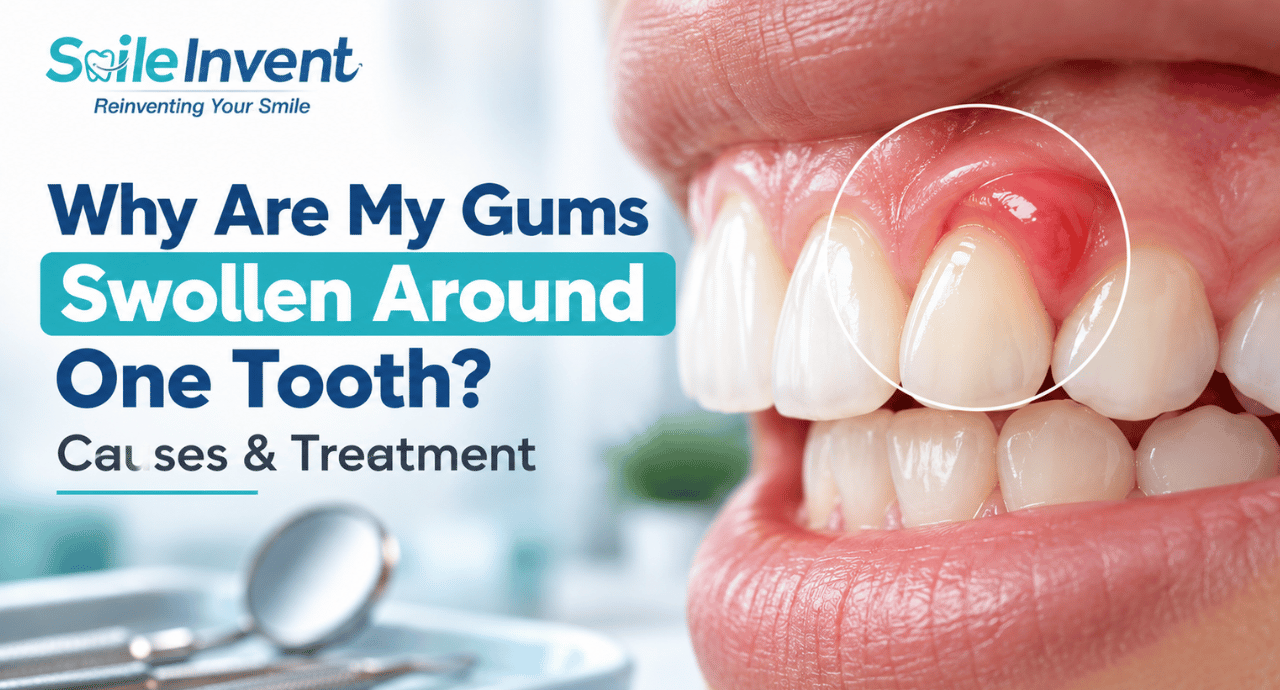
A swollen gum around one tooth may look different from the healthy gum around the other teeth. It can appear red, puffy, shiny or slightly darker, and the area may feel tender when you touch it or brush your teeth. Some people may also notice bleeding while brushing or flossing.
The way it feels can depend on the cause. You may feel mild soreness or pressure around the tooth, while an infection can cause stronger pain, sensitivity, a bad taste or a small swollen bump on the gum. A gum abscess may look like a pimple or boil filled with pus.
Common signs to look for
If the swelling is getting bigger, becoming painful, or is accompanied by pus, fever or facial swelling, it is important to get the area checked by a dentist rather than trying to treat the cause yourself.
No, a swollen gum around one tooth does not always mean you have an infection. The swelling can happen because of trapped food, plaque buildup, gum inflammation, irritation or other dental problems. In some cases, a cavity or gum disease can also cause the gum around a tooth to become swollen.
An infection is more likely when the swelling is accompanied by pus, a painful bump, severe tooth pain, bad taste, pain while chewing or fever. A dental abscess is one example of an infection that can cause a red, swollen bump around a tooth.
So, if the swelling is mild and there are no other concerning symptoms, it may not be an infection. But if the swelling becomes painful, keeps getting worse, comes back often or is accompanied by pus or fever, it is best to have a dentist examine the area and find the actual cause.
A dentist will first examine the swollen area and ask about your symptoms. They may check for redness, bleeding, tenderness, plaque buildup, gum pockets, tooth decay or signs of infection. They may also ask when the swelling started, whether it is painful and whether you have noticed any bad taste or discharge.
If the cause is not clear from the examination, the dentist may recommend a dental X-ray. An X-ray can help identify problems below the gumline, such as an infection around the tooth, damage to the supporting bone or a problem affecting the tooth root. For gum disease, the dentist may also measure the spaces around the tooth to check the health of the gums.
Once the cause is identified, your dentist can suggest the right treatment. This is important because swollen gums caused by trapped food or mild gum inflammation may need very different care from swelling caused by an abscess or a deeper dental problem.
A dentist does not treat gum swelling based on the swelling alone. First, they need to find out what is causing it. During the examination, they may check the affected tooth and gum for plaque, redness, bleeding, tenderness, tooth decay or signs of infection. If needed, they may also check the gum pockets or recommend a dental X-ray to look for problems below the gumline.
The dentist will look closely at the affected tooth and nearby gum. They may check for redness, bleeding, plaque buildup, tooth decay, tenderness, pus or other signs of inflammation or infection. They may also ask when the swelling started and whether you have pain, sensitivity or a bad taste in your mouth.
If gum disease is suspected, the dentist may use a small instrument called a periodontal probe to check the gum pockets around the tooth. This helps them understand the condition of the gums and whether there are deeper areas where bacteria may have collected.
If the cause is not visible during the examination, the dentist may recommend a dental X-ray. It can help show problems below the gumline, including tooth root infections, bone loss, cavities or other issues that cannot be seen during a regular examination.
Once the dentist knows what is causing the swelling, they can recommend the appropriate treatment. This could range from professional cleaning for plaque and tartar to treatment for gum disease, a cavity or an infection.
If the swelling is mild, a few simple steps at home may help keep the area clean and reduce irritation. These measures can provide temporary relief, but they do not replace dental treatment if the swelling is caused by gum disease, tooth decay or an infection.
You can try the following:
If the swollen gum around one tooth does not improve, keeps coming back or becomes more painful, it is better to have the area checked by a dentist. Home care may ease the symptoms, but the underlying cause may still need professional treatment.
Not every swollen gum needs urgent dental treatment, but you should not ignore swelling that does not improve, gets worse or keeps coming back. It is a good idea to see a dentist if the swelling lasts for more than a few days, is painful, or you notice bleeding, tenderness or a swollen bump around the tooth. Persistent swollen gums can sometimes be linked to an underlying dental or gum problem that needs treatment.
See a dentist if you notice:
Yes, you can reduce the chance of swollen gums by keeping your teeth and gums clean and dealing with dental problems early. Good daily oral care helps remove plaque and food particles that can irritate the gums. Regular dental checkups and cleanings can also help identify problems before they become more serious.
A few simple habits can help:
Even with good oral care, swelling can sometimes happen because of problems such as tooth decay, an abscess or a wisdom tooth that is not coming in properly. If swelling develops around one tooth and does not settle, getting it checked early can help identify the cause before it becomes a bigger problem.
If you have a swollen gum around one tooth that is not improving, getting it checked by a dental professional can help you find the actual cause. At Smile Invent Dental Clinic, the dental team provides care for gum problems and other dental conditions, with treatment planned according to the condition of your teeth and gums. The clinic is located in Bandra East, Mumbai, and provides dental care for patients across Mumbai.
If you are looking for a dentist in Mumbai for swollen gums, the team can assess the affected area and recommend the appropriate treatment. Depending on the cause, treatment may include teeth cleaning, scaling and root planing, root canal treatment or other dental care. Smile Invent also provides these treatments under one roof.
The aim is not just to reduce the swelling but to find and treat the reason behind it. If your gum swelling is persistent, painful or keeps coming back, booking a dental examination can help you avoid leaving an underlying problem untreated.
This adds the useful distinction between minor irritation and swelling caused by an underlying dental problem
This gives the reader a practical timeframe without repeating the “when should I see a dentist?” section.
This is highly relevant to the topic and can explain what happens when food remains trapped around the gumline.
This is a practical question that we haven't directly answered in the main article. We can explain when gentle flossing may help and when not to force it.
This gives additional information because people often assume that no pain means there is no problem.
We can give practical advice such as avoiding sharp objects, aggressive brushing and trying to squeeze or pop a swollen bump.
If you are wondering, “Why Are My Gums Swollen Around One Tooth?”, there can be several possible reasons. It may be something simple, such as food trapped around the tooth or gum irritation, but it can also be related to plaque buildup, gum disease, tooth decay or an infection. The symptoms around the swollen area can give some clues, but only a dental examination can confirm the actual cause.
A swollen gum does not always mean that you have an infection, and mild swelling may improve with proper oral care. But swelling that becomes painful, keeps coming back, develops a bump or pus, or is accompanied by fever or facial swelling should not be ignored. Dental infections and abscesses need professional treatment rather than home care alone.
The best approach is to pay attention to the change and get it checked if it does not settle. Finding the cause early can help you get the right treatment and protect the health of the affected tooth and surrounding gums.

Walk into any supermarket or pharmacy and you will find toothpast...
Read More
Wearing braces can make your daily brushing routine a little more...
Read More
Have you ever noticed a small white mark on your tooth while look...
Read More