

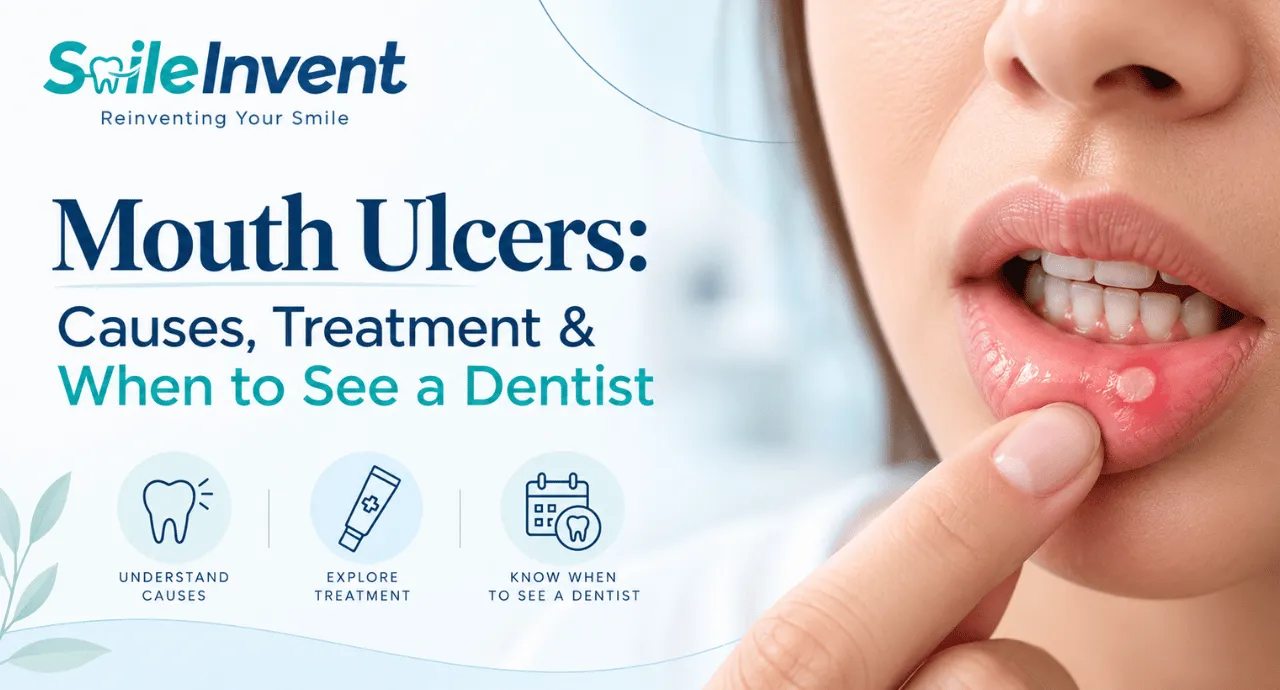


A mouth ulcer is a small, painful sore that develops inside the mouth. It can appear on the tongue, inside the cheeks, on the lips or along the gums. Even a small ulcer can make everyday activities like eating, drinking and brushing your teeth uncomfortable. You may notice a white or yellow centre with a red border, especially when the area gets irritated.
Mouth ulcers can develop for different reasons, such as accidentally biting your cheek, irritation from braces, stress or certain nutritional deficiencies. Most common mouth ulcers heal on their own, but the pain can make daily life difficult until they do. Knowing the possible mouth ulcer causes, how to manage the discomfort and when to seek dental advice can help you take the right steps.
What Is a Mouth Ulcer?
A mouth ulcer is a painful sore that develops inside the mouth. It can appear on the tongue, inside the cheeks, on the inner lips, on the gums or under the tongue. Most common mouth ulcers look like small, round sores with a white or yellow centre and a red border. They may cause pain while eating, drinking, brushing your teeth or speaking.
Mouth ulcers can develop for different reasons. You may get one after accidentally biting your cheek, brushing too hard or irritating your mouth with braces or a sharp tooth. Some ulcers appear without any clear cause. Most minor mouth ulcers heal on their own within one to two weeks. But if an ulcer keeps coming back, becomes unusually large or does not heal, it is best to get it checked by a dentist.
What Causes Mouth Ulcers?
Mouth ulcers can develop for different reasons. Sometimes, they occur after a minor injury inside the mouth, while in other cases, stress, nutritional deficiencies or certain health conditions may be involved. Common causes include:
Accidental biting: Biting the inside of your cheek or tongue while eating can injure the soft tissues and lead to an ulcer.
Sharp teeth or dental appliances: A sharp tooth, braces or poorly fitting dentures can repeatedly irritate the inside of your mouth.
Stress: Emotional stress may trigger recurring mouth ulcers in some people.
Vitamin and mineral deficiencies: Low levels of vitamin B12, iron or folate may contribute to repeated ulcers.
Certain foods: Spicy, acidic or rough foods can irritate an existing ulcer and may trigger symptoms in some people.
Hormonal changes: Some people experience recurring mouth ulcers around certain stages of their menstrual cycle.
Medicines and health conditions: Certain medicines and underlying conditions can cause repeated mouth ulcers. A healthcare professional can help identify the possible reason.
If you frequently develop painful ulcers in the mouth, do not assume that one cause explains every episode. A dentist or doctor can assess recurring ulcers and recommend suitable treatment.
What Are the Symptoms of a Mouth Ulcer?
The most common symptom of a mouth ulcer is a painful sore inside the mouth. It may start as a small, tender spot and become more uncomfortable when you eat, drink or brush your teeth. The symptoms can vary depending on the size and location of the ulcer.
Common symptoms of a mouth ulcer include:
A white or yellow sore: The ulcer often has a white or yellow centre with a red border.
Pain and tenderness: The affected area may hurt when touched or rubbed.
Discomfort while eating: Spicy, salty and acidic foods may make the pain worse.
Pain while brushing: Brushing near the sore can cause irritation.
Difficulty speaking: Larger or painful ulcers may make talking uncomfortable.
Multiple sores: Some people develop more than one ulcer at the same time.
Swelling or redness: The tissue around the ulcer may look red or feel tender.
Most minor mouth ulcers heal on their own. If you also have a fever, severe pain, difficulty swallowing or ulcers that keep returning, seek advice from a dentist or doctor. An ulcer that lasts longer than three weeks should be checked.
What Are the Different Types of Mouth Ulcers?
Mouth ulcers can differ in size, appearance, pain and healing time. Common canker sores are generally grouped into three types: minor, major and herpetiform ulcers. Most are not serious, but knowing their differences can help you understand when a sore may need professional attention.
- Minor mouth ulcers: These are the most common type. They are usually small, round or oval sores with a white or yellow centre and a red border. They can cause mild to moderate pain, especially while eating spicy foods or brushing your teeth. Most minor ulcers heal within one to two weeks and usually do not leave scars.
- Major mouth ulcers: These ulcers are larger and deeper than minor ulcers. They can cause significant pain and make eating, drinking or speaking uncomfortable. They may take several weeks to heal and can sometimes leave scars. A dentist or doctor should assess large, persistent or unusually painful ulcers.
- Herpetiform ulcers: These appear as clusters of many tiny, painful sores inside the mouth. The sores may occur in groups and sometimes join together to form a larger ulcer. Despite the name, they are not caused by the herpes virus. They generally heal within one to two weeks.
Not every sore inside the mouth is a canker sore, and the appearance alone may not confirm its cause. If an ulcer lasts longer than three weeks, keeps returning or looks unusual, arrange an examination with a dentist or doctor.
How to Treat a Mouth Ulcer
The right mouth ulcer treatment depends on the cause, size and severity of the sore. Most minor mouth ulcers heal on their own, so treatment usually focuses on reducing pain and preventing further irritation. If an ulcer is caused by a sharp tooth, braces or another source of injury, a dentist can help identify and address the problem.
Common ways to manage a mouth ulcer include:
Mouth ulcer gels: Protective or pain relieving gels may help reduce discomfort while eating and speaking. Ask a pharmacist or dentist to recommend a suitable product.
Medicated mouth rinses: A dentist may recommend an antiseptic or other medicated rinse for certain ulcers.
Pain relief: If the pain is affecting your daily activities, a suitable pain reliever may help. Check with a healthcare professional or pharmacist before taking medication.
Treating the underlying cause: If recurring ulcers are linked to a nutritional deficiency or a health condition, a doctor may recommend tests and treatment. Supplements should only be taken when appropriate.
Dental treatment: If a sharp tooth or dental appliance keeps rubbing against the sore, a dentist can check it and suggest a suitable solution.
Avoid applying harsh substances directly to the ulcer, as they can irritate the tissue further. If the sore is unusually large, keeps returning or lasts longer than three weeks, arrange an examination with a dentist or doctor instead of relying only on home treatment.
Home Remedies for Mouth Ulcers
If you have a painful mouth ulcer, simple home care can help ease the discomfort while it heals. These remedies do not cure every type of ulcer, but they can reduce irritation and make eating and drinking more comfortable. The aim is to keep the affected area clean and avoid anything that makes the soreness worse.
Avoid applying aspirin, undiluted essential oils or other harsh substances directly to the ulcer, as these may damage or irritate the tissue. If you are looking for how to heal mouth ulcers naturally, remember that home care mainly helps manage discomfort while the ulcer heals. Most minor ulcers improve within one to two weeks. If the ulcer lasts longer than three weeks, keeps coming back or becomes increasingly painful, consult a dentist or doctor.
How Long Does a Mouth Ulcer Take to Heal?
The mouth ulcer healing time depends on the type of ulcer, its size and what caused it. Most minor mouth ulcers heal on their own within one to two weeks. The pain usually starts to ease as the sore heals, although some ulcers may take longer to disappear completely.
Here is a general guide to mouth ulcer healing time:
These timeframes are general estimates and may vary from person to person. Repeated irritation from sharp teeth, braces or certain foods may make an ulcer more uncomfortable or slow its recovery. Avoiding irritating foods and keeping your mouth clean can help you manage the sore while it heals.
If a mouth ulcer lasts longer than three weeks, keeps returning or becomes larger or more painful, get it checked by a dentist or doctor. A persistent ulcer may need further examination to identify its cause and rule out other conditions.
Why Do Mouth Ulcers Keep Coming Back?
Getting a mouth ulcer once in a while is common, but frequent ulcers can become frustrating, especially when they make eating or brushing your teeth painful. Recurrent mouth ulcers may develop because of repeated irritation inside the mouth, nutritional deficiencies, stress or certain health conditions. Sometimes, there is no clear cause, even after an examination.
Common reasons for recurring mouth ulcers include:
Repeated mouth injuries: Accidentally biting your cheek or rubbing the same area against a sharp tooth, braces or dentures can cause repeated sores.
Nutritional deficiencies: Low levels of vitamin B12, iron or folate may be linked to recurring ulcers.
Stress and lack of sleep: Some people notice more ulcers during stressful periods or when their sleep routine changes.
Food triggers: Certain acidic, spicy or other foods may trigger ulcers in some people.
Hormonal changes: Some people experience recurring ulcers around their menstrual cycle.
Underlying health conditions: Certain digestive, immune system or other health conditions can cause repeated mouth ulcers.
If you keep asking yourself, “Why do I keep getting mouth ulcers?”, note how often they appear, where they develop and whether anything seems to trigger them. A dentist or doctor may examine your mouth and recommend blood tests or further assessment if needed. Avoid taking vitamin supplements without advice, as treatment depends on the underlying cause.
When Should You See a Dentist for a Mouth Ulcer?
Most minor mouth ulcers heal on their own within one to two weeks. But if you have an ulcer that lasts longer than three weeks, keeps coming back, grows larger or becomes increasingly painful, you should see a dentist. You should also get it checked if the sore bleeds, makes eating or drinking difficult, or appears along with a persistent red or white patch or a lump inside your mouth.
A dentist will examine the ulcer, ask about your symptoms and medical history, and check for possible causes such as irritation from a sharp tooth or a dental appliance. If needed, they may recommend further tests or refer you to another healthcare professional. If you have severe difficulty swallowing or breathing, seek emergency medical care.
How Can You Prevent Mouth Ulcers?
You may not be able to prevent every mouth ulcer, but a few simple habits can reduce irritation and help protect the soft tissues inside your mouth. Good oral hygiene, gentle brushing and avoiding foods that trigger soreness can make a difference, especially if you often develop ulcers.
Here are some practical ways to lower the risk of mouth ulcers:
Brush gently: Use a soft toothbrush and avoid brushing too hard around sensitive areas.
Maintain good oral hygiene: Brush twice a day and clean between your teeth gently to keep your mouth clean.
Avoid trigger foods: If spicy, acidic, salty or crunchy foods irritate your mouth, limit them while the area heals.
Prevent mouth injuries: Eat carefully to avoid biting your cheeks or tongue. If a sharp tooth, braces or dentures repeatedly rub against your mouth, ask a dentist to check them.
Eat a balanced diet: Include a variety of nutritious foods to help meet your vitamin and mineral needs.
Manage stress: Try to maintain a regular sleep routine and make time for activities that help you relax.
Get recurring ulcers checked: If mouth ulcers keep returning, a dentist or doctor can help identify possible triggers or underlying causes.
Mouth Ulcer Treatment at Smile Invent Dental Clinic
If you have a painful mouth ulcer that keeps returning or does not heal, a dental examination can help identify the possible cause. At Smile Invent Dental Clinic in Bandra East, Mumbai, patients can get their oral health concerns assessed and receive guidance on suitable next steps. The dentist may check for irritation from sharp teeth or dental appliances and look for signs that suggest the need for further investigation.
If you are searching for a Dentist in Mumbai for recurring mouth ulcers or a sore that is taking too long to heal, do not rely only on home remedies. A dentist can assess the ulcer, recommend suitable care and refer you for further medical evaluation when needed. If you notice an ulcer lasting longer than three weeks, arrange an appointment for a proper examination.
FAQs
1. How can I cure a mouth ulcer quickly?
Most minor mouth ulcers heal on their own within one to two weeks. You can ease the pain by rinsing your mouth with warm salt water, drinking enough water, eating soft foods and avoiding spicy or acidic foods. There is no guaranteed instant cure.
2. Are mouth ulcers contagious?
Most common canker sores are not contagious and do not spread through kissing or sharing food. Cold sores are different because they are caused by the herpes simplex virus and can spread to other people.
3. Can vitamin deficiency cause mouth ulcers?
Yes. Low levels of vitamin B12, iron or folate can be linked to recurring mouth ulcers. If you frequently develop ulcers, consult a dentist or doctor to find out whether a deficiency or another health condition could be responsible.
4. What is the best treatment for mouth ulcers?
The right treatment depends on the cause and severity of the ulcer. Minor ulcers often need only simple home care, while painful or persistent ulcers may need medicated gels, mouth rinses or other treatment recommended by a healthcare professional.
5. Can stress cause mouth ulcers?
Stress may trigger mouth ulcers in some people, especially those who experience them repeatedly. Getting enough sleep and managing stress may help reduce triggers, but recurring ulcers can have other causes too.
6. What foods should I avoid with a mouth ulcer?
Avoid foods that irritate the sore, such as very spicy, salty, acidic, crunchy or very hot foods. Soft foods and cool drinks may be more comfortable until the ulcer heals.
7. Why do I keep getting mouth ulcers?
Recurring mouth ulcers may be linked to repeated injuries inside the mouth, stress, hormonal changes, nutritional deficiencies, certain medicines or underlying health conditions. If they keep returning, a dentist or doctor can help investigate the possible cause.
8. When should I see a dentist for a mouth ulcer?
See a dentist if an ulcer lasts longer than three weeks, becomes unusually large or painful, bleeds, or keeps coming back. Persistent sores should be examined to check for other possible conditions.
Conclusion
Mouth ulcers can make everyday activities like eating, drinking and speaking uncomfortable, but most minor ulcers heal on their own within one to two weeks. Simple steps such as gentle brushing, avoiding irritating foods and keeping your mouth clean can help ease discomfort while the sore heals. If you experience recurrent mouth ulcers or have a sore that lasts longer than three weeks, do not ignore it.
The right care starts with understanding the possible cause. If you are looking for a Dentist in Mumbai for a persistent or recurring mouth ulcer, Smile Invent Dental Clinic in Bandra East can help assess your oral health concerns and guide you on the next steps. Seek a dental examination if the ulcer is not healing or keeps returning.
This article is general information, not a diagnosis. For advice about your own teeth, book a consultation.