
Table of Contents
Do you wake up with a sore jaw, a headache, or sensitive teeth even though you felt fine when you went to bed? You may be grinding your teeth in sleep without even knowing it. This is called sleep bruxism, a type of bruxism in which a person unconsciously clenches or grinds their teeth while sleeping. Many people only notice the problem when a partner hears the grinding or a dentist spots signs of tooth wear during a checkup.
Occasional teeth grinding may not cause serious problems, but frequent grinding can put repeated pressure on your teeth and jaw. Over time, it may lead to worn enamel, tooth sensitivity, jaw soreness, headaches, or even cracked and damaged teeth. The good news is that teeth grinding at night can be managed, especially when the signs are noticed early. In this guide, we will look at what causes sleep bruxism, how to recognise it, how it can affect your teeth, and what treatment options can help protect your smile.
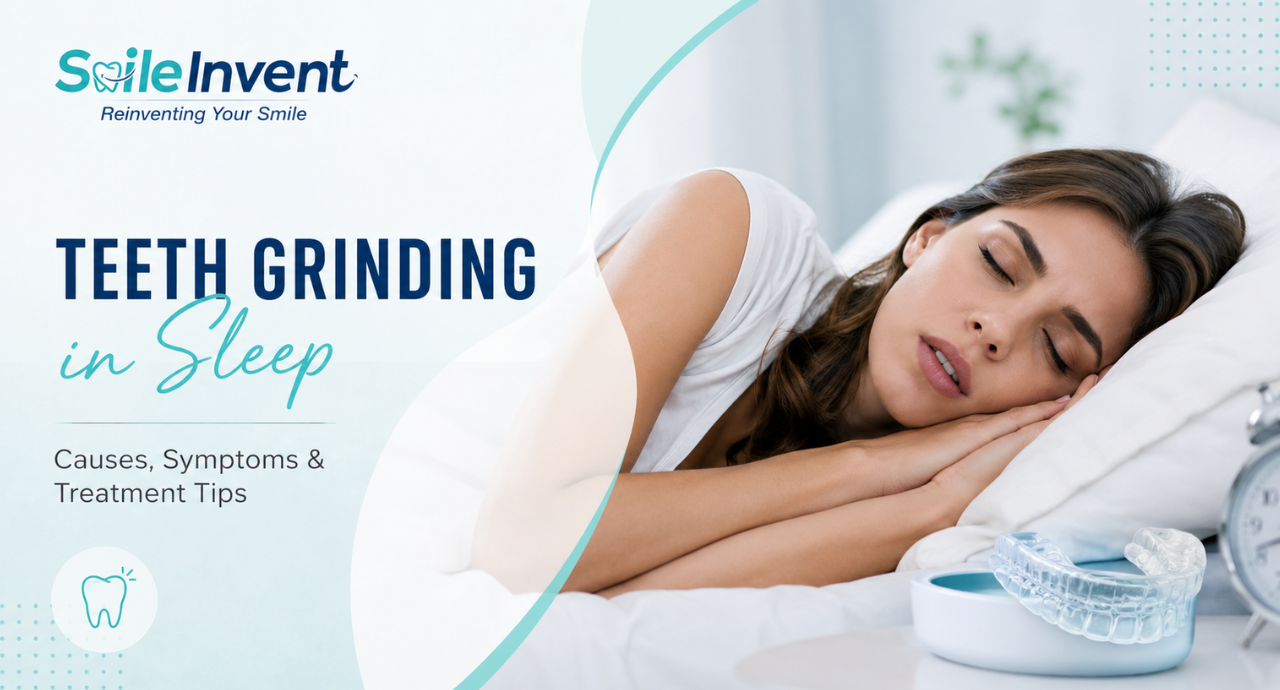
Teeth grinding in sleep, also called sleep bruxism, is a condition in which a person unconsciously grinds, rubs, or clenches their teeth while sleeping. Unlike normal chewing, this happens without conscious control. Some people make a noticeable grinding sound, while others mainly clench their jaw. Because it happens during sleep, many people do not realise they are doing it until they wake up with jaw soreness or a headache, or a partner notices the sound at night.
Bruxism can happen while a person is awake or asleep. Awake bruxism usually involves clenching the teeth, especially during periods of stress or concentration. If stress is a regular part of your day, it can also affect your mouth and jaw. You can learn more about this connection in our guide to stress and oral health. Sleep bruxism, on the other hand, happens while you are asleep and may go unnoticed for a long time. Frequent or forceful grinding can put extra pressure on the teeth and jaw, which may lead to tooth wear, sensitivity, jaw discomfort, headaches, or damage to existing dental work.
Teeth grinding in sleep can happen for different reasons, and sometimes there is more than one factor involved. Stress and anxiety are common triggers. If you go to bed feeling tense or worried, your jaw muscles may stay active during sleep. Poor sleep, certain medicines, caffeine, alcohol and tobacco use may also be linked with sleep bruxism. In some people, teeth grinding can also occur along with sleep related breathing problems such as obstructive sleep apnea.
Sleep bruxism can be difficult to notice because it happens while you are asleep. Some people only find out when their partner hears grinding sounds at night. Others notice changes after waking up, such as a sore jaw, headache or sensitive teeth. Your dentist may also spot signs of grinding during a routine dental checkup.
Common signs and symptoms include:
You may not have all of these symptoms, and some signs can be easy to miss. For example, you may not hear yourself grinding at night, but you could still be clenching your jaw while asleep. Over time, this repeated pressure can wear down the enamel, make your teeth more sensitive, or leave your jaw muscles sore and tired when you wake up. In some cases, the first sign of sleep bruxism is noticed by a dentist during a routine examination, such as unusual tooth wear, small cracks, or damage to an existing filling or crown.
Yes. Frequent teeth grinding in sleep can put much more pressure on your teeth than normal chewing. When this happens night after night, the outer enamel can slowly wear away. As the enamel becomes thinner, you may notice greater sensitivity when eating or drinking something hot, cold or sweet. Strong grinding can also cause small cracks, chips or changes in the shape of the teeth.
The effects are not limited to the teeth. Constant clenching can put extra strain on the jaw muscles and may lead to morning jaw soreness, facial pain or headaches. If you already have fillings, dental crowns or other dental work, repeated grinding can also put additional stress on them. In more advanced cases, significant tooth wear may require dental treatment to restore the damaged teeth.
Many people do not know they have sleep bruxism because the grinding happens while they are asleep. During a dental examination, a dentist can look for signs of teeth grinding in sleep, such as unusual tooth wear, flattened biting surfaces, small cracks, chips or increased sensitivity. The dentist may also check your jaw and facial muscles for tenderness or discomfort. If you have existing dental work, such as dental implants, fillings or crowns, they can also check for signs of excessive pressure or wear.
Your dentist may ask about your sleep, stress levels, medicines, caffeine and alcohol use, and whether someone has noticed you grinding your teeth at night. If you also have loud snoring, pauses in breathing or frequent waking, your dentist may suggest further evaluation for a sleep related problem. In some cases, a sleep study may be recommended to understand what is happening while you sleep.
There is no single treatment that works for everyone with sleep bruxism. The right approach depends on what may be triggering the grinding and whether it has already caused damage to your teeth or jaw. If stress is a factor, relaxing before bedtime, following a regular sleep routine and reducing caffeine in the evening may help. If you have jaw soreness, avoiding chewing gum and very hard foods for some time can also reduce extra strain on the jaw. These steps may help manage the problem, but they may not stop bruxism completely.
A custom night guard may be recommended when regular grinding is putting your teeth at risk. It creates a protective barrier between the upper and lower teeth and can help reduce the damage caused by repeated grinding. Some modern oral devices can also monitor jaw movement and grinding patterns while you sleep. You can learn more about these technologies in our guide to wearable oral devices for preventing dental issues.
Some habits may help reduce teeth grinding at night, especially when stress, poor sleep or certain lifestyle habits are contributing to the problem. Try keeping a regular sleep schedule, giving yourself some quiet time before bed and practising simple relaxation techniques. It can also help to reduce caffeine in the evening and avoid alcohol close to bedtime. If your jaw feels sore, avoid chewing gum or very hard foods for a while so the muscles get some rest. These steps may reduce triggers, but they should not be treated as a guaranteed cure for sleep bruxism.
Pay attention to what happens when you wake up. If you regularly have jaw pain, headaches, sensitive teeth or signs of worn enamel despite making these changes, it is worth speaking with a dentist. Persistent grinding can continue to put pressure on your teeth even when you do not notice it during sleep. A dentist can check for signs of damage and suggest ways to protect your teeth based on your symptoms.
Teeth grinding can also happen in children, especially during sleep. A child may grind their teeth without knowing it, and parents may first notice the sound at night or signs such as a sore jaw, headaches, tooth sensitivity or worn tooth surfaces.Regular pediatric dental care can also help identify changes in your child's teeth at an early stage. In some children, grinding may be temporary and can occur during different stages of dental development. Stress, changes in routine and certain sleep related problems may also be linked with sleep bruxism in children.
If your child grinds their teeth regularly, don't try to treat the problem with a mouthguard without first speaking with a dentist. A dentist can check whether the grinding is causing tooth wear or other problems and decide whether any treatment is needed. It is also useful to tell the dentist if your child snores, sleeps restlessly or frequently wakes during the night, as these details can help with the overall assessment.
You may not always know that you are grinding your teeth in sleep, so pay attention to the signs you notice after waking up. A sore or tight jaw, frequent morning headaches, tooth sensitivity, or pain while chewing can be reasons to get your teeth checked. You should also book a dental appointment if you notice flattened, chipped or cracked teeth, especially if these changes seem to be getting worse.
A dental visit is also a good idea if your partner regularly hears you grinding your teeth at night or if you wake up with jaw discomfort even though you have not injured your mouth. If you already have fillings, crowns or other dental work and notice new sensitivity or damage, a dentist can check whether sleep bruxism may be putting extra pressure on them. Early assessment can help identify the problem and protect your teeth before the damage becomes more serious.
If you regularly grind your teeth in sleep, Smile Invent Dental Clinic can help identify the signs of bruxism and check whether your teeth or jaw have been affected. During your visit, the dentist can examine your teeth for worn enamel, cracks, chips, sensitivity and other changes caused by repeated grinding. Your jaw muscles and bite can also be checked to understand how the grinding may be affecting your comfort.
Based on your symptoms and dental condition, the dentist may recommend ways to protect your teeth, such as a custom night guard. If grinding has already caused damage, treatments such as fillings, crowns or other restorative procedures may be considered. Smile Invent also offers different dental treatments under one roof, so your care can be planned according to the condition of your teeth rather than using the same approach for everyone.
If you are looking for a dentist in Mumbai for regular grinding, jaw discomfort or other dental concerns, Smile Invent Dental Clinic in Bandra East can assess your oral health and guide you towards suitable treatment. You do not have to wait for severe tooth pain before getting checked, especially if you are noticing signs of sleep bruxism.
Yes. Teeth grinding does not always produce a loud grinding noise. Some people mainly clench their teeth or make very small jaw movements while sleeping, so they may not realise they have sleep bruxism. A dentist may notice signs such as unusual tooth wear or jaw tenderness even when there is no obvious grinding sound.
Long term, frequent clenching can place extra strain on the jaw muscles. Some people may notice jaw soreness, facial muscle discomfort or changes in the appearance of the jaw muscles. Persistent jaw pain or changes in your bite should be checked by a dentist rather than assuming they are caused by bruxism alone.
Teeth grinding can place extra force on teeth and dental restorations. If you have dental implants, your dentist can check the implant, crown and surrounding tissues for signs of excessive pressure or wear. People who grind their teeth may need additional protection and regular dental monitoring depending on their individual situation.
A night guard mainly helps protect your teeth from the effects of grinding and clenching. It does not necessarily remove the underlying cause of bruxism or guarantee that you will stop grinding. A dentist can assess your teeth and jaw and recommend the type of appliance that is suitable for you.
There can be a connection between sleep bruxism and obstructive sleep apnea, but grinding your teeth does not automatically mean you have sleep apnea. If teeth grinding occurs along with loud snoring, pauses in breathing, gasping during sleep or significant daytime sleepiness, it is worth discussing these symptoms with a healthcare professional.
Often, yes. A dentist may look for patterns such as worn or flattened teeth, cracks, sensitivity, jaw muscle tenderness and changes to your bite. They may also ask about morning headaches, jaw discomfort and whether someone has noticed grinding sounds while you sleep.
It can change over time, and some people may have periods when they grind less. But if grinding is frequent or causing tooth wear, sensitivity or jaw pain, it should not simply be ignored. A dental examination can help determine whether your teeth need protection.
Teeth grinding in sleep, or sleep bruxism, can be easy to overlook because it happens when you are not aware of it. But regular grinding can gradually affect your teeth and jaw, leading to sensitivity, worn enamel, cracks, headaches or jaw discomfort. Paying attention to these signs can help you catch the problem before it causes more dental damage.
If you often wake up with jaw pain, headaches or sensitive teeth, or someone has noticed that you grind your teeth at night, consider getting your teeth checked. A dentist can identify signs of bruxism and recommend suitable ways to protect your teeth based on your needs. With the right care, sleep bruxism can be managed and your smile can stay healthy for years to come.
A swollen gum around one tooth can be uncomfortable and sometimes...
Read More
Walk into any supermarket or pharmacy and you will find toothpast...
Read More
Wearing braces can make your daily brushing routine a little more...
Read More