



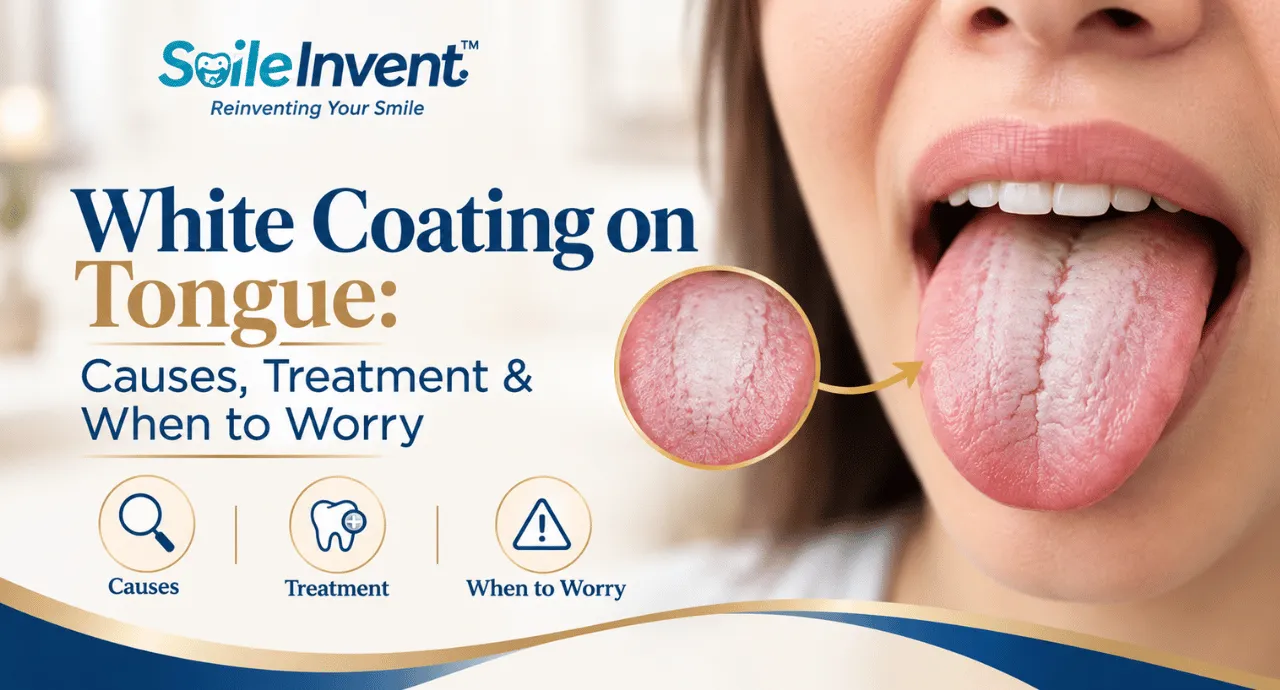




A white coating on the tongue can be easy to notice when you brush your teeth in the morning. Sometimes, it looks like a thin white layer. Other times, you may see thick white patches, notice bad breath, or feel that your mouth is not as fresh as usual. This can happen when bacteria, dead cells, and food particles collect on the tongue's surface.
A white tongue is often linked to dry mouth, poor oral hygiene, or not cleaning the tongue properly. In some cases, it may be caused by an oral infection or another condition that needs attention. Many cases improve with simple oral care, but if the coating does not go away, causes pain, or appears as a patch that does not clear with gentle cleaning, it is best to get it checked by a dental professional.
What Is a White Coating on the Tongue?
A white coating on the tongue is a layer that forms when dead cells, bacteria, and food particles collect between the tiny bumps on its surface. These bumps are called papillae. They help you taste food and give the tongue its slightly rough texture. When debris builds up around them, your tongue may look white instead of its usual pink colour. This is often called a white coated tongue.
A thin white layer that improves after brushing your teeth and gently cleaning your tongue is usually linked to everyday buildup. But white patches on the tongue that do not clear with gentle cleaning may have a different cause, such as an oral condition that needs examination. The appearance alone cannot confirm what is causing it, so pay attention to how long it lasts and whether you have pain, burning, or other symptoms.
What Causes a White Coating on the Tongue?
A white coating on the tongue can develop for several reasons. In many cases, it happens when bacteria, dead cells, and food debris collect on the tongue because of poor oral hygiene or inadequate tongue cleaning. Not drinking enough water can also lead to a dry mouth, making this buildup more noticeable. Mouth breathing, especially during sleep, may contribute to the problem because it can dry out the mouth.
Other causes include smoking, tobacco use, and certain medicines that reduce saliva or change the balance of microorganisms in the mouth. Sometimes, a white tongue is linked to oral thrush, a fungal infection that may cause creamy white patches and soreness. Conditions such as leukoplakia can also cause white patches that do not rub off easily. These conditions need professional assessment, so it is best not to assume every white patch is caused by poor oral hygiene.
What Are the Symptoms of a White Tongue?
The most noticeable symptom is a white layer on the tongue that may cover part or most of its surface. It can look thin and light in some people, while others may notice a thick white coating or separate white patches. You may also notice that your tongue feels rough, your mouth feels dry, or your breath is unpleasant. These symptoms can be more noticeable when you wake up in the morning.
Some people have no discomfort at all, while others may experience soreness, a burning feeling, an unpleasant taste, or sensitivity when eating. These symptoms can vary depending on the cause. If the white coating comes with pain, bleeding, difficulty swallowing, or patches that do not clear with gentle cleaning, arrange a dental checkup rather than trying to scrape the coating away.
Why Do I Have a Thick White Coating on My Tongue?
A thick white coating on the tongue can develop when bacteria, dead cells, and food particles build up on its surface. Poor tongue cleaning, dehydration, and dry mouth can make the coating more noticeable. You may see a thicker layer when you wake up, especially if you sleep with your mouth open or breathe through your mouth at night.
Check how the coating changes with gentle cleaning. If it starts to clear, it may be ordinary buildup. But if the thick white layer persists despite good oral care, keeps returning, or comes with soreness, burning, or patches that do not wipe away, visit a dentist. Avoid scraping your tongue forcefully because it can irritate the surface.
Can a White Tongue Cause Bad Breath?
Yes, a white tongue can contribute to bad breath. Bacteria, dead cells, and food particles can collect between the tiny bumps on your tongue. As they build up, they may produce unpleasant smells. You might notice white tongue and bad breath together, especially when you wake up in the morning or have a dry mouth.
Gentle tongue cleaning can help reduce this buildup. Brush your teeth twice a day, clean your tongue with a soft toothbrush or tongue scraper, and drink enough water throughout the day. If bad breath continues even after you maintain good oral hygiene, or if the white coating comes with pain or persistent patches, consult a dentist to find the cause.
How to Get Rid of a White Coating on the Tongue
A white coating on the tongue often improves with gentle cleaning and good oral care. You do not need to scrub your tongue hard or use strong products to remove it. Try these simple steps as part of your daily routine.
Clean your tongue gently: Use a soft toothbrush or tongue scraper once a day. Start at the back of your tongue only as far as comfortable, then move forward with light pressure.
Drink enough water: Sip water throughout the day to help prevent dry mouth and reduce buildup.
Brush your teeth twice a day: Use fluoride toothpaste and clean between your teeth daily to remove food particles and plaque.
Avoid tobacco: Smoking and chewing tobacco can affect your oral health and contribute to changes in your mouth.
Keep dentures clean: If you wear dentures, clean them daily and follow your dentist’s instructions for care.
These steps may help if the coating is caused by everyday buildup or dry mouth. If it does not improve, keeps returning, or comes with pain or persistent white patches, see a dentist. Avoid trying home remedies that burn or irritate your tongue, and do not use antifungal medicines unless a healthcare professional recommends them.
Does a White Tongue Need Medical Treatment?
A white tongue does not always need medical treatment. If the coating is caused by food debris, dead cells, or a dry mouth, gentle tongue cleaning, regular brushing, and drinking enough water may help. The coating should gradually improve with good oral care. Still, home care may not solve the problem if an infection or another oral condition is responsible.
A dentist can examine your tongue, ask about your symptoms and medicines, and recommend treatment based on the cause. For example, oral thrush may require antifungal medicine, while other persistent white patches may need further examination. Do not try to scrape off stubborn patches or start medication on your own. If the white coating continues despite good oral care, or you notice pain, bleeding, or difficulty swallowing, arrange a professional checkup.
White Coating on Tongue: When Should You Worry?
A white coating on the tongue is often harmless, but certain changes should not be ignored. If the coating does not improve with gentle cleaning and good oral care, or if it keeps coming back, arrange a dental checkup. Pay attention to white patches that do not wipe away easily, especially if they remain in the same area. A dentist can examine them and determine whether further tests or treatment are needed.
See a dentist if you notice any of these signs:
White patches that last for more than two weeks
Pain, burning, soreness, or bleeding on the tongue
Patches that do not clear with gentle cleaning
A lump or a persistent change in the tongue's appearance
Difficulty swallowing or speaking
If you have severe difficulty swallowing or breathing, seek urgent medical care. Do not assume that a persistent white patch is simply a buildup of bacteria. Early assessment can help identify the cause and ensure you receive the right care.
How Can You Prevent a White Coated Tongue?
Good daily oral care can help prevent the buildup that causes a white coated tongue. Along with brushing your teeth, make tongue cleaning part of your routine. You do not need to scrub hard. Gentle cleaning, enough water, and regular dental checkups can help keep your mouth clean and comfortable.
Here are a few habits to follow:
Clean your tongue daily: Use a soft toothbrush or tongue scraper gently.
Brush twice a day: Use fluoride toothpaste and clean between your teeth every day.
Stay hydrated: Drink water regularly, especially if your mouth often feels dry.
Avoid tobacco: Smoking and chewing tobacco can harm your oral health.
Clean dentures properly: Remove and clean them as advised by your dentist.
Get regular dental checkups: Seek advice if the coating persists or keeps returning.
These habits can help reduce everyday buildup, but they may not prevent every cause of a white tongue. If you notice persistent white patches, pain, or other unusual changes, have your tongue examined by a dental professional.
How Smile Invent Dental Clinic Can Help
A white coating on the tongue may be caused by simple buildup, dry mouth, an infection, or another oral condition. If it does not improve with regular oral care, a dental examination can help identify the cause. Your dentist will check the appearance of your tongue, ask about your symptoms, and suggest the right treatment or further evaluation if needed. Avoid self diagnosing or using medicines without professional advice.
If you have a persistent white coating, unusual patches, soreness, or ongoing bad breath, Smile Invent Dental Clinic can help you understand what may be causing the problem. If you are looking for a dentist in Mumbai, you can visit Smile Invent Dental Clinic in Bandra East for an oral health assessment and personalised guidance.
FAQs
1. Is a white coating on the tongue normal?
A thin white coating can be normal and may result from bacteria, dead cells, and food particles collecting on the tongue. If the coating becomes thick, persists, or comes with pain or unusual patches, get it checked by a dentist.
2. How do I get rid of white stuff on my tongue?
Brush your teeth twice a day and gently clean your tongue with a soft toothbrush or tongue scraper. Drink enough water and avoid smoking or chewing tobacco. If the coating does not improve with regular care, consult a dentist.
3. Can dehydration cause a white tongue?
Yes. Dehydration can reduce saliva, allowing bacteria and dead cells to collect on the tongue. Drinking water regularly may help if dehydration is the cause, but a persistent white coating may need professional assessment.
4. Does a white tongue always mean oral thrush?
No. A white tongue can result from poor oral hygiene, dry mouth, mouth breathing, or other causes. Oral thrush is one possibility, especially when creamy white patches occur with soreness or redness. A dentist or doctor can help identify the cause.
5. Why is my tongue still white after brushing?
Your tongue may remain white because of dry mouth, mouth breathing, or buildup that needs gentle cleaning. Sometimes, the cause is an oral condition rather than ordinary debris. Avoid forceful scraping, and seek advice if the coating persists despite good oral care.
6. When should I see a dentist for a white tongue?
See a dentist if the white coating lasts more than two weeks, does not clear with gentle cleaning, or comes with pain, bleeding, a lump, or difficulty swallowing. Persistent patches deserve examination, particularly if you use tobacco. Seek urgent care for severe difficulty swallowing or breathing.
Conclusion
A white coating on the tongue is often caused by a buildup of bacteria, dead cells, and food particles. Good oral hygiene, gentle tongue cleaning, and drinking enough water may help reduce it. But if the coating persists, does not clear with gentle cleaning, or comes with pain or unusual patches, do not ignore it. A dental examination can help identify the cause and guide the right treatment.
If you notice a white coating on tongue that does not improve with regular care, consult a dental professional for advice. Smile Invent Dental Clinic in Bandra East, Mumbai, can help assess your oral health and guide you on the next steps.
This article is general information, not a diagnosis. For advice about your own teeth, book a consultation.