
Table of Contents
If your day doesn’t start without tea or coffee, you’re not alone. For many people, caffeine is part of their daily routine. A cup in the morning, one at work, maybe another in the evening feels normal. But at some point, a small doubt pops up. Why do my teeth look dull? Why are they turning yellow even though I brush daily?
That’s where the question comes in, is caffeine bad for your teeth?
Tea and coffee don’t damage teeth overnight, but regular intake can slowly affect your smile. From stains to enamel issues, caffeine can cause problems if oral care is ignored. The good part is that most of these issues are preventable and treatable.
In this guide, we’ll break down how caffeine affects your teeth, what problems it can cause, and what you can do to protect your smile without asking you to quit your favorite drink.
Caffeine itself is not the biggest problem for your teeth. The real trouble comes from what usually comes with it. Tea and coffee are dark in color, slightly acidic, and often consumed multiple times a day. That combination slowly affects oral health.
One common issue is dry mouth. Caffeine can reduce saliva flow. Saliva protects teeth by washing away food particles and acids. When the mouth stays dry for long hours, bacteria get more time to damage teeth and gums. This also increases the chances of plaque buildup, which can harden over time if not removed properly. Many people do not realise that once plaque turns into tartar, brushing alone cannot remove it. In such cases, professional dental cleaning is required. You can learn more about this in our blog on how to remove tartar from teeth.
Tea and coffee also contain compounds that stick to the tooth surface. Over time, these compounds settle into the enamel and cause discoloration. That is why regular tea and coffee drinkers often notice yellow or brown stains.
Another concern is acidity. Frequent exposure to acidic drinks can weaken enamel. Once enamel becomes thin, teeth look dull and feel sensitive. At that stage, even hot or cold drinks can cause discomfort.
So while caffeine is not directly harmful like sugar, regular intake without proper oral care can slowly harm your teeth and gums.
Drinking tea or coffee daily may feel harmless, but over time it can affect both teeth and gums. These problems usually develop slowly, which is why many people ignore the early signs.
Tea and coffee contain dark pigments that stick to the tooth surface. Even with regular brushing, these stains can build up and make teeth look yellow or patchy. This is one of the most common complaints among tea and coffee lovers.
Caffeine reduces saliva production. Saliva helps keep the mouth clean and fresh. When the mouth stays dry for long hours, bacteria grow faster, leading to bad breath.
Tea and coffee are mildly acidic. Frequent intake can weaken the outer layer of teeth. As enamel becomes thinner, teeth may start reacting to hot tea, cold coffee, or even normal temperature water. Many people notice this sensitivity even after dental treatments like fillings. If this sounds familiar, you can read more about the causes and solutions in our detailed blog on tooth sensitivity after filling.
Plaque buildup around the gum line can irritate the gums. This may cause redness, swelling, or bleeding while brushing. If ignored, gum problems can slowly become more serious.
A dry mouth combined with staining compounds makes it easier for plaque to stick to teeth. Over time, this plaque hardens into tartar, which cannot be removed by brushing alone and needs professional dental cleaning.
Coffee is one of the most common causes of tooth staining because it contains tannins that stick to the enamel. However, you don’t necessarily have to stop drinking coffee to keep your teeth looking bright. By following a few simple habits, you can reduce the chances of stains.
Drinking a glass of water after coffee helps wash away pigments and acids that can stick to your teeth and cause discoloration.
Sugar in coffee increases the risk of cavities and plaque buildup, which can make staining worse
Sipping coffee throughout the day exposes your teeth to staining compounds for a longer time. Finishing it in one sitting reduces contact with enamel.
Coffee is acidic, which can temporarily soften tooth enamel. Dentists recommend waiting about 30 minutes before brushing to avoid damaging the enamel.
Brushing twice a day, flossing regularly, and visiting your dentist for professional teeth cleaning can help prevent stains caused by coffee and tea.
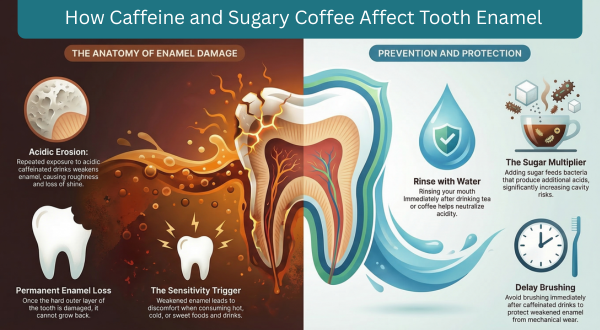
Enamel is the hard outer layer that protects your teeth. Once it gets damaged, it does not grow back. This is why enamel care is very important, especially for people who drink tea or coffee daily.
Caffeinated drinks are slightly acidic. When teeth are exposed to acids again and again, enamel slowly starts to weaken. At first, the change is not very noticeable. Teeth may look less shiny or feel slightly rough.
With time, weak enamel makes teeth more sensitive. You may feel discomfort while drinking hot tea, cold coffee, or even while eating sweet foods. In some cases, enamel damage also makes teeth more prone to staining, as the surface becomes rough and absorbs color more easily.
Adding sugar to tea or coffee can make things worse. Sugar feeds bacteria in the mouth, which produce acids that further damage enamel. This combination of acid and sugar increases the risk of cavities.
Good oral habits can help reduce enamel damage. Rinsing your mouth with water after tea or coffee and avoiding brushing immediately after drinking can protect enamel from further wear.
Caffeine stains can be treated effectively with the right dental care. The treatment depends on how deep the stains are and the overall condition of your teeth.
Scaling and polishing help remove surface stains caused by tea and coffee. This is often the first step and can visibly brighten teeth after a single visit.
When stains are deeper, whitening may be recommended. It helps lighten tooth color and improves the overall look of your smile when done safely by a dentist.
These toothpastes can help with mild surface stains. They work slowly and should not be overused, as frequent use may increase tooth sensitivity.
If stains are severe or enamel is already weak, a dentist may suggest other suitable cosmetic options. A proper check-up helps choose the safest treatment.
You don’t need to stop drinking tea or coffee to keep your teeth healthy. Small daily habits can help reduce staining and protect enamel in the long run.
Rinse your mouth with water after tea or coffeeSwishing plain water helps remove leftover pigments and acids. This simple step reduces the chances of stains settling on your teeth.
Tea and coffee make teeth slightly soft because of their acidity. Brushing immediately can damage enamel. Waiting for about 30 minutes allows enamel to harden again.
Sugar feeds harmful bacteria in the mouth. These bacteria produce acids that damage enamel and increase cavity risk. Drinking tea or coffee with less sugar is much better for your teeth.
A straw limits contact between the drink and your teeth. This helps lower the risk of staining, especially for people who drink cold coffee often.
Brushing twice a day and cleaning between teeth removes plaque that makes stains more visible. Good oral hygiene also protects gums
Professional cleanings remove early stains and plaque before they turn into bigger problems. Regular visits are especially important for daily caffeine drinkers.
There are many beliefs around tea and coffee when it comes to dental health. Some are true, while others are just myths. Let’s clear up a few common ones.
Myth: Coffee and tea always damage teeth
Tea and coffee do not automatically harm teeth. Problems usually start when they are consumed frequently without proper oral care.
Myth: Only coffee causes stains, not tea
Tea can stain teeth just as much as coffee. In some cases, tea stains are even harder to remove because they bind strongly to enamel.
Myth: Brushing harder removes coffee stains
Brushing aggressively can damage enamel and make stains worse over time. Gentle brushing with the right technique works better.
Myth: Whitening toothpaste can remove all stains
Whitening toothpaste helps with light surface stains only. Deep caffeine stains often need professional dental cleaning or whitening treatment.
Myth: Switching to herbal tea prevents staining completely
Some herbal teas can still stain teeth. Color and frequency matter more than whether the drink contains caffeine.
At Smile Invent Dental Clinic, dental care is not just about treating problems, but also about helping patients understand and prevent them. Many patients visit us with concerns about tooth stains caused by regular tea or coffee intake.
Our team focuses on identifying the real cause of staining before suggesting any treatment. Every smile is different, so treatment plans are based on the condition of your teeth, enamel health, and daily habits. We use safe and effective methods for stain removal, including professional cleaning and dentist-supervised whitening. The goal is always to improve your smile without harming enamel or causing sensitivity.
Patients also receive clear guidance on how to maintain results at home. Simple advice on brushing habits, diet, and follow-up care helps prevent stains from coming back.
With modern equipment, experienced dentists, and a patient-first approach, Smile Invent Dental Clinic aims to provide comfortable, reliable, and long-lasting dental care for tea and coffee lovers.
Caffeine alone does not weaken teeth, but drinks like tea, coffee, and energy drinks are acidic. Frequent exposure to acid can slowly weaken enamel, especially if oral care is poor.
Reducing coffee intake can help lower staining and sensitivity, but quitting is not always necessary. Good oral hygiene and regular dental cleaning can protect teeth even if you drink coffee daily.
Not always. Tea can stain teeth as much as coffee, and sometimes even more. Both can affect teeth if consumed frequently without proper care.
Whitening toothpaste can help with mild surface stains. It cannot remove deep caffeine stains. Overuse may also cause sensitivity, so dental advice is recommended.
Yes. Energy drinks are usually more acidic and contain high sugar levels. They can damage enamel faster and increase the risk of cavities compared to tea or coffee.
No. Teeth are softer after acidic drinks. It is better to wait at least 30 minutes before brushing to avoid enamel damage.
So, is caffeine bad for your teeth? Not directly. But regular tea and coffee habits can slowly affect your smile if oral care is ignored. Staining, sensitivity, and enamel wear usually build up over time, not overnight.
The good news is that you do not have to give up your favorite drink. Simple habits like proper brushing, reducing sugar, rinsing your mouth after tea or coffee, and regular dental visits can help protect your teeth.
If stains or sensitivity have already started, early dental care makes treatment easier and safer. Professional cleaning and the right guidance can restore your smile without damaging enamel.
With the right daily care and awareness, tea and coffee can remain part of your routine without harming your teeth or smile.
A swollen gum around one tooth can be uncomfortable and sometimes...
Read More
Walk into any supermarket or pharmacy and you will find toothpast...
Read More
Wearing braces can make your daily brushing routine a little more...
Read More