
Table of Contents
Missing teeth can change more than just your smile. You may find it harder to chew your food, speak clearly, or even feel confident while talking to others. Many people ignore it at first, but over time, the gap can cause nearby teeth to shift and create more dental problems.
That’s where a dental bridge for missing teeth becomes useful. It helps fill the gap and brings your smile back to normal. If you’re wondering what is a dental bridge and whether it’s the right option for you, this guide will explain everything in a simple way.
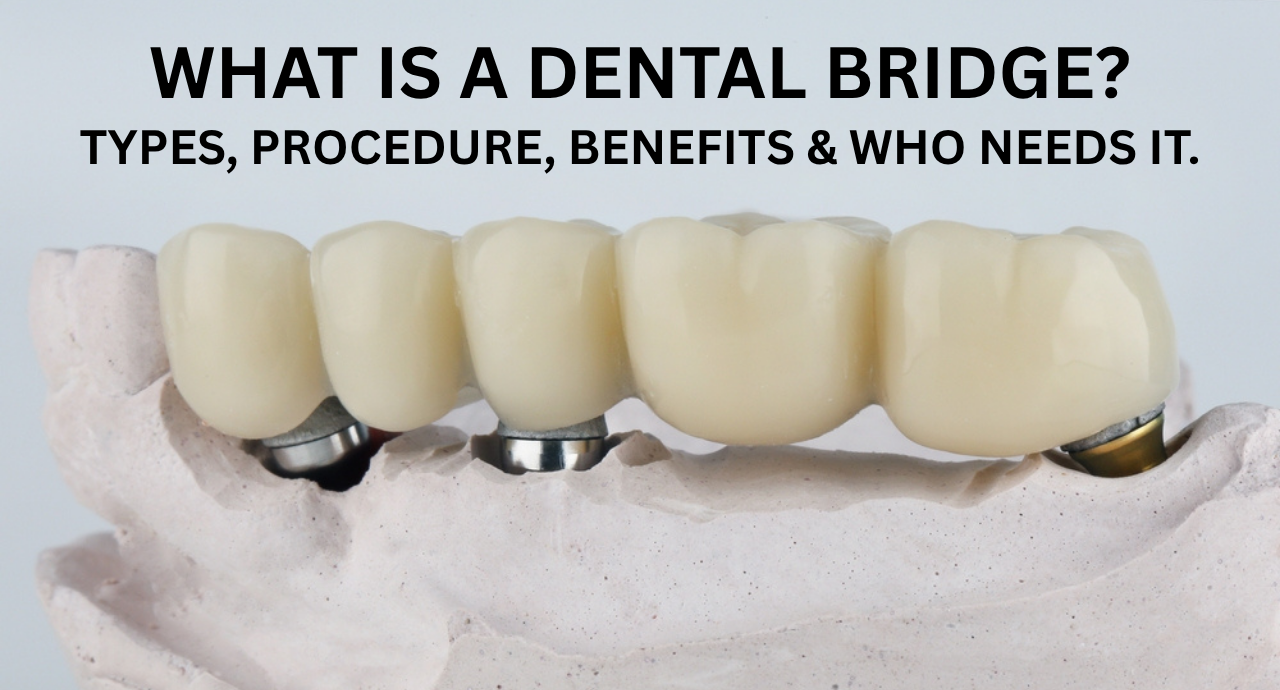
A dental bridge is a fixed dental solution used to replace one or more missing teeth. It fills the gap using an artificial tooth that is supported by the nearby teeth or implants. Once placed, it stays in position and looks quite natural, so you can smile and eat without worry.
In many cases, a dental bridge is part of a complete smile improvement plan. Dentists often combine it with treatments like Digital Smile Design to plan the final look of your smile. Depending on your condition, other options like dental implants, veneers, or teeth whitening may also be suggested to get the best overall result.
You may need a dental bridge for missing teeth when you have one or more gaps in your smile. Even a single missing tooth can make chewing difficult and affect the way you speak. Over time, the nearby teeth may start shifting into the empty space, which can lead to bite problems and uneven teeth.
A dental bridge is usually suggested when the surrounding teeth are strong enough to support it or when implants are not the right choice for you. It’s a good option if you want a fixed solution that feels natural and stays in place. If you are looking for a removable option, you can also explore dentures for missing teeth, which work differently but help restore your smile.
Not every dental bridge is the same. The type of bridge used depends on how many teeth are missing, the condition of the nearby teeth, and what kind of support is available. Some bridges rely on natural teeth, while others are supported by implants.
If you are considering a dental bridge treatment, your dentist will suggest the right option based on your needs and the long-term result you’re looking for. Below are the most common types of dental bridges used to replace missing teeth.

This is the most common type. It uses crowns on the teeth next to the gap to support the artificial tooth in between. It works well when you have strong natural teeth on both sides of the missing tooth.
This type is used when there is only one supporting tooth next to the gap. It is less commonly used because it puts more pressure on a single tooth, but it can still be helpful in certain cases.
This bridge uses a metal or ceramic framework that is attached to the back of nearby teeth instead of placing crowns. It is a more conservative option because it doesn’t require much tooth trimming, but it may not be as strong as other types.
This is a more advanced option where the bridge is supported by dental implants instead of natural teeth. It is strong, stable, and long-lasting. In many cases, it is planned along with Digital Smile Design to achieve better fit and a more natural-looking smile.
Dental bridges can be made from different materials, and the choice depends on strength, appearance, and your budget. The goal is to make the bridge look natural while also being strong enough for daily use.
Porcelain is one of the most commonly used materials. It looks very similar to natural teeth, which makes it a great choice for front teeth. It blends well with your smile.
Ceramic bridges are also tooth-colored and give a natural look. They are metal-free and a good option for people who prefer a more aesthetic finish.
This type combines strength and appearance. The metal inside provides durability, while the porcelain outside gives a natural look. It is often used for back teeth where strength is important.
Zirconia is a strong and modern material. It is durable, long-lasting, and also looks natural. Many patients prefer it because it offers both strength and aesthetics.
The dental bridge procedure is usually completed in 2–3 visits. It is a simple and well-planned treatment where your dentist focuses on both function and appearance, so your new teeth feel natural and comfortable.
In the first visit, the dentist checks your teeth and gums carefully. X-rays or digital scans may be taken to understand the gap and the health of nearby teeth. In some cases, planning may also include Digital Smile Design to get a clear idea of how your final smile will look.
The teeth next to the gap are gently shaped to make space for crowns. This step is done under local anesthesia, so you don’t feel pain. These teeth will act as support for the bridge.
After preparation, an impression or digital scan is taken. This helps create a custom-made bridge that fits properly with your bite and matches your natural teeth.
A temporary bridge is placed to protect the prepared teeth. It also helps you eat and speak normally while your final bridge is being made in the lab.
In the next visit, the permanent bridge is fixed in place. The dentist checks the fit, bite, and comfort before securing it. Once done, your dental bridge for missing teeth will look natural and function like your real teeth.
A dental bridge is not just about filling a gap. It helps restore normal function of your teeth and supports your overall oral health. From eating comfortably to maintaining proper alignment, it plays an important role in daily life.
Below are some key benefits of choosing a dental bridge for missing teeth.
Missing teeth can make it hard to bite or chew certain foods. A dental bridge for missing teeth fills that gap, so you can eat more comfortably and avoid putting extra pressure on one side of your mouth.
Gaps in teeth can affect how you pronounce certain words. A dental bridge helps support proper tongue placement, which makes your speech clearer and more natural.
When a tooth is missing, nearby teeth may slowly move into the empty space. This can lead to alignment issues and bite problems. A dental bridge keeps surrounding teeth in place and helps maintain proper spacing.
Teeth play an important role in supporting your facial shape. Missing teeth can sometimes cause a slight sunken look over time. A dental bridge helps maintain that support and keeps your face looking balanced.
Dental bridges are designed to match the color, size, and shape of your natural teeth. When done properly, they blend well with your smile and are not easily noticeable.
Unlike removable options, a dental bridge stays fixed in your mouth. This makes it easier to eat, speak, and go about your daily routine without worrying about movement or discomfort.
While a dental bridge is a reliable option for replacing missing teeth, it also has some limitations. Knowing these can help you make the right decision based on your needs and long-term expectations.
The teeth next to the gap are shaped to hold the bridge. This means some amount of natural tooth structure is removed.
A dental bridge can last many years, but it is not permanent. It may need replacement over time depending on care and usage.
If not cleaned properly, food can get trapped around the bridge, which may lead to cavities or gum problems.
If the supporting teeth are weak or unhealthy, a dental bridge may not be the best option.
Unlike implants, a bridge does not replace the root of the tooth, which means it may not prevent bone loss in the long term.
Many people worry about pain before getting a dental bridge procedure, but the process is usually comfortable. The tooth preparation step is done under local anesthesia, so you don’t feel pain during the treatment. You may feel slight pressure, but it is manageable.
After the procedure, some mild sensitivity or discomfort is normal for a few days, especially while eating hot or cold foods. This usually settles on its own as your mouth adjusts to the bridge.
If needed, your dentist may suggest simple medication to manage discomfort. Most patients return to their normal routine quickly and get used to the dental bridge within a short time.
A dental bridge can last anywhere from 5 to 15 years, and in many cases even longer with proper care. Its lifespan depends on how well you maintain your oral hygiene and the condition of the supporting teeth.
Regular brushing, flossing, and dental check-ups play a big role in keeping the bridge in good condition. Avoiding very hard or sticky foods can also help prevent damage. The stronger and healthier the surrounding teeth are, the better support the bridge will have over time.
With the right care and regular visits to your dentist, a dental bridge can remain stable and functional for many years.
A dental bridge is one of the common ways to replace missing teeth, but it is not the only option. Other treatments like dental implants and dentures are also used, depending on your dental condition and needs.
A dental bridge uses nearby teeth for support, while implants are placed directly into the jawbone. Implants are more long-lasting and help prevent bone loss, but they may require surgery and more time. A bridge is quicker and does not involve surgery, so it suits many patients.
Dentures are removable, while a dental bridge is fixed in place. Bridges feel more stable and natural during daily use. Dentures, on the other hand, can be a better option if multiple teeth are missing or if supporting teeth are not strong enough.
The right choice depends on your oral health, comfort, and long-term goals. Your dentist will guide you on which option works best for your situation.
A dental bridge is not just about filling a gap. It also needs to match your face, smile line, and natural teeth. That’s where Digital Smile Design helps. It allows the dentist to plan your smile in advance using digital images and measurements.
With this approach, the shape, size, and position of the bridge can be decided before the treatment starts. This helps avoid guesswork and gives a more balanced and natural-looking result.
It also makes it easier for you to understand how your smile will look after the treatment. So, when a dental bridge is planned with Digital Smile Design, the final result usually looks more accurate and well-matched to your overall appearance.
If you are dealing with missing teeth, getting the right treatment at the right time can make a big difference. At Smile Invent Dental Clinic, the focus is on simple, practical solutions that suit your dental condition and comfort.
Whether you need a dental bridge for missing teeth or want to explore other options, the team helps you understand what works best for you. Treatments are planned carefully so that your smile looks natural and feels comfortable in daily life.
If you are unsure about your condition, you can get expert dental care at Smile Invent Dental Clinic to explore the right treatment options and take the next step toward a healthier smile.
A dental bridge can last around 5 to 15 years, sometimes longer with good care. Regular brushing, flossing, and dental check-ups help increase its life.
Both have their benefits. A bridge is quicker and does not involve surgery, while an implant is more long-lasting and supports the jawbone. The right option depends on your dental condition.
Yes, once you get used to it, you can eat most foods normally. It’s better to avoid very hard or sticky foods to keep the bridge safe.
Not always. A root canal is only needed if the supporting tooth is damaged or infected. Your dentist will decide based on your condition.
A fixed bridge feels more stable and natural, while dentures are removable and may suit cases where multiple teeth are missing. The best choice depends on your needs and comfort.
A dental bridge is a simple and effective way to replace missing teeth and restore your smile. It helps improve chewing, speech, and overall comfort, while also preventing future dental issues caused by gaps.
If you’re still wondering what is a dental bridge, it is a fixed solution that fills the gap using artificial teeth supported by nearby teeth or implants. With proper care and the right treatment plan, it can last for many years and feel just like your natural teeth.
If you have missing teeth and are not sure which option is right for you, it’s always better to consult a dentist and understand your choices clearly.

Walk into any supermarket or pharmacy and you will find toothpast...
Read More
Wearing braces can make your daily brushing routine a little more...
Read More
Have you ever noticed a small white mark on your tooth while look...
Read More