
Table of Contents
Most people never think about how they breathe. We simply breathe without paying attention to whether the air goes through the nose or the mouth. But this small habit can make a bigger difference than you might expect. While breathing through your mouth during a cold or after exercise is normal, relying on it every day can affect your oral health over time. A person who regularly breathes through their mouth, often called a mouth breather, may be more likely to experience dry mouth, bad breath, tooth decay, gum problems, and even changes in the way the teeth and jaws develop.
When comparing mouth breathing vs nose breathing, the nose is designed to do much more than just let air in. It filters dust and allergens, warms the air before it reaches the lungs, and helps keep the mouth naturally moist. Mouth breathing does not provide these benefits. In children, long term mouth breathing may also influence jaw development and dentofacial and craniofacial development, especially if it continues while the face and jaws are still growing. Adults can also face dental problems because of chronic mouth breathing, particularly if they often wake up with a dry mouth or struggle because they can't breathe through the nose.
This guide explains the difference between a mouth breather vs nose breather, the common causes of mouth breathing, its effects on your teeth and gums, and the treatment options available. If you have noticed that you or your child mostly breathes through the mouth instead of the nose, understanding the reason behind it is the first step toward protecting your oral health.
Mouth breathing happens when a person breathes mainly through the mouth instead of the nose. This can be temporary, especially if you have a cold, allergies, or a blocked nose. In these situations, breathing through the mouth is normal because your body is trying to get enough air. If the habit continues even after the blockage has cleared, it may become a long term breathing pattern.
A person who regularly breathes through their mouth is often called a mouth breather. Many people are unaware of the habit because it commonly occurs during sleep. Over time, chronic mouth breathing can dry out the mouth and reduce the protective effects of saliva, increasing the risk of cavities that may require Dental Fillings. It can also contribute to bite problems and changes in jaw development, especially in children, which may later need correction with Clear Aligners or Teeth Braces.
Mouth breathing is usually temporary in situations such as:
Mouth breathing may become a concern if you or your child:
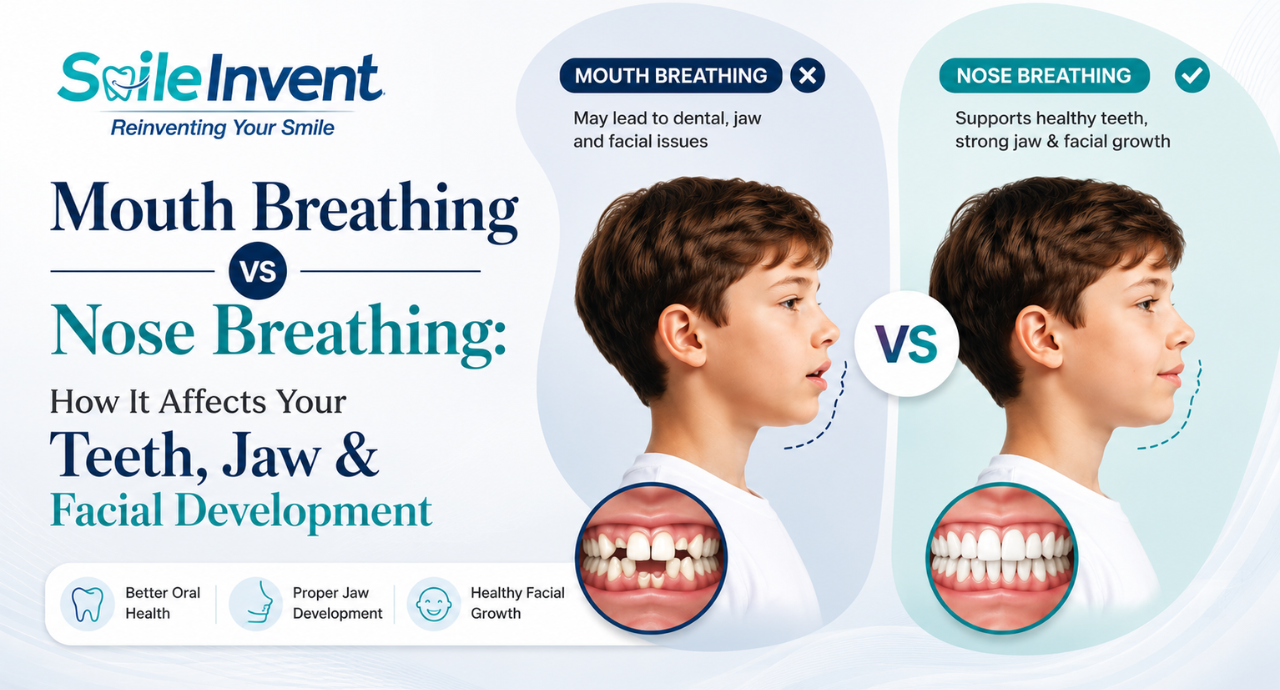
The biggest difference between a mouth breather vs nose breather is the path the air takes into the body. Although both methods deliver oxygen to the lungs, the nose is naturally designed for breathing. It filters dust, pollen, and bacteria, warms and moistens the air, and supports proper tongue posture. When a person breathes through the mouth for long periods, these natural functions are bypassed, which can affect both oral and overall health.
A nose breather is more likely to have a moist mouth, balanced saliva production, and proper tongue placement against the roof of the mouth. On the other hand, a mouth breather may experience dry mouth, bad breath, frequent cavities, and changes in bite or jaw development over time. These effects are more noticeable in children because their facial bones and jaws are still developing.
Mouth breathing is usually a symptom of an underlying problem rather than a habit that starts on its own. When the nose is blocked or it becomes difficult to breathe through the nose, the body naturally switches to breathing through the mouth to get enough air. For some people, this only happens for a few days during a cold. For others, it can continue for months or even years if the root cause is not treated.
Children and adults can both develop mouth breathing, but the reasons may be different. In children, enlarged adenoids or tonsils are common causes. Adults are more likely to experience mouth breathing due to allergies, a deviated nasal septum, chronic sinus problems, or nasal congestion. In some cases, a person may continue breathing through the mouth out of habit, even after the original problem has improved.
Not everyone who breathes through their mouth has the same cause. Finding the reason behind the habit is the first step in choosing the right treatment and preventing long term oral health problems.
Your mouth relies on saliva to protect your teeth and gums. Saliva washes away food particles, helps control bacteria, and neutralizes acids that can damage tooth enamel. When you breathe through your mouth for long periods, the mouth becomes dry because saliva evaporates more quickly. A dry mouth creates the perfect environment for harmful bacteria to grow, increasing the risk of several dental problems.
The effects of chronic mouth breathing are often gradual, so many people do not notice them until symptoms appear. Some may wake up with a dry mouth every morning, while others experience frequent cavities or persistent bad breath despite maintaining good oral hygiene. Over time, reduced saliva and constant dryness can affect the health of both the teeth and gums.
A lack of saliva leaves the mouth feeling dry and uncomfortable. You may also notice difficulty swallowing, cracked lips, or a dry throat after waking up.
Saliva helps protect tooth enamel by washing away bacteria and food debris. When saliva levels drop, plaque builds up more easily, increasing the risk of cavities.
Dry oral tissues are more vulnerable to inflammation and bacterial growth. This can lead to swollen, bleeding gums and, if left untreated, may progress to gum recession and gum disease.
Bacteria multiply more quickly in a dry mouth, producing unpleasant odors that can cause persistent bad breath.
Without enough saliva to clean the teeth naturally, plaque accumulates more easily. If it is not removed through regular brushing and professional cleanings, it can harden into tartar.
A dry mouth can make teeth more vulnerable to acid attacks and enamel wear, increasing the chances of sensitivity and other dental problems.
Yes, long term mouth breathing can influence jaw development, especially during childhood when the bones of the face and jaws are still growing. The way we breathe affects the position of the tongue, lips, and facial muscles. During normal nose breathing, the tongue rests gently against the roof of the mouth, which helps support healthy growth of the upper jaw. When a child breathes through the mouth most of the time, the tongue often rests lower in the mouth instead. Over time, this change in tongue posture may affect the shape and growth of the jaws.
Not every child who breathes through the mouth will develop jaw or bite problems, but persistent mouth breathing has been linked to several dental and orthodontic concerns. The longer the habit continues during the growing years, the greater the chance of changes in the way the teeth and jaws develop.
These changes usually develop gradually and may not be noticeable in the early stages. Regular dental checkups can help monitor jaw growth and identify any developing bite problems at an early stage.
Dentofacial development refers to the growth of the teeth, jaws, and the lower part of the face, while craniofacial development includes the growth of the entire skull and facial bones. During childhood, these structures are still developing, which means daily habits such as breathing, swallowing, and tongue posture can influence how they grow. When a child consistently breathes through the mouth instead of the nose, the muscles and tongue may not function in their natural position, which can affect normal facial development over time.
Research suggests that long term mouth breathing may be associated with changes in facial growth patterns, particularly when it begins at a young age and continues for several years. The impact varies from child to child, and factors such as genetics, overall health, and the underlying cause of mouth breathing also play a role. Mouth breathing alone does not determine how a person's face will develop, but it can contribute to certain dental and facial changes if left untreated during the growing years.

The term mouth breather face is often used to describe certain facial features that may develop in children who breathe through their mouth for a long time during their growing years. It is not a medical condition or an official diagnosis. Not every child who is a mouth breather will develop these changes, as facial growth is also influenced by genetics, overall health, and the underlying cause of mouth breathing.
When a child regularly breathes through the mouth, the tongue may rest lower than its natural position instead of against the roof of the mouth. Over time, this can affect the way the upper jaw, teeth, and facial muscles develop. Since the face and jaws are still growing during childhood, long term mouth breathing may contribute to changes in facial appearance and bite alignment.
Some features that may be seen in children with persistent mouth breathing include a longer face, a narrow upper jaw, crowded teeth, a high arched palate, lips that stay slightly open at rest, or bite problems such as an open bite or crossbite. These features do not always mean a child is a mouth breather, but if they are seen along with symptoms like snoring, dry mouth, or difficulty breathing through the nose, a dental evaluation can help identify whether mouth breathing is playing a role.
Many people do not realize they are mouth breathers because the habit often happens while they are asleep. Others may think waking up with a dry mouth or snoring is normal and never connect these symptoms to the way they breathe. In children, the signs can be even harder to notice because they develop gradually over time.
If you regularly experience several of the following symptoms, mouth breathing could be the reason.
Children naturally breathe through their nose most of the time. If your child regularly sleeps with an open mouth, snores, or prefers breathing through the mouth during the day, it may be more than just a habit. Persistent mouth breathing can affect dentofacial and craniofacial development, especially while the face, jaws, and teeth are still growing. The earlier it is identified, the easier it is to manage the underlying cause and reduce the risk of future dental problems.
Long term mouth breathing may influence the way the upper jaw develops and how permanent teeth erupt. Some children may develop crowded teeth, bite problems, or a narrow upper jaw because the tongue is not resting in its natural position against the roof of the mouth. These changes happen gradually, so parents may not notice them until they become more obvious during the school years or when an orthodontic evaluation is recommended.
Not every child who breathes through their mouth will experience these changes, but it is worth paying attention if the habit continues for a long time or is accompanied by symptoms such as frequent snoring, dry mouth, restless sleep, or difficulty breathing through the nose. Identifying the cause early can support healthy facial growth and improve both oral health and overall well being.
Diagnosing mouth breathing involves more than checking whether someone breathes through their mouth. Your dentist will look for signs that the habit is affecting your teeth, gums, bite, or jaw development. If needed, they may also recommend further evaluation to identify the underlying cause.
Your dentist will ask about symptoms such as snoring, dry mouth, bad breath, allergies, frequent nasal congestion, or difficulty breathing through the nose. They may also ask whether the habit is more noticeable during the day or while sleeping.
The teeth, gums, tongue, and soft tissues are examined for signs of dry mouth, plaque build up, tooth decay, gum inflammation, or other oral health concerns that may be linked to chronic mouth breathing.
Your dentist will check how your upper and lower teeth come together and look for signs of crowded teeth, a narrow upper jaw, an open bite, or other orthodontic concerns.
For children, the dentist may assess facial symmetry, jaw growth, and tooth development to identify any changes that could be associated with long term mouth breathing.
If the dentist suspects that blocked nasal passages, enlarged tonsils, adenoids, or other airway problems are causing mouth breathing, you may be referred to an ENT specialist or another healthcare professional for further evaluation.
There is no single treatment for mouth breathing because the right approach depends on what is causing it. Some people develop the habit due to allergies or nasal congestion, while others may have enlarged adenoids, a deviated septum, or orthodontic issues. Once the underlying cause is identified, the treatment can be planned accordingly.
In many cases, improving breathing is a team effort. A dentist may work with an ENT specialist, orthodontist, or other healthcare professional to treat both the underlying cause and its effects on your oral health. This is especially important for children, as early treatment can support healthy jaw growth and reduce the need for more complex dental treatment in the future.
You should schedule a dental checkup if you or your child experiences any of the following:
At Smile Invent Dental Clinic, our experienced dentist in Mumbai understands that mouth breathing can affect more than just your breathing pattern. It may impact your teeth, gums, bite, and even facial growth in children. We take a comprehensive approach to identify the dental effects of chronic mouth breathing and recommend the most suitable treatment based on your individual needs.
During your visit, our dentists perform a detailed oral examination to assess your teeth, gums, jaw alignment, and bite. If mouth breathing has contributed to crowded teeth, bite problems, or changes in jaw development, we will discuss the available treatment options. When necessary, we also work closely with ENT specialists and other healthcare professionals to help address the underlying cause and provide complete care.
Whether you are concerned about your child's facial development or have been experiencing dry mouth, frequent cavities, or bad breath due to mouth breathing, our team is committed to helping you achieve better oral health through timely diagnosis, personalized treatment, and regular follow up.
Yes. Mouth breathing reduces saliva, which helps protect your teeth. A dry mouth creates an environment where bacteria can grow more easily, increasing the risk of cavities.
Yes. A dry mouth caused by mouth breathing allows bacteria to build up, which can lead to persistent bad breath even with regular brushing and flossing.
Occasional mouth breathing during a cold or nasal congestion is common. If it happens regularly, it may indicate an underlying issue and should be evaluated.
Braces can correct bite problems and crowded teeth caused by long term mouth breathing. If an airway problem is the cause, it should also be treated for the best results.
Mouth taping is not suitable for everyone and should not be used without medical advice. If your mouth breathing is caused by a blocked nose or another airway problem, mouth taping may not be safe.
Nose breathing helps filter, warm, and humidify the air before it reaches the lungs. It also supports better oral health by keeping the mouth moist and reducing the risk of dry mouth and related dental problems.
Mouth breathing may seem harmless, but if it continues for a long time, it can affect your teeth, gums, jaw development, and facial growth, especially in children. Recognizing the signs early and addressing the underlying cause can help protect both your oral health and overall well being.
If you or your child regularly breathes through the mouth, snores, wakes up with a dry mouth, or has concerns about jaw or dental development, a dental evaluation can help identify the cause and recommend the right treatment. Early care can support healthier teeth, better breathing, and long term oral health.

Walk into any supermarket or pharmacy and you will find toothpast...
Read More
Wearing braces can make your daily brushing routine a little more...
Read More
Have you ever noticed a small white mark on your tooth while look...
Read More