
Table of Contents
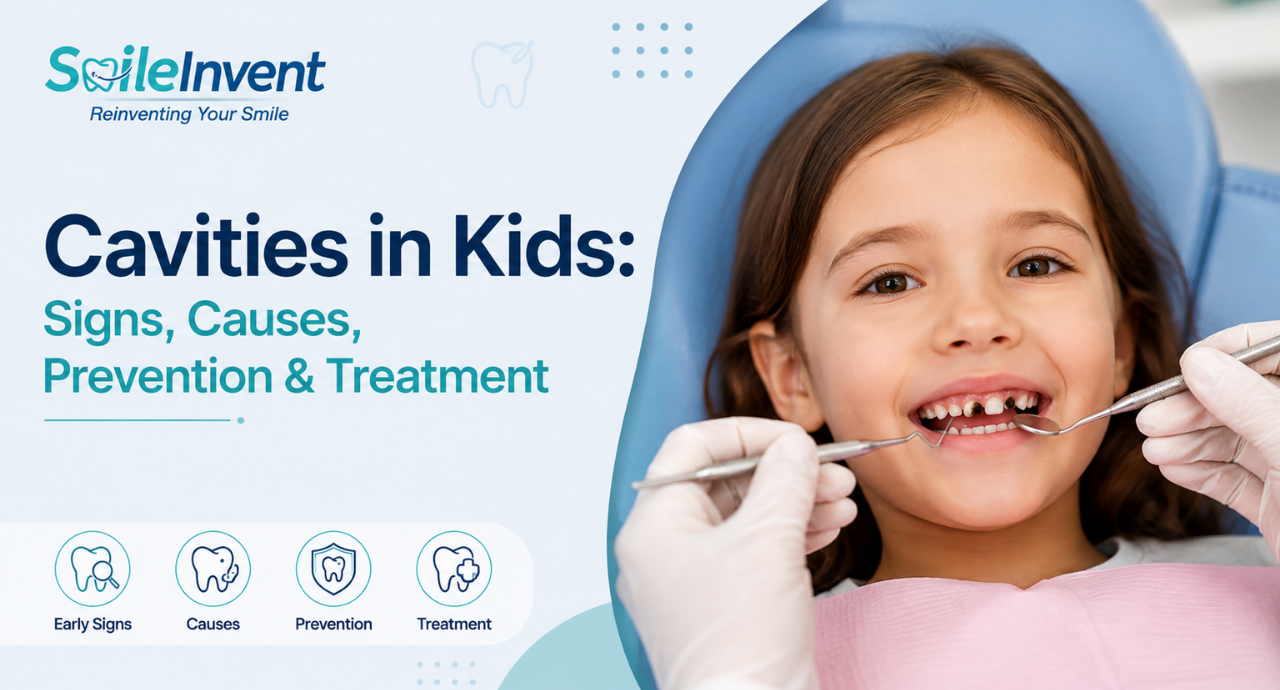
Cavities in kids are areas of tooth decay that can affect both baby teeth and permanent teeth. Early signs may include white, brown or dark spots on the teeth, while more advanced decay can cause sensitivity, toothache, difficulty eating or swelling.
Cavities can often be prevented with regular brushing, fluoride toothpaste, healthy eating habits and routine dental check-ups. Finding and treating tooth decay early can also help prevent pain and infection.
This guide explains the signs, causes, prevention and treatment of cavities in children, along with what parents should look for and when to take their child to a dentist.
Cavities in kids are small damaged areas or holes that form on the teeth due to tooth decay. They don’t appear suddenly. Cavities develop when bacteria in dental plaque use sugars and starches from food and drinks to produce acids that damage tooth enamel over time.
When bacteria mix with food and stay on the teeth for a long time, it leads to plaque and tartar buildup that needs removal, which increases the risk of cavities in kids. At the early stage, cavities in children may not cause any pain, so they are easy to miss during daily brushing.
As the decay spreads deeper into the tooth, children may start feeling discomfort while eating or sensitivity to hot and cold foods. In some cases, parents may notice dark spots, bad breath, or swelling around the gums. These are common signs of dental cavities in children that should not be ignored.
Childhood cavities can affect both baby teeth and permanent teeth. Even though baby teeth fall out eventually, they are important for chewing, speaking clearly, and guiding permanent teeth into the right position. Tooth decay in kids can lead to infections, pain, and difficulty eating if left untreated.
Regular dental check-ups help detect cavities early and protect your child’s smile before the problem becomes serious.
Cavities can look different depending on how far tooth decay has progressed. Early signs may appear as white or chalky spots on the tooth. As decay progresses, the area may become yellow, brown or dark, and a visible hole may eventually form.
Cavities between teeth may not be easy to see at home and may require a dental examination or X-ray to detect. Not every dark or discolored spot is a cavity, so a dentist should evaluate any unusual change in your child's teeth.
Cavities in children usually develop because of a combination of daily habits and oral health factors. The most common causes include:
Sweets, chocolates, juices, and soft drinks leave sugar on the teeth. Bacteria feed on this sugar and produce acids that damage the tooth surface, leading to cavities in kids.
When brushing is rushed or skipped, plaque stays on the teeth. Over time, this increases the risk of tooth decay in kids.
Eating sugary or starchy foods many times a day gives bacteria more chances to attack the teeth. It’s not just the amount of sugar, but how often it’s consumed.
Foods like chips, crackers, biscuits, and white bread stick to the teeth and break down into sugars, which can cause dental cavities in children.
Some children have enamel that is thinner or weaker. This makes teeth more sensitive to acid damage and increases the chances of childhood cavities.
Saliva helps clean the teeth and wash away food particles. Mouth breathing reduces saliva flow, leaving the mouth dry and increasing cavity risk.
Cavity-causing bacteria can spread through shared spoons or food, especially in younger children.
Recognizing cavity symptoms early can save your child from pain and discomfort later. Cavities don’t always cause immediate pain, especially in the beginning, so parents need to watch for small changes.
Common cavity symptoms in kids include:
These spots are often the first visible sign of tooth decay. They may appear on the surface of the tooth and slowly darken over time.
Children may feel discomfort while chewing or complain that a tooth feels “funny” or painful.
Some children may complain that a tooth hurts when they bite or chew. This can be a sign that the decay has progressed and should be checked by a dentist.
A child may avoid certain foods, chew on one side of the mouth, or become upset while eating because of tooth sensitivity or pain.
If your child suddenly avoids ice cream, cold water, or warm food, it could be due to sensitivity caused by cavities.
A bad smell that doesn’t go away after brushing can be a sign of bacteria buildup and dental cavities in children.
Swelling may indicate infection and should be checked by a dentist as soon as possible.
Sometimes, younger children may not mention pain at all because they are unable to explain it clearly. Changes like irritability, trouble eating, or frequent crying can also be warning signs. That’s why regular dental visits are important to catch cavities early, even before symptoms become obvious.
You should arrange a dental check-up if you notice white, brown or dark spots on your child's teeth, repeated sensitivity, toothache, pain while chewing or swelling around the gums.
Don't wait for pain before seeking advice. Some cavities may not cause noticeable symptoms in the early stages. If your child has swelling, significant pain, difficulty eating or other signs of infection, contact a dentist promptly.
Yes, cavities can occur in children’s front teeth, especially in babies and toddlers. These cavities can develop when sugary drinks or other sources of sugar remain in contact with the front teeth frequently or for long periods.
One common cause is frequent bottle-feeding or sipping milk, juice, or sweet drinks throughout the day or at bedtime. When a child sleeps with milk or juice in the mouth, sugar stays on the front teeth and feeds bacteria. This leads to acid formation and tooth decay.
Poor oral cleaning can also increase the risk. Even though front teeth are visible, they are often not cleaned properly in young children. Over time, this allows plaque to build up and damage the enamel.
Cavities in front teeth usually start as white spots near the gum line. If ignored, they can turn brown or black and may cause pain or infection. These teeth play an important role in speech development and smiling, so early care through pediatric dental care is important.
Regular dental visits and proper cleaning of front teeth from an early age can help prevent cavities and protect your child’s smile.
Preventing cavities in children starts with daily habits at home. Small changes in routine can protect your child’s teeth and reduce the risk of tooth decay.
Children should brush in the morning and before going to bed. Use a soft toothbrush and a fluoride toothpaste suitable for their age. Night brushing is especially important because bacteria are more active while sleeping. For young children, the amount of fluoride toothpaste should be appropriate for their age. Parents should also help or supervise brushing until the child can brush effectively on their own.
Young children often brush in a hurry and miss areas like the back teeth or near the gums. Parents should guide or assist brushing until the child learns proper technique.
Chocolates, candies, juices, soft drinks, and packaged snacks increase the risk of cavities in kids. Try to reduce how often these foods are given rather than cutting them out completely.
Frequent snacking allows bacteria to produce acids throughout the day. Fixed meal and snack times give teeth time to recover.
Rinsing the mouth with plain water after eating helps wash away food particles and sugars when brushing isn’t possible.
Letting children sleep with milk or sweet drinks keeps sugar on the teeth for hours. This is a common reason for cavities in children’s front teeth.
Regular dental check-ups help catch cavities early and prevent bigger problems later. Dentists can also guide parents on proper oral care.
Fluoride strengthens tooth enamel and protects teeth from decay. Your dentist may suggest fluoride application based on your child’s dental condition.
What children eat every day has a direct impact on their teeth. A balanced and healthy diet helps keep teeth strong and protected, while frequent intake of sugary and processed foods increases the risk of cavities in kids. When sweets and snacks are eaten often, bacteria get more chances to damage the teeth. Encouraging balanced meals and limiting sugary snacks not only helps reduce dental cavities in children but also supports overall oral health as kids grow.
Chocolates, toffees, gummies, and sweets stick to the teeth and feed bacteria that cause tooth decay in kids.
Packaged juices, soft drinks, and flavored milk contain hidden sugars. Sipping these drinks throughout the day increases cavity risk.
Foods like caramels, dried fruits, and chewing candies cling to the teeth and are hard to wash away with saliva.
Chips, biscuits, crackers, and white bread break down into sugars and often stay stuck between teeth.
Even healthy foods can cause problems if eaten too often. Constant eating gives bacteria more chances to produce acids.
The treatment for cavities in baby teeth depends on how deep the decay is. The good news is that today’s dental treatments for kids are safe, gentle, and designed to keep children comfortable.
In the early stage of tooth decay, fluoride may be applied to help strengthen the tooth and slow down the cavity from getting worse.
If the cavity has formed, the decayed part of the tooth is carefully removed and filled with a tooth-coloured material. This helps restore the tooth and prevents further damage.
When decay reaches the nerve of the tooth, a procedure called pulpotomy may be needed. This helps remove the infected portion and save the remaining tooth.
In cases where a baby tooth is badly damaged, a crown may be placed over it to protect the tooth. Stainless steel crowns are commonly used for baby teeth and help restore function.
When it comes to your child’s smile, gentle and personalized care really matters. Smile Invent Dental Clinic in Bandra East, Mumbai, focuses on creating a friendly, stress-free experience for children of all ages.
At Smile Invent, we understand that kids can feel nervous about dental visits. That’s why we use modern techniques and a calm environment to make every check-up or treatment easy and comfortable for young patients.
Here’s what sets us apart:
We offer pediatric treatments designed to prevent cavities early and help children build healthy oral habits that last a lifetime.
We believe in regular check-ups, cleanings, fluoride applications, and habit guidance to protect your child’s teeth from decay.
We use gentle treatment methods and explain procedures in a way children can understand, helping them feel calm and comfortable.
We provide complete care from cavity prevention and fillings to fluoride treatments and routine dental exams, supporting both present and future oral health.
We focus on personalized care and take time to build trust with both parents and children, making every dental visit a positive experience.
Choosing a clinic where your child feels safe and supported can make a big difference in their dental journey and help them grow up with healthy teeth and a confident smile.
Yes, cavities in kids are common, especially due to sugary foods, poor brushing habits, and irregular dental check-ups. Early prevention and treatment are important.
Yes. Cavities in baby teeth should always be treated to prevent pain, infection, and problems with permanent teeth later.
Yes. Cavities in a 5-year-old can be safely filled using child-friendly dental procedures to stop decay from spreading.
A cavity should not be left untreated. Even small cavities can grow deeper over time and cause pain or infection.
Untreated cavities can lead to tooth pain, swelling, infection, difficulty eating, and damage to permanent teeth.
Dentists treat cavities using fluoride treatments, fillings, pulp therapy, or crowns depending on how severe the decay is.
Pediatric dentists use gentle, child-friendly techniques to help reduce fear and make dental visits comfortable for children.
Cavities in kids are common, but they should never be ignored. Small dental issues can turn into painful problems if left untreated. With proper brushing habits, a healthy diet, and regular dental visits, most cavities in children can be prevented or treated early.
Paying attention to early signs, limiting sugary foods, and seeking timely dental care helps protect your child’s teeth and overall health. Treating cavities in baby teeth also supports proper chewing, speech development, and healthy permanent teeth in the future.
Regular check-ups and gentle dental care play a big role in keeping your child’s smile healthy and confident. Taking the right steps today can help your child grow up with strong teeth and fewer dental problems tomorrow.
Walk into any supermarket or pharmacy and you will find toothpast...
Read More
Wearing braces can make your daily brushing routine a little more...
Read More
Have you ever noticed a small white mark on your tooth while look...
Read More