
Table of Contents
Keeping teeth clean is very important for a healthy mouth and overall health. Even if you brush your teeth every day, some food particles and plaque can still stay on the teeth, especially near the gums and between teeth. When this plaque is not removed properly, it slowly becomes hard and turns into tartar on teeth, also known as tartar teeth, which can lead to gum disease, bad breath and tooth decay if left untreated.
Tartar cannot be removed by normal brushing once it forms. If it stays on the teeth for a long time, it can cause gum problems, bad breath, tooth decay, and other oral health issues. Many people do not notice tartar in the early stage, but it can slowly damage teeth and gums if ignored.
Understanding what tartar is, why it forms and its common signs helps you take better care of your teeth and avoid dental problems in the future.
Tartar is a hard layer that forms on the teeth when plaque is not cleaned properly. Plaque is a soft, sticky film made of bacteria, food particles and saliva. It forms on teeth every day after eating or drinking. If plaque is not removed by brushing and flossing, it slowly hardens and turns into tartar.
Tartar usually forms near the gum line, between the teeth, and behind the front teeth where saliva collects the most. Once plaque turns into tartar, it sticks strongly to the tooth surface and cannot be removed by regular brushing or flossing at home.
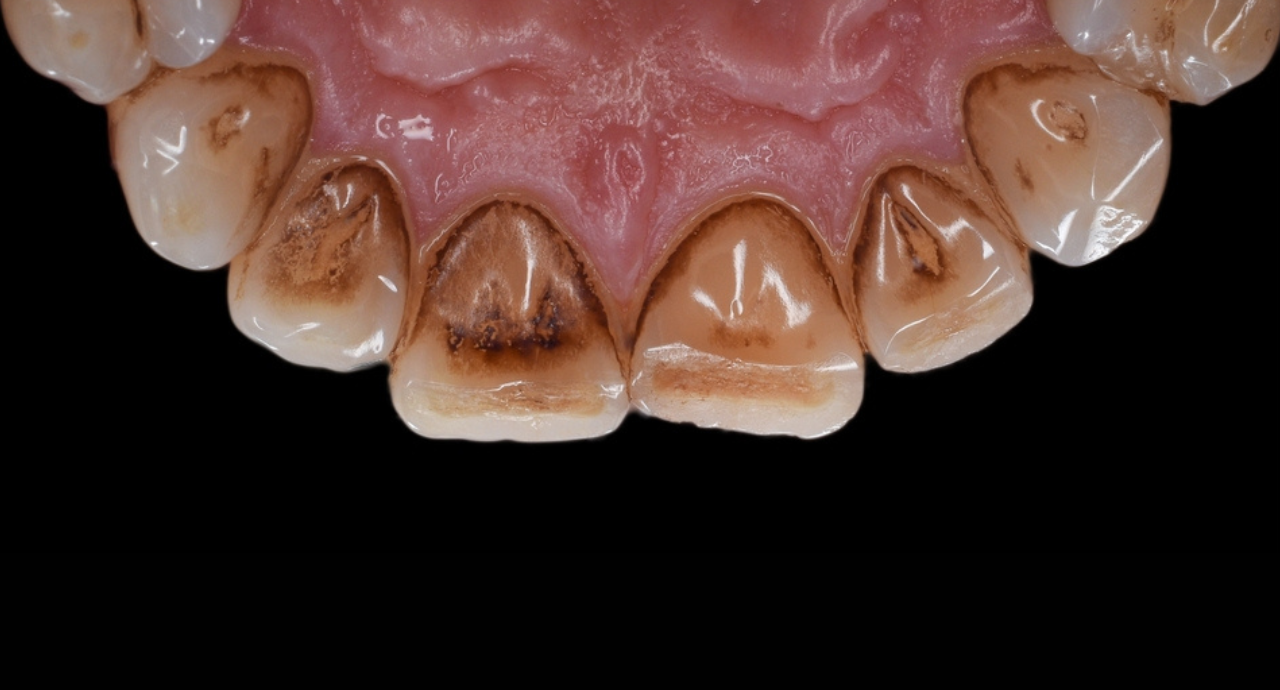
Tartar may appear yellow, brown, or off-white in color. Brown tartar is common in people who smoke or frequently drink tea or coffee, as stains can build up on hardened tartar over time. It can make teeth look stained and feel rough when touched with the tongue. Over time, these stains can affect the appearance of your smile. After proper tartar removal, treatments like teeth whitening can help improve tooth color and brightness.
Tartar is made from plaque that stays on the teeth for a long time. Plaque is a sticky layer that forms daily after eating or drinking. When this plaque is not removed, it mixes with minerals present in saliva and slowly becomes hard.
Tartar is mainly made of:
When plaque combines with saliva minerals, it can harden within one to three days. Once it becomes tartar, it sticks firmly to the teeth and gums. This hard layer creates a rough surface, making it easier for more plaque and bacteria to attach.
Because of its hard nature, tartar cannot be removed at home with a toothbrush. Professional dental cleaning is needed to remove it safely.
Tartar on teeth shows several signs that slowly appear over time. Many people do not notice these symptoms in the early stage, but they become more clear as tartar builds up. These symptoms affect both the teeth and the gums. Common symptoms of tartar on teeth include:
Tartar often looks like yellow, brown or off-white stains on the teeth. These stains usually appear near the gum line or between teeth. They do not go away even after brushing or using toothpaste.
Healthy teeth feel smooth when you touch them with your tongue. When tartar forms, the teeth start feeling rough or uneven. This rough surface allows more plaque and bacteria to stick easily.
Tartar traps bacteria that release bad-smelling gases. Because of this, bad breath may stay even after brushing, flossing, or using mouthwash.
Tartar irritates the gums and causes inflammation. The gums may look red, swollen, and sore instead of healthy pink. This is often an early sign of gum problems.
When tartar builds up near the gums, they become weak and bleed easily. Bleeding during brushing or flossing should not be ignored, as it shows gum irritation.
In serious cases, gums start pulling away from the teeth. This creates small gaps where more bacteria collect. It can also make teeth feel sensitive or loose.
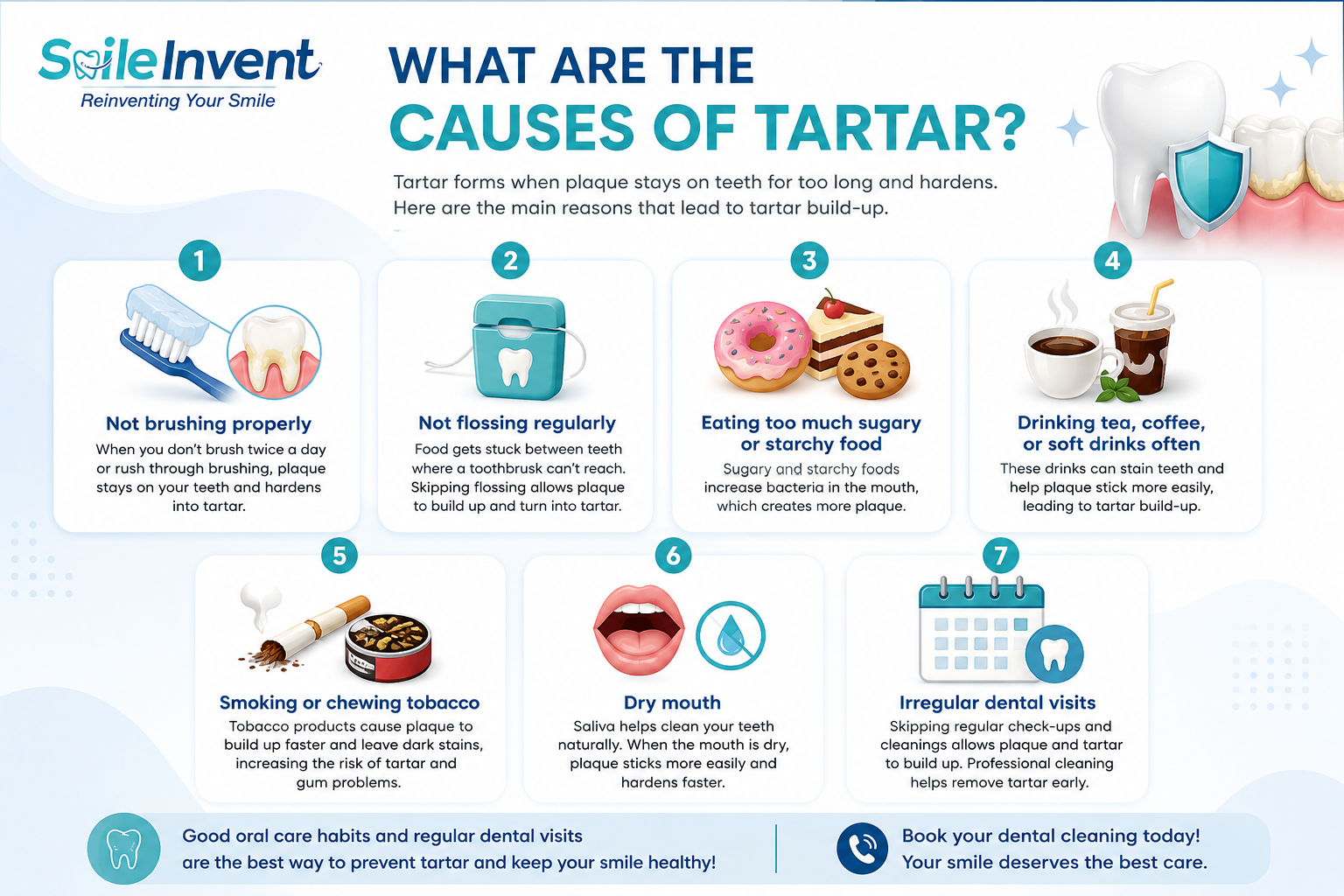
Tartar forms when plaque is not cleaned from teeth on time. Many daily habits can increase the chance of tartar build-up. Some of the most common causes of tartar include:
When teeth are not brushed twice a day or brushing is rushed, plaque stays on the teeth. Over time, this plaque hardens and turns into tartar.
Food often gets stuck between teeth where a toothbrush cannot reach. If flossing is skipped, plaque collects in these areas and slowly becomes tartar.
Foods like sweets, chocolates, biscuits, and chips increase bacteria in the mouth. These bacteria form more plaque, which later turns into tartar.
Tea, coffee, and soft drinks can stain the teeth. These stains make it easier for plaque to stick, which leads to tartar over time.
Tobacco causes plaque to build up faster on teeth. It also leaves dark stains and increases the risk of tartar and gum problems.
Saliva helps clean teeth naturally. When the mouth is dry, plaque sticks to the teeth more easily and hardens faster.
If dental cleaning is delayed for a long time, plaque and tartar keep building up. Regular dental visits help remove early tartar before it becomes serious.
Tartar does not only affect how teeth look. If it stays in the mouth for a long time, it slowly damages the gums and teeth. Untreated tartar can lead to several dental problems and serious complications if ignored. Many common oral health issues start because of tartar that is not removed on time.
Tartar irritates the gums and causes redness, swelling, and soreness. Healthy gums should be firm and light pink, but tartar makes them weak and sensitive. This irritation can worsen if tartar is not removed.
When tartar builds up near the gum line, gums become soft and start bleeding easily. Bleeding during brushing or flossing is often an early sign of gum disease caused by tartar.
Tartar traps bacteria deep inside it. These bacteria release a bad smell that causes long-lasting bad breath. Brushing alone may not remove this smell.
Bacteria living in tartar slowly damage the tooth surface. This damage can lead to cavities and holes in the teeth. If untreated, tooth decay can cause pain and infection.
If tartar is not cleaned, it can lead to serious gum disease. Gums may start pulling away from the teeth, forming pockets where more bacteria grow. This condition becomes harder to treat at later stages.
In advanced cases, tartar damages the bone that supports the teeth. This can make teeth feel loose and unstable. In severe situations, it may even result in tooth loss.
As gums pull away from the teeth, tooth roots become exposed. This can cause pain or sensitivity when eating hot, cold, or sweet foods.
Preventing tartar is easier than removing it later. Tartar forms when plaque stays on the teeth for too long and is not cleaned properly. By taking care of your teeth every day and following simple habits, you can keep plaque under control and protect your teeth and gums.
Brushing in the morning helps clean plaque that builds up overnight, while brushing at night removes food and germs from the day. Use a soft toothbrush and brush gently to avoid hurting your gums. Make sure to clean near the gums, back teeth, and corners of the mouth. Choosing the right brush also matters, and understanding the difference between an electric toothbrush vs manual toothbrush can help you pick the best option for daily brushing.
Tartar-control toothpaste helps slow down plaque from becoming hard. Fluoride keeps the teeth strong and protects them from damage. Using the right toothpaste every day helps prevent tartar.
Brushing alone cannot clean between the teeth. Flossing removes food and plaque stuck between teeth and along the gums, where tartar often starts.
Germs also stay on the tongue and can spread back to the teeth. Cleaning the tongue helps reduce bacteria and keeps the mouth fresh.
Sugary foods increase germs in the mouth. Sticky foods stay on teeth longer and are harder to clean. Eating less of these foods helps reduce plaque.
Drinking water helps wash away food and bacteria after meals. It also keeps the mouth moist and supports natural cleaning by saliva.
Smoking and tobacco cause plaque and tartar to form faster. They also harm the gums. Avoiding tobacco helps keep your mouth healthy.
Dental cleanings help remove plaque and early tartar that brushing cannot remove. Regular check-ups also help find problems early and keep teeth in good condition.
Many people search for how to get rid of tartar buildup without visiting a dentist. The truth is that once tartar hardens, it cannot be completely removed at home. However, following the right oral care routine can help control plaque, reduce early tartar build-up, and prevent it from getting worse until you can visit a dental professional.
Use a soft toothbrush and brush gently in small circular movements. Pay special attention to the gum line and back teeth, as tartar usually builds up in these areas. Regular brushing helps clean plaque before it turns hard.
Tartar-control toothpaste helps slow down the hardening of plaque. Using it daily can reduce new tartar build-up and keep your teeth cleaner for a longer time.
Flossing helps remove food and plaque stuck between the teeth and near the gums. These areas are often missed while brushing and are common places for tartar to form.
Rinsing with salt water helps reduce germs in the mouth and soothe irritated gums. Doing this once a day can support gum health and control plaque.
Mouthwash helps kill bacteria that cause plaque and bad breath. It also supports daily brushing and flossing to keep the mouth clean.
Bacteria collect on the tongue and can spread back to the teeth. Cleaning your tongue every day helps reduce bacteria and keeps the mouth fresh.
When tartar is already present on your teeth, certain daily habits can make the problem worse and cause more harm to your teeth and gums. Making small changes in your routine can help slow down tartar build-up and protect your oral health. Below are some common habits you should avoid if you have tartar.
When you do not brush or floss regularly, food and plaque stay on the teeth longer. Over time, this plaque hardens and turns into more tartar, making the problem worse.
Foods like sweets, chocolates, cakes, and biscuits increase germs in the mouth. These germs create more plaque, which later becomes tartar if not cleaned properly.
Tea, coffee, and soft drinks can stain the teeth. These stains make it easier for plaque to stick, which leads to tartar over time.
Tobacco causes plaque to build up faster on teeth. It also leaves dark stains and increases the risk of tartar and gum problems.
Saliva helps clean teeth naturally. When the mouth is dry, plaque sticks to the teeth more easily and hardens faster.
If dental cleaning is delayed for a long time, plaque and tartar keep building up. Regular dental visits help remove early tartar before it becomes serious.
Tartar does not only affect how teeth look. If it stays in the mouth for a long time, it slowly damages the gums and teeth. Untreated tartar can lead to several dental problems and serious complications if ignored. Many common oral health issues start because of tartar that is not removed on time.
Tartar irritates the gums and causes redness, swelling, and soreness. Healthy gums should be firm and light pink, but tartar makes them weak and sensitive. This irritation can worsen if tartar is not removed.
When tartar builds up near the gum line, gums become soft and start bleeding easily. Bleeding during brushing or flossing is often an early sign of gum disease caused by tartar.
Tartar traps bacteria deep inside it. These bacteria release a bad smell that causes long-lasting bad breath. Brushing alone may not remove this smell.
Bacteria living in tartar slowly damage the tooth surface. This damage can lead to cavities and holes in the teeth. If untreated, tooth decay can cause pain and infection.
If tartar is not cleaned, it can lead to serious gum disease. Gums may start pulling away from the teeth, forming pockets where more bacteria grow. This condition becomes harder to treat at later stages.
In advanced cases, tartar damages the bone that supports the teeth. This can make teeth feel loose and unstable. In severe situations, it may even result in tooth loss.
As gums pull away from the teeth, tooth roots become exposed. This can cause pain or sensitivity when eating hot, cold, or sweet foods.
Preventing tartar is easier than removing it later. Tartar forms when plaque stays on the teeth for too long and is not cleaned properly. By taking care of your teeth every day and following simple habits, you can keep plaque under control and protect your teeth and gums.
Brushing in the morning helps clean plaque that builds up overnight, while brushing at night removes food and germs from the day. Use a soft toothbrush and brush gently to avoid hurting your gums. Make sure to clean near the gums, back teeth, and corners of the mouth. Choosing the right brush also matters, and understanding the difference between an electric toothbrush vs manual toothbrush can help you pick the best option for daily brushing.
Tartar-control toothpaste helps slow down plaque from becoming hard. Fluoride keeps the teeth strong and protects them from damage. Using the right toothpaste every day helps prevent tartar.
Brushing alone cannot clean between the teeth. Flossing removes food and plaque stuck between teeth and along the gums, where tartar often starts.
Germs also stay on the tongue and can spread back to the teeth. Cleaning the tongue helps reduce bacteria and keeps the mouth fresh.
Sugary foods increase germs in the mouth. Sticky foods stay on teeth longer and are harder to clean. Eating less of these foods helps reduce plaque.
Drinking water helps wash away food and bacteria after meals. It also keeps the mouth moist and supports natural cleaning by saliva.
Smoking and tobacco cause plaque and tartar to form faster. They also harm the gums. Avoiding tobacco helps keep your mouth healthy.
Dental cleanings help remove plaque and early tartar that brushing cannot remove. Regular check-ups also help find problems early and keep teeth in good condition.
Tartar forms when plaque is not cleaned from the teeth on time. Once it hardens, it cannot be completely removed at home. However, following the right home care routine can help control plaque, reduce early tartar, and prevent it from getting worse.
Use a soft toothbrush and brush gently in small circular movements. Pay special attention to the gum line and back teeth, as tartar usually builds up in these areas. Regular brushing helps clean plaque before it turns hard.
Tartar-control toothpaste helps slow down the hardening of plaque. Using it daily can reduce new tartar build-up and keep your teeth cleaner for a longer time.
Flossing helps remove food and plaque stuck between the teeth and near the gums. These areas are often missed while brushing and are common places for tartar to form.
Rinsing with salt water helps reduce germs in the mouth and soothe irritated gums. Doing this once a day can support gum health and control plaque.
Mouthwash helps kill bacteria that cause plaque and bad breath. It also supports daily brushing and flossing to keep the mouth clean.
Bacteria collect on the tongue and can spread back to the teeth. Cleaning your tongue every day helps reduce bacteria and keeps the mouth fresh.
When tartar is already present on your teeth, certain daily habits can make the problem worse and cause more harm to your teeth and gums. Making small changes in your routine can help slow down tartar build-up and protect your oral health. Below are some common habits you should avoid if you have tartar.
When you do not brush or floss regularly, food and plaque stay on the teeth longer. Over time, this plaque hardens and turns into more tartar, making the problem worse.
Foods like sweets, chocolates, cakes, and biscuits increase germs in the mouth. These germs create more plaque, which later becomes tartar if not cleaned properly.
Tea, coffee, and soft drinks can stain the teeth. These stains allow plaque to stick more easily, especially near the gums, leading to more tartar.
Smoking and tobacco cause tartar to form faster on the teeth. They also weaken the gums and increase the risk of gum infection and tooth problems.
Using a hard toothbrush or brushing with too much force can harm the gums and wear down the tooth surface. This can make teeth sensitive and allow tartar to settle more easily.
Using sharp objects or tools at home to scrape tartar can cut the gums and damage teeth. This may lead to pain, bleeding, or infection.
Sometimes tartar becomes hard and spreads to areas that cannot be cleaned at home. When tartar stays near the gums for a long time, it can cause bleeding, swelling, pain, and infection. If you notice constant bad breath, bleeding while brushing, red or swollen gums, or visible tartar on your teeth, it is important to visit a dental professional. Ignoring these signs can allow the problem to worsen and affect deeper gum tissue and teeth.
A dental professional has special tools to remove tartar safely without harming the teeth or gums. Professional cleaning helps stop gum disease, reduce infection, and protect the bone that supports the teeth. Regular dental visits also help find early signs of tooth decay and gum problems, making treatment easier and less painful. Seeking timely dental care helps maintain a healthy mouth and prevents serious dental issues.
Smile Invent Dental Clinic provides complete dental care for patients dealing with tartar and gum problems. As a trusted dentist in Bandra East, the clinic focuses on safe and comfortable tartar removal using professional dental cleaning methods. These treatments help remove hard tartar that cannot be cleaned at home and lower the risk of gum disease and tooth damage.
At Smile Invent Dental Clinic, dentists also guide patients on correct brushing, flossing, and daily oral care habits to prevent tartar from forming again. Each patient receives advice based on their dental condition and needs. Regular check-ups and professional cleanings help maintain clean teeth, healthy gums, and long-term oral health.
Hard tartar cannot be removed at home. Brushing and flossing help prevent more tartar, but professional cleaning is needed to remove it.
No. Scraping tartar at home can damage gums and teeth. Tartar should be removed by a dental professional.
Tartar removal is usually not painful. You may feel mild pressure, especially if gums are sensitive.
Yes. Removing tartar is important to prevent gum disease and tooth damage.
Yes. If not treated, tartar can cause gum disease, cavities, and tooth loss.
Yes. Tartar irritates the gums and can make them bleed, especially while brushing or flossing. Bleeding gums are an early sign of gum problems.
Yes. Tartar can come back if proper oral care is not followed. Regular brushing, flossing, and dental visits help prevent it.
Tartar is a hard deposit that forms on teeth when plaque is not cleaned on time. If left untreated, it can cause gum problems, bad breath, tooth decay and even tooth loss. While daily brushing and flossing help prevent tartar build-up, hard tartar cannot be removed at home. Regular dental visits are important to keep teeth clean and gums healthy. Taking care of your teeth every day and getting professional help when needed can help maintain good oral health and avoid serious dental problems.
Walk into any supermarket or pharmacy and you will find toothpast...
Read More
Wearing braces can make your daily brushing routine a little more...
Read More
Have you ever noticed a small white mark on your tooth while look...
Read More