

Table of Contents
Canine teeth are a vital part of our dental structure. While many people pay attention to their front teeth for a bright smile, canine teeth play an essential role in both function and aesthetics. These teeth are located between the incisors and premolars and are responsible for tearing food and guiding the movement of the jaw.
The term “canine tooth” comes from the Latin word caninus, meaning “dog-like.” These teeth earned their name because of their pointed shape, resembling the sharp teeth found in dogs and other carnivorous animals. Historically, canine teeth played a key role in tearing food and offering protection in early humans and animals.
In humans, canine teeth are less sharp but still important. They help guide the jaw while chewing, maintain proper tooth alignment, and support the natural shape of the face. The upper canines are often called “eye teeth” because they are positioned directly beneath the eyes.
Humans have canine teeth for both functional and aesthetic purposes. From an evolutionary perspective, our ancestors relied on these pointed teeth to tear meat and chew tougher foods. Although our diets and jaw structures have evolved, canine teeth continue to play an essential role in daily oral function.
Functionally, canine teeth help us bite and tear food effectively. They also act as natural guides for jaw movement, ensuring that the upper and lower teeth align properly during chewing or speaking. This mechanism, known as canine guidance, protects other teeth from excessive wear and strain.
Aesthetically, well-shaped canine teeth enhance the overall appearance of the smile. They help define the corners of the mouth, add natural contour to the lips, and contribute to a balanced facial structure.
Canine teeth in humans serve the same essential purpose as other teeth — to help break down food for easier digestion. Their pointed shape allows you to tear and grip tougher foods such as meat, fruits, and certain vegetables. Canine teeth also play a key role in guiding food into the correct position for biting and chewing efficiently.
Beyond eating, canine teeth assist with speech and pronunciation, working alongside the incisors to form specific sounds. They also influence the overall appearance of your smile. In some cultures, people have intentionally reshaped or sharpened their canines for aesthetic or symbolic reasons, though such practices are not recommended as they can lead to dental damage and gum issues.
Humans have four canine teeth, each positioned strategically in the mouth to support both function and balance. These are divided into:
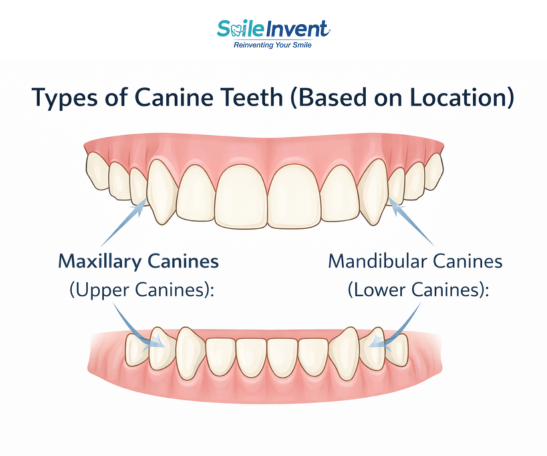
Located in the upper jaw, these teeth are usually more prominent and help guide the alignment of the upper and lower teeth during chewing. They also play an important role in the shape and contour of the upper lip and overall smile.
Found in the lower jaw, these teeth assist in tearing food and maintaining the proper contact between the upper and lower dental arches. They are slightly narrower than the upper canines but just as important for bite stability.
Together, these canine teeth create balance in your bite, ensuring smooth jaw movement and proper alignment. Any damage, misalignment, or loss of these teeth can affect how you chew and how your smile looks, which is why routine dental check-ups are essential for keeping them healthy.
Like other teeth, canine teeth can face a range of issues that affect both function and appearance. Some common problems include:
In some people, canine teeth fail to emerge properly and remain trapped within the gums or jawbone. This condition can cause misalignment or crowding and often requires orthodontic treatment or oral surgery to correct.
Because of their pointed edges, canines are prone to gradual wear or small chips over time. Treatments such as dental bonding or veneers can help restore their natural shape and strength.
Canine teeth can sometimes appear darker due to thicker enamel or staining. Teeth whitening or veneers are effective cosmetic options to improve their appearance.
If the gum around a canine tooth recedes or enamel wears down, it can lead to sensitivity or discomfort. Fluoride treatments, gum care, and proper oral hygiene can help manage this.
Crooked or protruding canines can affect the bite and overall smile symmetry. Braces or clear aligners are commonly used to realign them for better function and aesthetics.
A broken canine tooth can occur due to injury, biting on hard foods, teeth grinding, or weakened enamel from decay. Since canine teeth play a key role in biting and guiding jaw movement, damage to them can affect both function and appearance.
A chipped or fractured canine tooth may cause pain, sensitivity, sharp edges, or difficulty while chewing. In some cases, the damage may be cosmetic, while deeper cracks can expose the inner layers of the tooth and increase the risk of infection.
Treatment for a broken canine tooth depends on the severity of the damage. Dental bonding is often used for minor chips, while crowns may be recommended for larger fractures to restore strength and shape. If the tooth nerve is affected, root canal treatment may be necessary before restoring the tooth. Early treatment helps prevent further damage and preserves the natural tooth whenever possible.
Canine teeth play an important role in maintaining the alignment and stability of your bite. If a canine tooth is missing due to injury, decay, or extraction, it can affect both the function and appearance of your smile.
Without a canine tooth, nearby teeth may gradually shift out of position, leading to bite problems and uneven pressure while chewing. This can also cause discomfort in the jaw and increase the risk of wear on other teeth.
Missing canine teeth can also impact the symmetry of the smile because canines help define the corners of the mouth and support the facial structure.
To restore a missing canine tooth, dentists may recommend treatments such as:
Replacing a missing canine tooth early helps maintain proper bite alignment and prevents further dental complications.
Gum recession, also known as gingival recession, occurs when the gum tissue surrounding the teeth wears away or pulls back, exposing more of the tooth or its root. This condition can cause tooth sensitivity, pain, and a higher risk of cavities and periodontal disease.
Canine teeth are more prone to gum recession because they have longer roots and sit at the corners of the dental arch — areas that often experience more pressure during brushing or chewing. When the gums recede around canines, it can lead to discomfort and even aesthetic concerns, as the teeth may appear longer or uneven.
Several factors contribute to gum recession near the canines, including:
Treatment depends on the cause and severity. Mild cases can be managed with professional cleaning and improved brushing techniques. More advanced recession may require scaling and root planing, laser therapy, or gum grafting to restore the lost tissue and protect the roots.
Maintaining good oral hygiene, using a soft-bristled toothbrush, and visiting your dentist regularly are key to keeping your canine teeth healthy and free from gum recession.
Some people have naturally pointed or sharp canine teeth, which can make their smile appear uneven or cause discomfort if the edges irritate the lips or gums. In such cases, several safe and effective cosmetic dental treatments can help reshape or soften the appearance of these teeth.
This is one of the most common and non-invasive ways to reshape canine teeth. A tooth-colored resin is applied to the surface, molded to the desired shape, and hardened using a special light. It smoothens the pointed tip and blends seamlessly with the natural enamel.
In this procedure, the dentist gently removes a small portion of the enamel to adjust the shape of the canines. It’s a quick and painless treatment that can instantly create a more balanced look.
Porcelain veneers can also be used to correct overly pointed or uneven canine teeth. They are thin shells bonded to the front surface of the teeth, improving both shape and color. Veneers are a great option for those seeking long-term aesthetic improvement.
Similar to reshaping, recontouring focuses on refining the enamel layer to even out any irregularities or sharp points. It’s less invasive but ideal for minor corrections.
Canine teeth play an essential role in shaping the overall appearance and balance of your smile. Their position helps define the smile line, support facial structure, and maintain facial symmetry. However, when canines appear too pointed, worn down, or uneven, they can impact the harmony of your smile.
Cosmetic dental treatments such as no-prep veneers, bonding, or tooth contouring can refine the shape of your canines, creating a smoother and more proportionate look. These minimally invasive options help achieve a natural and confident smile without extensive dental work, ensuring your teeth look well-aligned and aesthetically pleasing.
Taking care of your canine teeth is vital for maintaining a strong bite and a healthy smile. Brushing twice daily with a soft-bristled toothbrush and fluoride toothpaste helps prevent plaque buildup, while daily flossing keeps the areas between teeth clean. Avoid brushing too hard, as it can wear down enamel and cause gum recession. Regular dental check-ups allow for early detection of any issues like wear, sensitivity, or discoloration. If you grind your teeth at night, wearing a night guard can protect the canines from damage. With proper oral hygiene and routine care, your canine teeth will remain healthy, functional, and naturally beautiful for years to come.
Canine teeth are the pointed teeth located next to your incisors (the front teeth). Humans have four of them — two on the top and two on the bottom. They help tear food and guide your bite while chewing
Removing a canine tooth is usually avoided because it is important for chewing and bite alignment. However, if necessary due to damage, infection, or impaction, it can be safely removed by a dentist with proper care.
Losing a canine tooth can affect how your teeth align and how your smile looks. It may also make chewing more difficult. In such cases, dental implants, bridges, or crowns can be used to replace the missing tooth and restore normal function.
Dentists can fix canine teeth using several treatments depending on the issue. For chips or shape correction, bonding or veneers are common. If the tooth is decayed or fractured, a dental crown may be used to restore its strength and appearance.
During the procedure, canine tooth extraction is not painful because local anesthesia is used to numb the area. Some mild soreness or swelling may occur afterward, but it usually subsides within a few days with proper care.
Canine teeth play an essential role in how your mouth functions and how your smile looks. They help you bite, tear food, and maintain proper alignment between the upper and lower teeth. Healthy canines also add balance and character to your facial structure, making them vital for a confident and natural smile.
At Smile Invent Dental Clinic, our team focuses on preserving the health, strength, and aesthetics of your canine teeth through personalized dental care. Whether you need reshaping, bonding, orthodontic alignment, or treatment for gum concerns, we provide safe and effective solutions to help you maintain a healthy, well-balanced smile.
With regular check-ups and the right care, your canine teeth can stay strong, functional, and beautifully aligned for years to come.
A swollen gum around one tooth can be uncomfortable and sometimes...
Read More
Walk into any supermarket or pharmacy and you will find toothpast...
Read More
Wearing braces can make your daily brushing routine a little more...
Read More