
Table of Contents
Teeth whitening is a cosmetic dental treatment that helps lighten the colour of natural teeth and reduce certain types of stains and discoloration. Depending on the cause of the discoloration, options may include professional teeth whitening, dentist-supervised at-home whitening, or over-the-counter products.
The right option depends on the type of staining, your dental health, your sensitivity, and the results you want. This complete guide explains how teeth whitening works, the different treatment options, possible risks, how long results can last, and how to maintain a brighter smile.
Teeth stains can appear for many reasons, and understanding the type of stain helps in choosing the right teeth whitening method. Generally, stains are divided into two main categories:
| Whitening option | Where it is done | Best suited for | Expected results |
|---|---|---|---|
| Professional whitening | Dental clinic | People wanting faster, professionally supervised treatment | Usually faster and more noticeable |
| Dentist-supervised home whitening | At home | People who prefer gradual whitening | Gradual improvement with professional guidance |
| OTC whitening products | At home | Mild surface stains and maintenance | Usually more gradual and limited |
These stains form on the outer layer of the teeth, called enamel. They are usually caused by:
Extrinsic stains respond well to professional teeth whitening and whitening toothpaste.
These stains occur inside the tooth structure. Causes include:
Intrinsic stains often require professional teeth whitening treatments for noticeable improvement.
With age, enamel becomes thinner and dentin becomes darker, making teeth look yellow. This is a mix of both extrinsic and intrinsic staining.
Understanding your stain type helps your dentist suggest the best option for safe and effective teeth whitening.
Teeth whitening works best on natural teeth with certain types of surface or internal discoloration. However, whitening does not change the colour of dental restorations such as crowns, veneers, and fillings.
Some types of deep discoloration may also respond differently to whitening. A dentist can examine the cause of the discoloration and recommend whether whitening or another cosmetic treatment is more appropriate.
Teeth whitening is a dental procedure that helps lighten the colour of your teeth and reduce visible stains. It works by breaking down discoloration on the enamel and, in some cases, deeper layers of the tooth. The goal is to make your teeth look cleaner and brighter without harming the natural structure of your teeth.
Whitening can be done using different methods, such as professional teeth whitening at a dental clinic, at-home kits provided by a dentist, or over-the-counter products. While each method works differently, the main aim remains the same: helping you achieve a brighter smile in a safe and effective way.
People often look for whitening when daily habits, ageing, or food choices cause dullness. Understanding what teeth whitening means helps you choose the method that suits your needs and comfort.
Teeth whitening is a suitable option for anyone who feels their smile looks dull or stained due to daily habits, ageing, or lifestyle factors. If you notice yellowing, dark spots, or uneven coloring on your teeth, whitening can help restore a brighter appearance. Many people choose it before important events, professional meetings, or simply to feel more confident in their smile.
However, teeth whitening may not be ideal for everyone. People with untreated cavities, gum disease, very sensitive teeth, or those who are pregnant should avoid whitening until a dentist gives approval. Whitening also does not change the color of crowns, fillings, or veneers so it’s important to keep that in mind.
If you’re unsure whether whitening is right for you, a quick check-up with a dentist can help guide you. They can examine your teeth, identify the type of stains you have, and suggest the safest and most effective whitening option.
There are several ways to whiten your teeth, and each method works differently based on the type of stains you have and the results you want to achieve. Some treatments offer quick and noticeable changes, while others provide gradual improvement at home. Knowing the available options helps you choose a safe and suitable whitening method that fits your needs and comfort level.
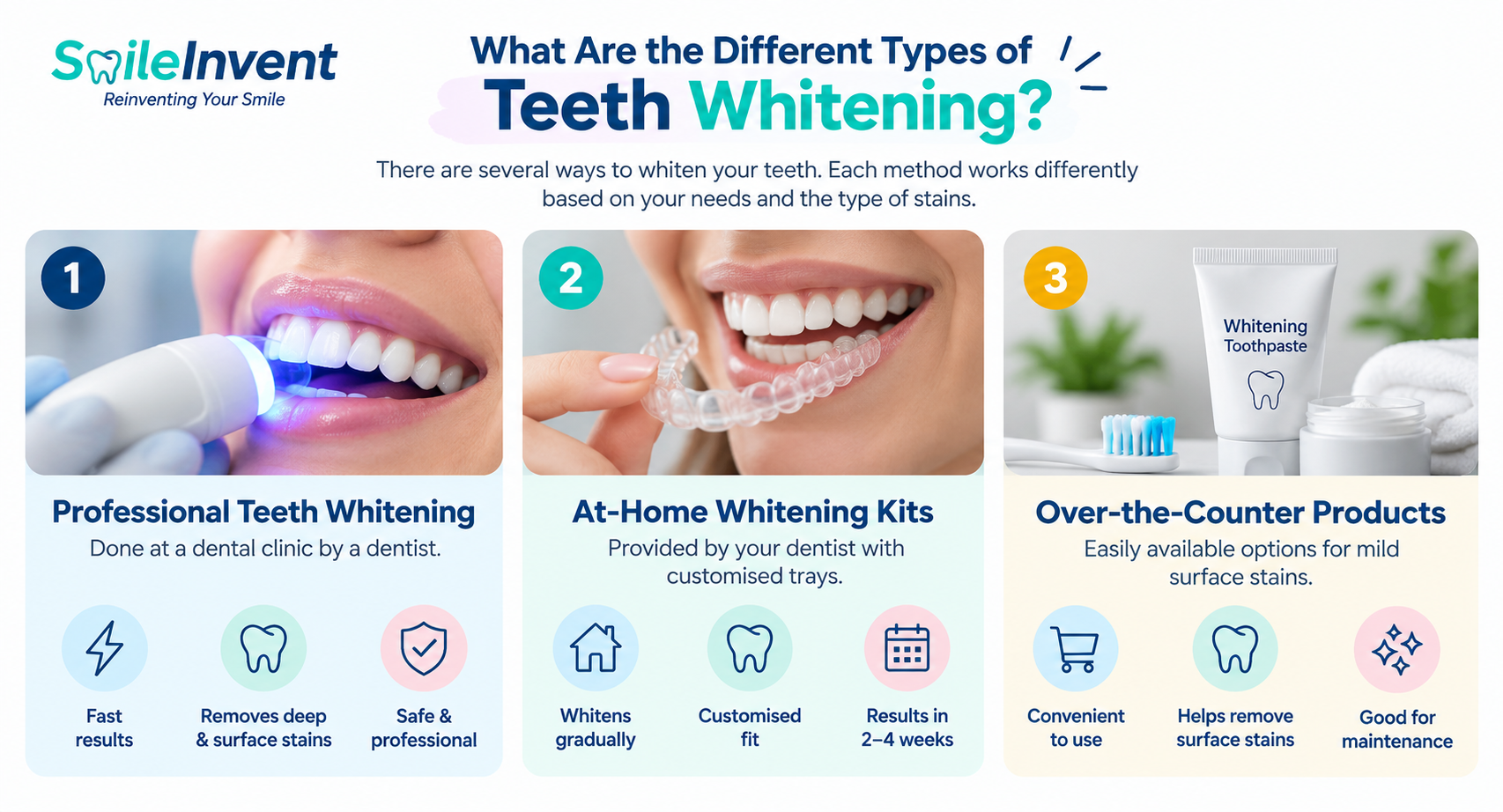
This is the most effective whitening method and is performed by a dentist. In-clinic treatments use high-quality, dental-grade whitening gels along with advanced techniques to remove both surface and deep stains. A dentist ensures the process is safe for your enamel and gums, providing fast and predictable results. Professional whitening is ideal for people with heavy discoloration or those who want a noticeable improvement in a short period, often within a single session.
For individuals who want the convenience of whitening at home but still prefer professional supervision, dentist-dispensed whitening kits are a reliable option. These kits use a higher-strength whitening gel paired with customised trays designed specifically for your teeth. The customised fit ensures even distribution of the gel and prevents it from spilling onto the gums, reducing the risk of irritation.
You apply a small amount of the whitening gel into the trays and wear them for the duration recommended by your dentist. Results develop gradually, usually within 2–4 weeks of consistent use. This method works well for mild to moderate tooth discolouration and offers the flexibility of home treatment with outcomes comparable to in-clinic whitening.
OTC whitening solutions are designed for easy, affordable, at-home use and can be integrated into your everyday oral care routine. Common options include:
Whitening Toothpaste
These toothpastes use gentle abrasives and polishing agents to remove plaque and surface-level stains. Some variants also contain safe whitening boosters to help brighten the teeth over time. Since strong bleaching agents like hydrogen peroxide are restricted in toothpaste formulations in India, consumers should look for enamel-friendly whitening blends that effectively remove stains without causing sensitivity.
For example, some whitening toothpastes include micro-polishing ingredients that help lift superficial discolouration and strengthen enamel with regular use, often showing noticeable improvements within a short period.
Whitening Strips
Whitening strips are thin, flexible sheets coated with a pre-measured whitening gel. They adhere directly to the teeth and remain in place for the recommended period. The peroxide-based gel gently lightens stains when used consistently. Compared to generic store-bought trays, strips are more user-friendly and adapt better to the natural contour of the teeth.
Whitening Mouthwashes
Certain mouthwashes contain low-strength whitening agents that offer mild brightening effects while freshening breath and reducing bacteria. Though they can support your whitening routine, they are not a substitute for bleaching treatments. It’s best to choose products with enamel-safe formulations or those approved by dental professionals.
Some people try natural remedies like brushing with baking soda or oil pulling to lighten their teeth. These methods may help slightly with surface stains but are generally mild and not very effective for deep or stubborn discoloration. Natural remedies are not recommended for long-term whitening and should be used carefully to avoid enamel damage.
Teeth whitening works by targeting the stains that build up on the enamel over time. Whether the treatment is done professionally or at home, the goal is the same to break down discoloration molecules and lighten the shade of the teeth. The process involves specific whitening agents and, in some cases, activation methods that help achieve faster and more effective results. Understanding how whitening works makes it easier to choose the method that best suits your dental needs.
Teeth whitening works mainly through the use of bleaching agents, such as hydrogen peroxide or carbamide peroxide. These agents penetrate the enamel and break down stains caused by food, drinks, tobacco, or ageing. The chemical reaction helps lighten both surface and some deeper stains, making teeth appear brighter.
In professional teeth whitening treatments, a special light or laser is sometimes used to speed up the whitening process. The light activates the bleaching gel, helping it penetrate stains more effectively. This method allows for faster and more noticeable results compared to at-home treatments.
At-home products, including whitening strips, gels, and toothpaste, usually contain lower concentrations of bleaching agents. They gradually remove surface stains but may take longer to show results. These methods are suitable for mild discoloration and maintenance after professional whitening.
Keeping your teeth white after a whitening treatment requires a few simple habits to maintain long-lasting results. Daily routines, food choices, and oral hygiene practices play a big role in preventing stains from returning. With the right care, you can keep your smile bright for a longer time and reduce the need for frequent whitening sessions. Here are some easy ways to maintain your results.
While teeth whitening is generally safe, it can come with certain risks if not done properly or without professional guidance. Some people may experience tooth sensitivity, gum irritation, or uneven results depending on their oral health. Overuse of whitening products can also weaken enamel over time. Understanding these risks helps you choose the right whitening method and avoid potential problems.
One of the most common risks of teeth whitening is temporary tooth sensitivity. Some people may feel mild discomfort or tingling during or after treatment. This usually fades within a few days, but using a lower-strength whitening gel or dentist-supervised care can reduce sensitivity.
Whitening agents can sometimes irritate the gums if they come into direct contact. Professional teeth whitening minimizes this risk with protective barriers, while at-home kits should be used carefully according to instructions.
Teeth that have fillings, crowns, or veneers may whiten differently than natural teeth. This can result in uneven coloring if not properly managed. Professional guidance ensures consistent and natural-looking results.
Using whitening products too often or leaving gels on for too long can damage enamel and increase sensitivity. Following the dentist’s instructions is essential for safe treatment.
Although rare, some people may be sensitive or allergic to ingredients in whitening gels. A dentist can recommend alternatives if needed.
Teeth whitening can brighten your smile, but it’s important to follow the right safety steps to protect your teeth and gums. Not all whitening methods suit everyone, and using them incorrectly may cause sensitivity or irritation. With proper guidance and safe practices, you can achieve good results without harming your oral health. Here are some essential safety tips to keep in mind before starting any whitening treatment.
Before starting any whitening treatment, it’s important to consult a dentist. They can examine your teeth, identify any underlying dental issues, and recommend the safest method for your smile.
Whether using at-home kits or over-the-counter products, follow the instructions exactly. Overuse or incorrect application can lead to sensitivity, gum irritation, or uneven whitening.
During professional whitening, protective barriers are used to shield your gums. When using home kits, make sure the gel does not touch your gums to avoid irritation.
Choose products recommended or prescribed by a dentist. Professional-grade gels and trays are safer and more effective than random over-the-counter products.
After whitening, avoid dark-colored foods and beverages, such as coffee, tea, and red wine, for at least 24–48 hours. This helps maintain results and reduces the risk of new stains forming.
Mild sensitivity is normal, but if it persists or worsens, consult your dentist. They may suggest adjusting the treatment or using a lower-strength gel.
The results of teeth whitening can vary depending on the method used and individual habits. Professional teeth whitening usually provides the longest-lasting results, often maintaining a brighter smile for six months to one year. At-home kits and over-the-counter products may need more frequent use to maintain the same level of brightness.
Several factors can affect how long whitening lasts. Consuming stain-causing foods and drinks such as tea, coffee, red wine, and dark sauces can reduce the longevity of the results. Smoking or tobacco use also shortens the effect. Good oral hygiene, including regular brushing, flossing, and dental cleanings, helps extend the life of whitening treatments.
For most people, occasional touch-ups are recommended to keep teeth looking bright and even. A dentist can advise the best schedule for touch-ups based on your habits and the type of whitening treatment you received.
At Smile Invent Dental Clinic in Bandra East, we provide safe and effective teeth whitening treatments tailored to each patient’s needs. Our experienced dentists first examine your teeth to determine the type of stains and recommend the most suitable whitening method, whether professional in-clinic treatment or a dentist-supervised at-home kit.
We use dental-grade whitening gels and advanced techniques to ensure even, natural-looking results while protecting your enamel and gums. The clinic environment is designed for comfort, and our team focuses on providing a stress-free experience for first-time patients and those looking for touch-ups alike.
Whether you are searching for teeth whitening near me or want a reliable clinic for long-lasting results, Smile Invent ensures personalized care that helps you achieve a brighter, confident smile safely.
No whitening treatment can guarantee 100% perfectly white teeth because natural tooth color varies for everyone. Professional teeth whitening provides the most noticeable and even results, but results also depend on the type of stains and dental health.
The best way is professional teeth whitening under a dentist’s supervision. It is safe, effective, and gives faster results than over-the-counter or home remedies. A dentist can also recommend the right strength and method for your teeth.
No, teeth do not become weak if whitening is done correctly. Dentist-supervised treatments protect enamel and gums. Temporary sensitivity may occur but does not harm the strength of teeth.
Professional in-clinic whitening is generally the most effective, followed by dentist-supervised at-home kits. Over-the-counter products work for mild stains but may not provide dramatic results.
Yes, dentists recommend whitening toothpaste as part of daily oral care. It helps remove surface stains and maintain brightness, but it cannot replace professional whitening for deep or severe stains.
Teeth whitening is a simple and effective way to brighten your smile and boost confidence. Understanding the types of stains, available whitening methods, and proper aftercare can help you choose the safest and most suitable option.
Professional teeth whitening, whether in-clinic or dentist-supervised at-home treatment, provides the most reliable results. Over-the-counter products and natural remedies can help maintain brightness but are less effective for deep stains.
Walk into any supermarket or pharmacy and you will find toothpast...
Read More
Wearing braces can make your daily brushing routine a little more...
Read More
Have you ever noticed a small white mark on your tooth while look...
Read More