
Table of Contents
Baby teeth may be small, but they have a big role in your child's growth and development. They help children chew food properly, learn to speak clearly, and create space for permanent teeth to come in the right position. Many parents assume that baby teeth do not need much attention because they eventually fall out, but healthy baby teeth are the foundation of a healthy smile.
The right dental care should start even before the first tooth appears. A simple daily routine can protect your child from cavities, gum problems, and discomfort later on. That's why learning how to care for baby teeth from an early age can make a real difference.
In this guide, we'll explain when to start baby teething care, how to take care of baby teeth at different stages, and the best ways to keep your child's teeth healthy as they grow. Whether you're a first-time parent or looking to improve your child's oral care routine, these practical tips can help you build healthy habits that last a lifetime.
Baby teeth do much more than create a cute smile. They play an important role in your child's everyday life and support healthy growth and development. Taking good care of baby teeth from the beginning can help prevent dental problems and set the stage for strong permanent teeth in the future. Regular checkups and preventive care through a Pediatric Dentistry treatment can also help identify potential issues early and support healthy dental development as your child grows.
Baby teeth allow children to bite, chew, and enjoy different foods comfortably. Healthy teeth make it easier for children to get the nutrition they need during their growing years.
Teeth help children form words and pronounce sounds correctly. Healthy baby teeth support normal speech development as children learn to communicate.
Baby teeth act as natural placeholders for adult teeth. They keep the right amount of space in the jaw until permanent teeth are ready to emerge.
As children chew and use their teeth every day, their jaws continue to develop. Baby teeth support proper jaw growth and help create room for permanent teeth.
A healthy smile helps children eat, speak, and smile without pain or discomfort. Good oral health can also boost their confidence as they interact with family, friends, and classmates./p>
Many parents think dental care begins when the first tooth appears, but good oral hygiene should start much earlier. Starting early helps keep your baby's mouth clean and makes oral care a natural part of their daily routine. Knowing when to start baby teething care can help prevent dental problems and support healthy tooth development from the beginning.
Even before teeth emerge, it is a good idea to gently clean your baby's gums. Use a soft, clean, damp cloth or gauze to wipe the gums after feedings and before bedtime. This helps remove milk residue and keeps the mouth fresh and clean.
Most babies get their first tooth between 6 and 10 months of age, although every child is different. As soon as the first tooth appears, begin brushing it gently with a soft-bristled baby toothbrush and a small amount of fluoride toothpaste recommended for young children.
Teething can cause symptoms such as sore gums, drooling, irritability, and a desire to chew on objects. During this stage, continue cleaning your baby's teeth and gums regularly. A clean, cool teething ring can also help soothe discomfort and make the teething process easier for your child.
The best time to build healthy habits is from the start. Brushing your baby's teeth twice a day, especially before bedtime, helps protect them from cavities and teaches children that oral care is a normal part of everyday life.
Your child's oral care needs change as they grow. What works for a newborn may not be enough for a toddler with a full set of baby teeth. Following age-appropriate dental care practices can help keep your child's teeth and gums healthy throughout each stage of development.
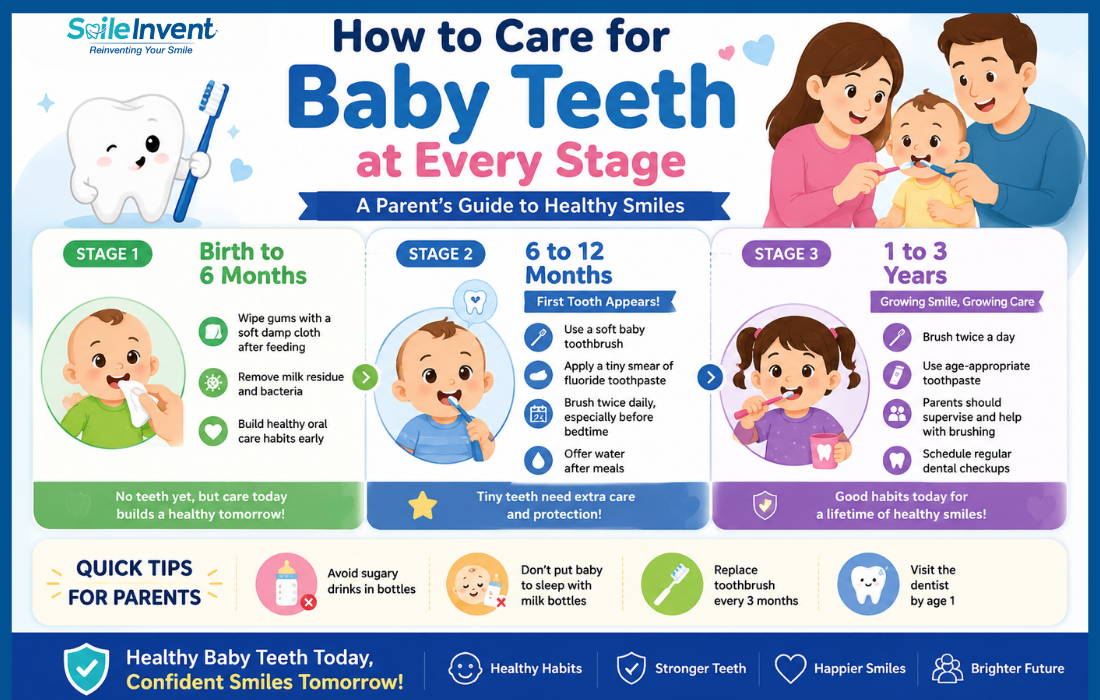
During the first few months, your baby's gums need gentle care even though no teeth are visible yet. After feedings, wipe the gums with a clean, damp cloth or soft gauze. This simple habit helps remove bacteria and milk residue from the mouth.
This is also a good time to establish a routine. Regular gum cleaning helps babies become comfortable with oral care, making brushing easier when their first teeth begin to appear.
The first tooth usually erupts during this stage. Once it appears, start brushing with a soft-bristled baby toothbrush and a tiny smear of fluoride toothpaste. Brush gently twice a day, especially before bedtime.
As your baby begins eating solid foods, pay attention to sugary snacks and drinks. Offering water after meals and maintaining regular brushing can help protect newly erupted teeth from decay.
By this age, many children have several baby teeth and need a more structured oral care routine. Continue brushing twice daily using an age-appropriate toothbrush and the recommended amount of fluoride toothpaste.
Toddlers often want to brush on their own, which is great for building independence. Still, parents should supervise and help with brushing to make sure all tooth surfaces are cleaned properly. Regular dental checkups during these years can also help identify any concerns early and keep your child's smile healthy.
A good oral care routine does not have to be complicated. A few simple habits followed every day can go a long way in keeping your child's teeth healthy and cavity-free. The key is to start early and stay consistent.
Pick a toothbrush designed for your child's age. It should have soft bristles and a small head that can comfortably fit inside your baby's mouth. Replace the toothbrush every three to four months, or sooner if the bristles become worn out.
A comfortable toothbrush makes brushing easier and helps clean teeth without irritating sensitive gums.
As soon as the first tooth appears, use a small smear of fluoride toothpaste about the size of a grain of rice. Once your child reaches the age of three, you can increase the amount to a pea-sized portion.
Using too much toothpaste is not necessary. A small amount is enough to help protect teeth while keeping brushing safe for young children.
Brush your child's teeth every morning and before bedtime. Nighttime brushing is especially important because food particles and bacteria can stay on the teeth while your child sleeps.
Spend about two minutes brushing gently and make sure all tooth surfaces are cleaned, including the front, back, and chewing areas.
Most young children do not have the coordination to brush effectively on their own. Even if they want to hold the toothbrush and try, parents should guide or finish the brushing process.
Making brushing a fun activity through songs, stories, or reward charts can help children develop positive oral care habits and look forward to brushing every day.
Oral hygiene is not only about the teeth. Gently cleaning the tongue and gums can help remove bacteria and keep your child's mouth fresh and healthy.
A complete cleaning routine supports overall oral health and helps children get used to caring for every part of their mouth.
Tooth decay is one of the most common dental problems in young children, but it is often preventable. Small daily habits can make a big difference in protecting your child's teeth. The earlier you start, the easier it becomes to maintain a healthy smile.
Many parents use a bottle to help their baby fall asleep, but this habit can increase the risk of tooth decay. When milk, formula, or juice stays on the teeth for long periods, sugars can feed harmful bacteria and lead to cavities.
If your baby needs a bottle at bedtime, water is the safest option after brushing their teeth.
Sugary snacks, candies, biscuits, and sweetened drinks can increase the risk of cavities. The bacteria in the mouth feed on sugar and produce acids that weaken tooth enamel.
Try to offer healthy snacks such as fruits, vegetables, yogurt, and cheese. Limiting sugary treats can help keep your child's teeth stronger and healthier.
As children grow, encourage them to drink water regularly. Water helps rinse away food particles and keeps the mouth clean between brushing sessions.
It is also a good idea to avoid frequent sipping of sweet drinks throughout the day, as constant sugar exposure can increase the chance of tooth decay.
Cavity-causing bacteria can pass from a parent or caregiver to a child through shared utensils, pacifiers, or by testing food with the same spoon.
Using separate utensils and keeping pacifiers clean can help reduce the transfer of harmful bacteria.
Dental visits are not just for treating problems. Regular checkups help identify early signs of tooth decay before they become more serious. A dentist can also provide guidance on brushing, diet, and other preventive care measures based on your child's age and needs.
Preventive dental care is often the simplest way to keep your child's smile healthy and avoid more complex treatments later.
Most children experience a few dental issues while their baby teeth are developing. Some are a normal part of growing up, while others may need professional attention. Knowing the signs can help parents take action early and protect their child's oral health.
Teething is a natural process, but it can make babies uncomfortable. Many children experience sore gums, excessive drooling, irritability, and a strong urge to chew on objects. These symptoms are usually temporary and improve once the tooth emerges.
Offering a clean, chilled teething ring can help soothe sore gums. Gentle gum massage with clean fingers may also provide relief.
Cavities can develop as soon as the first teeth appear. Frequent exposure to sugary drinks, poor brushing habits, or sleeping with a bottle can increase the risk of tooth decay.
Early treatment is important because untreated cavities can cause pain, infection, and difficulty eating.
White spots may seem harmless, but they can be one of the earliest signs of enamel damage or tooth decay. These spots often appear near the gum line and should not be ignored.
If you notice white patches that do not disappear, it is a good idea to have them evaluated by a pediatric dentist.
Baby teeth can sometimes appear yellow, brown, or stained. This may happen because of poor oral hygiene, certain medications, injury, or the early stages of decay.
Regular brushing and professional dental examinations can help identify the cause and determine if treatment is needed.
Mild gum irritation is common during teething. The gums may appear slightly red or swollen around an erupting tooth. In most cases, these symptoms improve on their own.
If swelling becomes severe, is accompanied by fever, or does not improve after a few days, parents should seek professional dental advice.
Regular dental checkups help keep your child's teeth healthy, but there are times when a visit to a pediatric dentist becomes especially important. Some dental problems may not be obvious at first, so parents should watch for signs that could indicate an underlying issue.
Children may not always be able to explain what is bothering them, but ongoing tooth pain should never be ignored. If your child complains about pain while eating, drinking, or brushing, it could be a sign of tooth decay, sensitivity, or infection.
A dental examination can help identify the cause and prevent the problem from becoming more serious.
Healthy gums should look pink and firm. If your child's gums are swollen, red, or bleed frequently during brushing, it may indicate irritation, infection, or poor oral hygiene.
Early treatment can help protect both the gums and developing teeth.
Dark spots, holes, chipped teeth, or visible signs of decay should be checked by a dentist as soon as possible. Even small cavities can grow quickly in baby teeth and may cause pain or infection if left untreated.
Prompt treatment helps preserve the tooth and prevent further damage.
Changes in tooth color can sometimes signal early tooth decay or enamel problems. White spots are often one of the first warning signs, while brown or black spots may indicate more advanced decay.
A pediatric dentist can determine the cause and recommend the most suitable treatment.
Every child develops at their own pace, but significant delays in tooth eruption may need professional evaluation. If your child has not started getting teeth within the expected age range or if permanent teeth seem delayed, a dental assessment may be helpful.
Early evaluation can rule out developmental or dental concerns.
If your child avoids certain foods, chews on one side of the mouth, or experiences discomfort while eating, there may be an underlying dental issue. Pain, cavities, or gum problems can make eating difficult and affect nutrition.
Addressing these concerns early can help your child eat comfortably and maintain good oral health.
Occasional bad breath is common, but bad breath that continues despite regular brushing may be a sign of tooth decay, gum problems, or bacterial buildup in the mouth.
A dental checkup can help identify the cause and ensure your child's mouth stays healthy and fresh.
Many parents wait until their child has a dental problem before scheduling a visit, but early dental care can help prevent issues before they start. Regular dental checkups allow a pediatric dentist to monitor your child's oral development and provide guidance tailored to their age and needs.
Dental experts recommend scheduling your child's first dental visit by their first birthday or within six months after the first tooth appears, whichever comes first. This early visit helps establish a dental home for your child and gives parents an opportunity to learn the best ways to care for baby teeth.
Early dental checkups help identify potential concerns before they become serious. A pediatric dentist can check for signs of tooth decay, monitor tooth development, and provide advice on brushing techniques, teething care, and healthy feeding habits. These visits also help children become familiar with the dental environment, making future appointments less stressful. They can also help detect early signs of crowding, spacing, or bite issues that may affect your child's smile in the future. Learn more about treatment options and timing in our guide on Braces for Kids.
Most children benefit from dental checkups every six months. Regular visits allow the dentist to track oral health, perform preventive care, and address any concerns at an early stage. The exact schedule may vary depending on your child's dental needs and risk factors.
The first visit is usually simple and comfortable. The dentist will examine your child's teeth, gums, jaw, and overall oral development. Parents can also discuss concerns related to teething, thumb sucking, feeding habits, or oral hygiene routines. The goal of the appointment is to ensure healthy development and help parents feel confident about their child's dental care.
Parents can make dental visits more positive by speaking about the dentist in a calm and encouraging way. Reading children's books about dental checkups or explaining what will happen in simple terms can help reduce anxiety. A positive first experience often encourages children to feel comfortable with dental care as they grow.
Taking care of your child's teeth does not have to be complicated. A simple daily routine can help keep teeth and gums healthy while reducing the risk of cavities and other dental problems. Use this checklist as a quick reminder to stay on track with your child's oral care.
Start the day by brushing your child's teeth with an age-appropriate toothbrush and fluoride toothpaste. Encourage your child to rinse or drink water after breakfast to help remove leftover food particles from the mouth. A few minutes of oral care in the morning can help keep the mouth clean and fresh throughout the day.
Nighttime brushing is one of the most important parts of baby teeth care. Food particles and bacteria can remain on the teeth while your child sleeps, increasing the risk of cavities. Make sure your child brushes thoroughly before bed and avoids eating or drinking anything sugary afterward. If they need a drink, water is the best choice.
In addition to daily brushing, take a quick look at your child's teeth and gums every week. Watch for white spots, dark stains, swelling, or anything unusual. Spotting small problems early can help prevent bigger dental issues and ensure your child maintains a healthy smile.
Healthy habits formed during childhood often stay for life. As a parent, you can help your child build a positive relationship with oral care by making it simple, consistent, and enjoyable. Here are some practical tips to follow:
Caring for your child's teeth starts at home, but regular dental visits are equally important for maintaining long-term oral health. At Smile Invent Dental Clinic, we work closely with parents to help children develop healthy dental habits from an early age. Our approach focuses on preventive care, early diagnosis, and age-appropriate treatments that support healthy smiles as children grow.
We understand that visiting a dental clinic can feel unfamiliar for young children. That's why we strive to create a welcoming and comfortable environment where children feel at ease during their appointments. From routine dental checkups and oral health assessments to cavity prevention and guidance on baby teeth care, our team is committed to supporting your child's oral health at every stage.
If you are looking for a trusted dentist in Mumbai for your child's dental care needs, Smile Invent Dental Clinic offers personalized treatment and professional guidance tailored to growing smiles. Regular dental visits can help identify concerns early, prevent future complications, and ensure that your child develops strong and healthy teeth for years to come.
Baby teeth should be brushed twice a day—once in the morning and once before bedtime. Regular brushing helps remove plaque and reduces the risk of cavities.
Use a fluoride toothpaste recommended for children. For babies and children under three years of age, a small smear of toothpaste about the size of a grain of rice is usually sufficient.
Most babies get their first tooth between 6 and 10 months of age. However, every child develops differently, so some may get teeth earlier or later.
Yes, baby teeth can develop cavities just like permanent teeth. Poor oral hygiene, frequent sugary snacks, and sleeping with a bottle can increase the risk of tooth decay.
Your child should have their first dental visit by their first birthday or within six months after the first tooth appears. Early dental visits help monitor oral development and prevent dental problems.
A clean, cool teething ring, gentle gum massage, and extra comfort from parents can help relieve teething discomfort. Avoid using sugary teething products.
Learning how to care for baby teeth is one of the most important steps parents can take to support their child's oral health. Healthy baby teeth help children eat comfortably, speak clearly, and create the right foundation for permanent teeth. Simple habits such as cleaning the gums early, brushing twice a day, limiting sugary foods, and scheduling regular dental checkups can make a lasting difference.
The key to successful care for baby teeth is consistency. Starting early and following a daily oral care routine can help prevent common dental problems and encourage lifelong healthy habits. If you have questions about how to take care of baby teeth or need professional guidance, regular visits to a trusted dental clinic can help ensure your child's smile stays healthy and strong as they grow.
Walk into any supermarket or pharmacy and you will find toothpast...
Read More
Wearing braces can make your daily brushing routine a little more...
Read More
Have you ever noticed a small white mark on your tooth while look...
Read More