


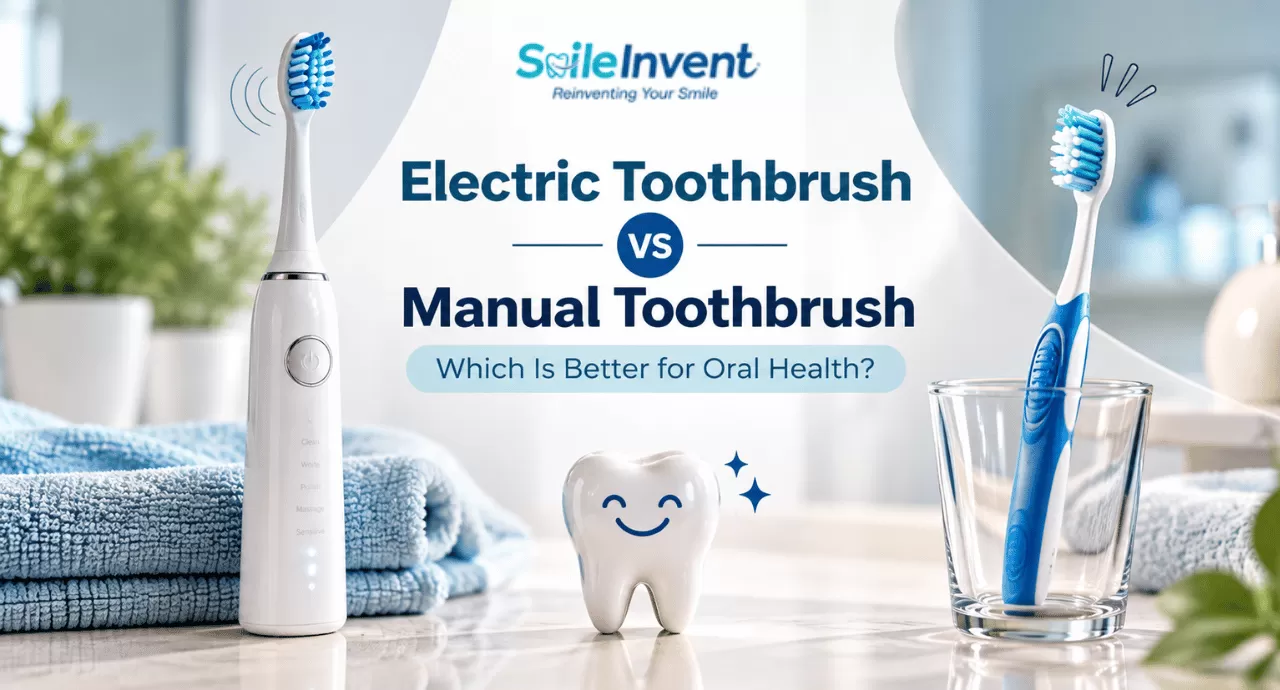
Choosing between an electric toothbrush and a manual toothbrush can be confusing. Both help remove plaque and keep your teeth and gums healthy, but they differ in cleaning action, ease of use, and cost.
An electric toothbrush may help remove plaque more effectively for some people, especially those who find brushing difficult or struggle with their brushing technique. A manual toothbrush can also clean teeth effectively when used correctly. The right choice depends on your oral health needs, brushing habits, and budget.
In this guide, we compare electric and manual toothbrushes, explain their pros and cons, and help you understand which option may suit your needs.
Why Is Brushing Your Teeth Important?
Brushing your teeth twice a day helps remove plaque, prevent cavities, and maintain healthy gums. Poor brushing habits, such as brushing too quickly or missing certain areas, can allow plaque to build up and increase the risk of dental problems.
Both electric and manual toothbrushes can support good oral hygiene when used correctly. Choose a soft-bristled toothbrush, brush for two minutes with fluoride toothpaste, and clean between your teeth daily. Regular dental checkups can also help identify oral health problems early.
Electric Toothbrush vs Manual Toothbrush: Pros and Cons
Choosing between an electric toothbrush and a manual toothbrush depends on your brushing technique, oral health needs, and budget. Both can help remove plaque, but an electric toothbrush uses powered movements that may make cleaning easier for some people.
Manual Toothbrush: Pros and Cons
Pros:
Affordable and easily available: Manual toothbrushes are budget-friendly and easy to find.
Convenient for travel: They are lightweight and do not need charging or batteries.
Effective with the right technique: A soft-bristled manual toothbrush can clean teeth effectively when used correctly.
Cons:
Depends on brushing technique: Missing certain areas or brushing too quickly can leave plaque behind.
Risk of brushing too hard: Excessive pressure can irritate gums and contribute to tooth wear.
May be difficult for some users: People with limited hand mobility may find manual brushing challenging.
Electric Toothbrush: Pros and Cons
Pros:
Helps remove plaque: Electric toothbrushes can offer modest improvements in plaque removal and gum health compared with manual toothbrushes.
Makes brushing easier: Powered movements can help people who struggle with manual brushing technique.
Useful features: Many models include timers and pressure sensors to support better brushing habits.
Helpful for some users: People with braces or limited hand mobility may find an electric toothbrush easier to use.
Cons:
Higher cost: The initial price is usually higher, and replacement brush heads add to ongoing costs.
Needs charging or batteries: This may be inconvenient during travel.
Requires an adjustment period: Some users need time to get comfortable with the powered brushing action.
Which Toothbrush Is Better for Everyday Use?
The best type of toothbrush is one that you can use correctly and consistently. An electric toothbrush may help if you find manual brushing difficult, while a manual toothbrush can work well with proper technique. In either case, brush gently for two minutes, twice a day, using fluoride toothpaste.
Electric Toothbrush vs Manual Toothbrush: Comparison
| Feature | Electric Toothbrush | Manual Toothbrush |
|---|---|---|
| Plaque removal | May offer better plaque removal for some users | Effective when used with the correct technique |
| Brushing technique | Powered movements can make brushing easier | Requires controlled hand movements |
| Ease of use | Helpful for people with limited hand mobility | May require more manual effort |
| Cost | Higher initial cost and replacement-head expenses | More affordable |
| Travel | May require charging or batteries | Lightweight and easy to carry |
| Brushing timer | Available in many models | Usually requires a separate timer |
| Pressure control | Some models include pressure sensors | Depends on the user's brushing pressure |
Both toothbrush types can support good oral health when used correctly. The right choice depends on your brushing habits, dental needs, and budget.
Common Brushing Mistakes to Avoid
Even with the right toothbrush, poor brushing habits can reduce effectiveness and harm oral health. Whether you use a manual or an electric toothbrush, avoiding these common mistakes is essential:
- Brushing too hard: Excess pressure can wear down enamel and irritate gums. Let the brush do the work.
- Not brushing long enough: Brushing for less than two minutes often leaves plaque behind.
- Skipping certain areas: Back teeth, gum lines, and inner surfaces are commonly missed.
- Using worn-out bristles: Old or frayed bristles clean poorly and can damage gums
- Neglecting the tongue: Bacteria on the tongue can cause bad breath and affect oral hygiene.
- Rinsing immediately after brushing: Rinsing with water right away washes off fluoride. Spit out excess toothpaste and wait before rinsing.
Best Toothbrush for Limited Hand Mobility
Brushing teeth can be challenging for individuals with conditions like arthritis, Parkinson’s disease, or reduced grip strength. In such cases, choosing the best toothbrush for limited hand mobility becomes an important step for maintaining oral hygiene effectively and comfortably.
From our professional experience at Smile Invent Dental Clinic, patients with hand mobility issues often find electric toothbrushes more practical. The automated brushing action reduces the need for complex wrist movements and provides consistent cleaning. Features such as larger ergonomic handles, lightweight design, and built-in timers make these brushes easier to use and more reliable than standard manual options.
For those who prefer manual brushes, look for models with a thick, non-slip grip or handle attachments that improve control. Adaptive aids like foam sleeves or angled handles can also make brushing more manageable.
When selecting the best toothbrush for limited hand mobility, the goal is to minimize strain while ensuring effective plaque removal. Consulting a dentist can help in choosing the most suitable option based on your individual needs. At Smile Invent Dental Clinic, we guide our patients toward tools and techniques that support long-term oral health, especially when mobility is limited.
Risks of Using an Electric Toothbrush
Electric toothbrushes are highly effective for oral hygiene, but like any tool, they come with certain considerations and potential risks:
Over-brushing and Gum Damage
Some people apply too much pressure while using an electric toothbrush. This can lead to gum recession, enamel wear, and tooth sensitivity. Although many modern brushes have pressure sensors, improper use can still cause damage over time. Learn how to prevent gum damage with proper brushing techniques.
Tooth Sensitivity
The vibrating or oscillating motion may feel uncomfortable for individuals with sensitive teeth, gum recession, or exposed dentin. This usually improves with time, but in some cases, patients may prefer softer bristle heads or switching back to manual brushing.
Cost of Maintenance
While the toothbrush itself is a one-time purchase, the replacement brush heads need to be changed every 3 months. These costs can add up, and using worn-out brush heads reduces cleaning efficiency.
Dependency on Power Supply
Electric toothbrushes require charging or batteries. If not charged properly, especially during travel, it may not be ready when needed—something that never happens with manual brushes
Not Always Ideal for Everyone
Children under a certain age or individuals with certain dental conditions might find electric toothbrushes too strong unless specifically designed for them. Choosing the right type of brush head is important.
Which Toothbrush Should You Choose?
When it comes to oral hygiene, there is no single “best” toothbrush for everyone. The right choice depends on your dental needs, budget, and lifestyle.
Choose a Manual Toothbrush if:
- You’re looking for a cost-effective and easily available option.
- You travel frequently and want something lightweight and portable.
- You have good brushing habits and are confident in your technique (brushing for 2 minutes, reaching all surfaces, and not applying too much pressure).
- You prefer a simple and straightforward option without worrying about charging or replacements.
Choose an Electric Toothbrush if:
- You have braces, crowns, bridges, or other dental work, where thorough cleaning is essential.
- You find manual brushing difficult due to arthritis, mobility issues, or limited hand strength.
- You want extra features like built-in timers, pressure sensors, or different cleaning modes.
- You’re looking for a brush that makes it easier for children or seniors to maintain oral hygiene.
Key Point to Remember
The most important factor is not the type of toothbrush but how consistently and correctly you use it. Whether manual or electric, brushing twice a day for at least two minutes, using fluoride toothpaste, and replacing your brush (or brush head) every three months are essential for maintaining oral health.
How to Brush Your Teeth?
No matter which toothbrush you choose—manual or electric—the correct brushing technique is what keeps your teeth and gums healthy. Here’s how to do it properly:
Brush Twice a Day
Always brush in the morning and before bedtime. This helps remove food particles, plaque, and bacteria.
Use the Right Amount of Toothpaste
For adults, a pea-sized amount of fluoride toothpaste is enough. For children under 6, use a rice-grain-sized smear.
Correct Brushing Technique
- Hold the toothbrush at a 45-degree angle to your gums.
- Use gentle, circular motions to clean the outer, inner, and chewing surfaces of your teeth.
- Avoid scrubbing too hard, as this can wear down enamel and irritate gums
Don’t Forget the Gum Line and Tongue
Gently brush along the gum line and also clean your tongue to remove bacteria and keep your breath fresh.
Time it Right
Brush for at least two minutes. Many electric toothbrushes come with built-in timers to help with this.
Replace Your Toothbrush Regularly
Change your manual toothbrush or electric brush head every 3 months, or sooner if bristles are frayed.
Smile Invent’s Expert Advice
At Smile Invent Dental Clinic, we often get asked: “Which toothbrush is the best—manual or electric?” Our answer is simple: the best toothbrush is the one you will use regularly and correctly.
Here’s our professional advice for patients:
Consistency Matters Most
Brushing twice a day with proper technique is more important than the type of toothbrush you use. Even the most advanced electric brush won’t help if you don’t use it regularly.
Choose Based on Your Dental Needs
- If you have braces, implants, or mobility issues, an electric toothbrush can give better results.
- If you are comfortable with a manual toothbrush and have good brushing habits, it can be just as effective.
Avoid Over-Brushing
We often see patients brushing too hard, which can damage enamel and gums. Whether manual or electric, gentle brushing with soft bristles is key.
Replace on Time
Change your manual toothbrush or electric brush head every 3 months. Frayed bristles don’t clean effectively and may harm your gums.
Seek Professional Guidance
Every patient’s dental condition is different. If you have sensitive teeth, gum problems, or orthodontic treatment, our dentists can guide you toward the right choice for your oral health.
FAQs
1. How to use an electric toothbrush effectively?
Place the brush gently against your teeth and gums and let it do the work—no scrubbing needed. Move slowly from tooth to tooth, cleaning all surfaces evenly. Use a soft brush head and replace it every 3 months.
2. How long should you brush your teeth with an electric toothbrush?
Brush for 2 minutes, twice a day. Most electric toothbrushes have built-in timers to help you clean each area of your mouth properly.
3. How often should I replace my toothbrush or brush head?
It’s best to replace it every 3 months, or sooner if the bristles are frayed. A worn-out brush cannot clean teeth effectively.
4. Can children use electric toothbrushes?
Yes, electric toothbrushes can be safe and effective for children (usually recommended for ages 3+). Look for age-appropriate models with soft bristles.
5. Are battery-operated toothbrushes as effective as rechargeable electric ones?
Battery-operated brushes are a step up from manual, but rechargeable electric toothbrushes generally offer stronger, consistent power and extra features like timers and pressure sensors.
6. Do I still need to floss if I use an electric toothbrush?
Yes. Toothbrushes, manual or electric, cannot reach between teeth as effectively as floss. Flossing once a day is essential for complete oral hygiene.
7. Which type of toothbrush is better for people with sensitive teeth?
Both manual and electric can be suitable if they have soft bristles. However, electric toothbrushes with pressure sensors may help prevent over-brushing, which is beneficial for sensitive teeth.
8. Can an electric toothbrush whiten my teeth?
While it won’t change the natural color of your teeth, an electric toothbrush may help reduce surface stains more effectively than a manual one, giving a cleaner and brighter appearance.
Conclusion
When it comes to the debate of electric toothbrush vs. manual toothbrush, there is no one-size-fits-all answer. Both can keep your teeth and gums healthy if used properly and consistently.
- A manual toothbrush is simple, affordable, and effective when the right brushing technique is followed.
- An electric toothbrush offers added convenience, better plaque removal for some people, and helpful features like timers and pressure sensors.
The key takeaway is this: Consistency, proper brushing habits, and regular dental check-ups matter more than the type of toothbrush you choose.
At Smile Invent Dental Clinic, we encourage our patients to select a toothbrush that fits their lifestyle and comfort while focusing on good oral hygiene practices. If you’re unsure about which option suits you best, our dentists are here to guide you.
This article is general information, not a diagnosis. For advice about your own teeth, book a consultation.