
Table of Contents
Tooth pain that comes and goes can be caused by several dental problems, including tooth sensitivity, cavities, a cracked tooth, gum disease, or an irritated tooth nerve. You may notice the pain while eating or drinking something hot or cold, biting down, or sometimes even when there is no obvious trigger.
The fact that the pain stops does not always mean the problem has gone away. If the same tooth keeps hurting, the pain becomes more frequent or lasts longer, or you develop swelling, fever, or pain when biting, you should have it checked by a dentist.
In this blog, we’ll explain why tooth pain comes and goes, the common causes of intermittent toothache, warning signs that need dental attention, how dentists find the cause, and the treatment options available.
Intermittent tooth pain is a toothache that comes and goes instead of staying constant. You may feel discomfort while eating, sipping a hot cup of tea, drinking cold water, or biting into something hard. Once the trigger is gone, the pain may fade away. Some people feel a dull ache, while others experience throbbing tooth pain or a sharp pain that lasts only a few seconds.
This type of pain often happens because the inner part of the tooth becomes sensitive. A cavity, worn enamel, a cracked tooth, or an irritated tooth nerve can react to heat, cold, pressure, or sugary foods. If the pain is caused by deep decay affecting the nerve, you may need Root Canal Treatment to save the tooth.
Many people ignore intermittent tooth pain because it isn't constant. They wait until the pain becomes severe before visiting a dentist. But early dental treatment is usually simpler and can prevent the problem from getting worse. If your tooth pain keeps returning, even if it comes and goes, it's a good idea to have it checked by a dentist.
If your tooth pain disappears after a few minutes or hours, it doesn't always mean the problem is gone. In many cases, the pain is triggered by something specific, such as eating hot or cold food, drinking a sweet beverage, or putting pressure on the tooth while chewing. Once that trigger is removed, the pain may stop. But the tooth or the surrounding tissues may still be damaged.
Pain also depends on how irritated the tooth nerve is. In the early stages of a cavity or a cracked tooth, the nerve may only react occasionally. As the damage becomes worse, the pain usually becomes more frequent and lasts longer. That's why a toothache that comes and goes should never be ignored, even if it feels manageable.
Common triggers that can cause intermittent tooth pain include:
If you notice that the same tooth hurts repeatedly under these conditions, it's a sign that your teeth need professional attention. Early treatment can stop the pain and prevent a small dental problem from turning into a bigger one.
Several dental problems can cause a toothache that appears for a while and then disappears. Some causes are minor and easy to treat, while others need immediate dental care. Here are the most common reasons behind intermittent tooth pain.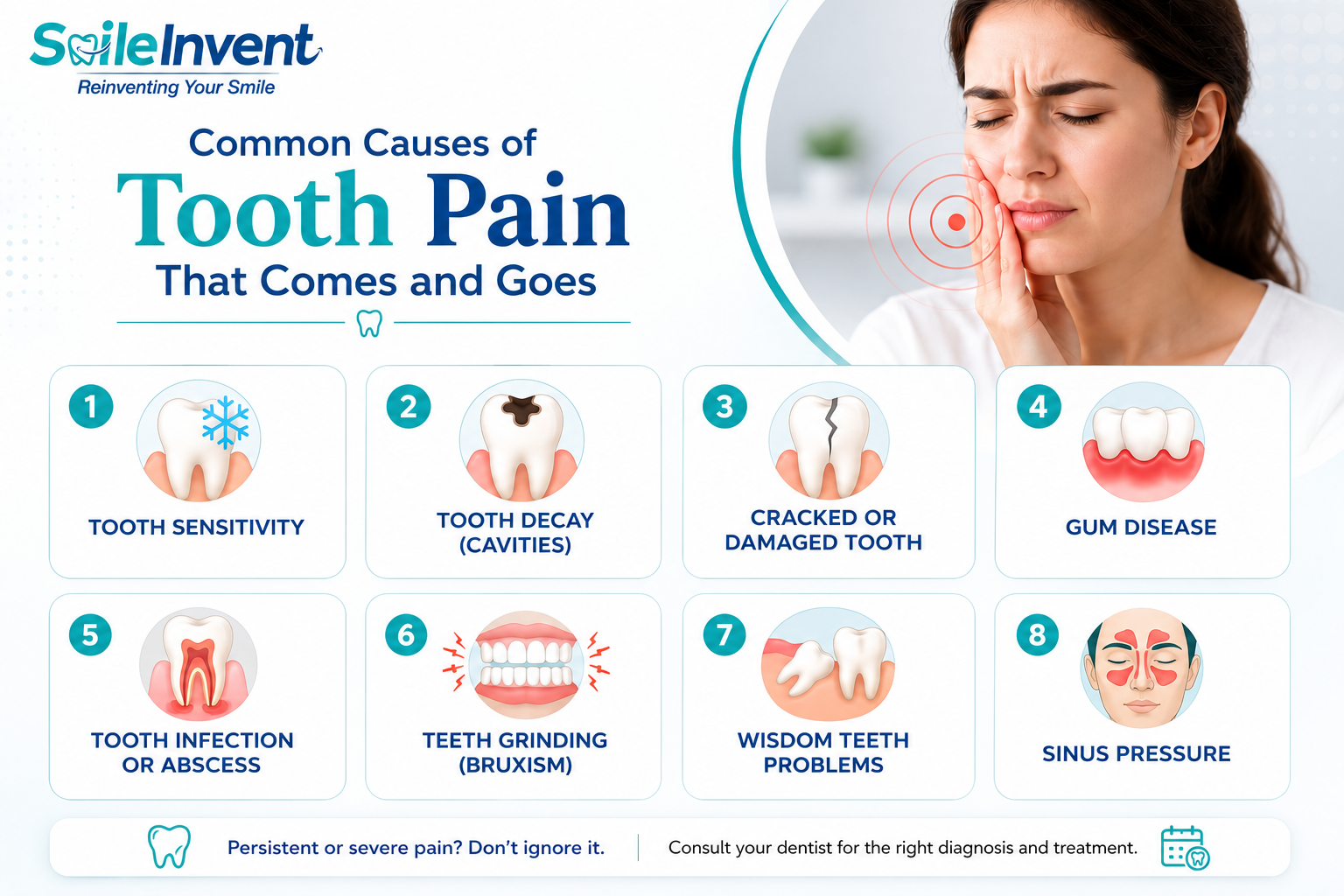
Tooth sensitivity is one of the most common reasons for occasional tooth pain. When the protective enamel wears down or the gums recede, the inner layer of the tooth becomes exposed. This makes the tooth react to hot drinks, cold foods, sweets, or even cold air.
The pain is usually short and sharp, but if it keeps happening, it's best to get it checked. A dentist can recommend treatments such as desensitizing toothpaste, fluoride application, or other solutions based on the cause.
A small cavity may not hurt all the time. In the early stages, you may only feel pain when eating sugary foods or drinking something cold. As the decay spreads deeper into the tooth, the discomfort becomes more frequent and intense.
Treating a cavity early with a dental filling is much easier than waiting until the tooth needs more complex treatment.
A tiny crack in a tooth isn't always visible, but it can cause pain when you bite down or release pressure after chewing. The discomfort may come and go, making it easy to mistake it for a temporary problem.
Cracked teeth don't heal on their own. Depending on the severity of the damage, your dentist may recommend a dental crown or other restorative treatment to protect the tooth.
Healthy gums support your teeth and protect their roots. When gums become infected or start pulling away from the teeth, the roots can become exposed, leading to pain and sensitivity.
You may also notice swollen gums, bleeding while brushing, or bad breath. Treating gum disease early can prevent further damage to both your gums and teeth. Regular professional teeth cleaning can help remove plaque and tartar, reducing the risk of gum disease and keeping your gums healthy.
A tooth infection can cause tooth nerve pain that comes and goes, especially in the early stages. As the infection spreads, the pain often becomes severe and may be accompanied by swelling, pus, or a bad taste in the mouth.
This is a dental emergency and should never be ignored. Prompt treatment can stop the infection from spreading and help save the tooth.
Many people grind or clench their teeth while sleeping without realizing it. This repeated pressure can wear down the enamel, strain the tooth nerve, and cause pain that is more noticeable in the morning.
If teeth grinding is the cause, your dentist may recommend a custom night guard to protect your teeth and reduce pressure.
Wisdom teeth can cause recurring pain when they don't have enough space to grow properly. The discomfort may come and go, especially if food gets trapped around the partially erupted tooth or the surrounding gum becomes inflamed.
Regular dental check-ups and X-rays can help determine whether the wisdom tooth needs treatment or removal.
Not all toothaches begin inside the tooth. A sinus infection or congestion can put pressure on the upper back teeth because the sinus cavities are located close to their roots. The pain often feels dull and may affect several teeth instead of just one.
If the discomfort gets worse along with nasal congestion, facial pressure, or a headache, the cause may be sinus-related rather than a dental problem.
Not every toothache is an emergency, but some symptoms should never be ignored. If your tooth pain comes and goes for several days or keeps getting worse, it's time to schedule a dental appointment. Early treatment can prevent complications and may help save your natural tooth.
Seek dental care as soon as possible if you notice any of the following warning signs:
Many people wait until the pain becomes unbearable before visiting a dentist. By then, a simple problem like a small cavity may have reached the tooth nerve and require more extensive treatment. If your toothache keeps coming back, don't wait for it to become severe. Getting it checked early is the best way to protect your oral health and avoid unnecessary discomfort.
Tooth pain may disappear for a while, but that does not always mean the underlying problem has healed. A cavity, cracked tooth, gum problem, or irritated tooth nerve can continue to cause damage even when the pain is not constant.
If your toothache keeps coming back, becomes more frequent, lasts longer, or starts to hurt when you bite or chew, it is best to have the tooth examined by a dentist. Finding the cause early can help prevent the problem from becoming more serious.
Finding the exact cause of a toothache is the first step toward the right treatment. Since different dental problems can cause similar symptoms, your dentist will examine your teeth, gums, and bite before recommending any procedure. They will also ask questions about when the pain started, what triggers it, and whether it comes and goes or stays constant.
The table below shows how dentists diagnose the most common causes of tooth pain:
After identifying the cause, your dentist will explain the condition and recommend the most suitable treatment. Early diagnosis not only relieves pain faster but also helps prevent the problem from becoming more serious.
The right treatment depends on what's causing your tooth pain. While painkillers may provide temporary relief, they don't fix the underlying problem. A proper dental examination can identify the cause and help your dentist choose the most effective treatment.
Ignoring intermittent tooth pain can allow the problem to become more serious over time. Visiting a dentist early often means simpler treatment, faster recovery, and a better chance of saving your natural tooth.
While not every toothache can be prevented, good oral care can greatly reduce your risk of cavities, gum disease, tooth sensitivity, and other common dental problems. Small daily habits can make a big difference in keeping your teeth healthy and pain-free.
Here are some simple ways to help prevent tooth pain:
If you notice tooth sensitivity or a toothache that comes and goes, don't wait for the pain to become severe. Early dental care is often the easiest and most effective way to protect your smile.
A toothache that comes and goes may seem harmless, but it can be an early sign of a dental problem that needs attention. At Smile Invent Dental Clinic, our experienced team takes the time to find the root cause of your tooth pain instead of simply treating the symptoms. Whether the discomfort is caused by tooth sensitivity, cavities, gum disease, a cracked tooth, or an infection, we provide personalized care to help restore your oral health.
If you're looking for a trusted dentist in Mumbai for toothache treatment, Smile Invent Dental Clinic offers comprehensive dental care using modern diagnostic technology and advanced treatment methods. After a thorough examination, our dentists create a treatment plan that is tailored to your needs. From preventive care and tooth fillings to root canal treatment and gum care, we focus on relieving pain while protecting your natural teeth whenever possible.
If your tooth pain keeps coming back or you're experiencing throbbing tooth pain, don't ignore it. Booking a dental check-up early can prevent further damage and help you avoid more complex treatment later. Visit Smile Invent Dental Clinic and let our experienced team help you enjoy a healthy, pain-free smile.
Not always. Mild pain may not need immediate treatment, but it should never be ignored. If the pain becomes severe, keeps returning, or is accompanied by swelling, fever, or difficulty chewing, you should visit a dentist as soon as possible.
Hot and cold temperatures can trigger pain when the protective enamel is worn down or the tooth nerve becomes irritated. This often happens because of tooth sensitivity, a cavity, or a small crack in the tooth.
The pain can stop temporarily, but the underlying problem may still be present. If the pain keeps returning, schedule a dental examination to find the cause.
Keep your appointment even if the pain has stopped. Avoid chewing on the affected side, brush gently, and stay away from very hot, cold, or sugary foods until your dentist examines the tooth.
Yes. Stress can lead to teeth grinding or jaw clenching, especially during sleep. This puts extra pressure on your teeth and jaw, which may cause discomfort, tooth sensitivity, or occasional tooth pain.
A warm saltwater rinse, a cold compress for swelling, or over-the-counter pain relief may provide temporary comfort. These remedies don't treat the actual cause, so it's still important to see a dentist if the pain keeps coming back.
So, why does tooth pain come and go? In most cases, it's a sign that something is affecting your tooth or gums, even if the discomfort isn't constant. Issues such as tooth sensitivity, cavities, cracked teeth, gum disease, or tooth infections can cause pain that appears and disappears depending on the trigger. While the pain may seem minor at first, the underlying problem often continues to progress.
If you're experiencing intermittent tooth pain, don't wait for it to become severe. Early diagnosis and treatment can help prevent further damage and protect your oral health. If your toothache keeps returning, schedule a dental check-up to identify the cause and get the right treatment before the problem becomes more serious.

Walk into any supermarket or pharmacy and you will find toothpast...
Read More
Wearing braces can make your daily brushing routine a little more...
Read More
Have you ever noticed a small white mark on your tooth while look...
Read More