
Table of Contents
Thumb sucking is a common habit among babies and young children. Many children start sucking their thumbs even before they are born, and it often continues during infancy and the toddler years. For most children, it is a natural way to feel safe, calm, and comfortable, especially when they are tired, anxious, or trying to fall asleep.
In many cases, thumb sucking is harmless and children stop on their own as they grow older. But when the habit continues for several years or becomes frequent and forceful, it can start affecting the way the teeth and jaws develop. Parents often begin to worry when permanent teeth start coming in and the thumb-sucking habit is still present.
If you're wondering how to stop thumb sucking or whether your child needs a thumb sucking guard, you're not alone. In this guide, we'll explain why children suck their thumbs, how long the habit usually lasts, its effects on teeth, and the most effective ways to help your child break the habit gently and successfully.
Thumb sucking is a natural reflex that begins very early in life. In fact, some babies start sucking their thumbs while still in the womb. After birth, this habit often continues because it provides a sense of comfort and security. Just as adults may have habits that help them relax, children use thumb sucking to soothe themselves during different situations.
Many children suck their thumbs when they are feeling tired, sleepy, anxious, bored, or overwhelmed. A toddler may suck their thumb before bedtime, during a long car ride, or when adjusting to a new environment. The habit can also become part of a child's daily routine, making it something they do without even realizing it.
Some of the most common reasons children suck their thumbs include:
Parents should remember that thumb sucking is rarely a sign of a serious problem. In most cases, it is simply a normal childhood habit. The real concern is not why a child sucks their thumb, but how long the habit continues and whether it starts affecting their teeth and oral development. If you are concerned about the impact of thumb sucking on your child's smile, a Pediatric Dentistry consultation can help assess their oral development and identify any potential issues early.
Most children naturally stop sucking their thumbs as they grow older. The habit is most common during infancy and the toddler years because it provides comfort and helps children feel secure. Many children gradually lose interest in thumb sucking between the ages of 2 and 4 without any intervention from parents.
Every child is different, so there is no exact age at which thumb sucking stops. Some children give up the habit quickly, while others continue doing it occasionally during sleep, when they are tired, or during stressful situations. Occasional thumb sucking at a young age is usually not a cause for concern.
The table below gives a general idea of what parents can expect:
The biggest concern is not the child's age alone, but how often and how forcefully they suck their thumb. A child who occasionally sucks their thumb before sleep may have fewer dental issues than a child who sucks vigorously for several hours every day. That's why parents should pay attention to the pattern of the habit rather than focusing only on age.
If thumb sucking continues after the age of 5 or begins affecting the position of the teeth, it may be time to seek advice from a pediatric dentist.
Many parents worry as soon as they notice their child sucking their thumb, but in most cases, there is no need to panic. Thumb sucking is a normal part of childhood and often disappears on its own. The concern usually begins when the habit continues beyond the preschool years or becomes strong enough to affect the development of the teeth and jaws.
Parents should pay closer attention if their child is still sucking their thumb after the age of 4 or 5, especially when permanent teeth are starting to emerge. At this stage, frequent thumb sucking can place pressure on the teeth, gums, and roof of the mouth. Over time, this may lead to alignment issues that could require orthodontic treatment later.
You may want to consult a pediatric dentist if you notice any of the following signs:
It is also worth remembering that not all thumb-sucking habits have the same impact. A child who lightly rests their thumb in their mouth may experience fewer problems than a child who sucks forcefully for long periods. The intensity and frequency of the habit often matter more than the habit itself.
Early guidance can make a big difference. If you are unsure whether your child's thumb sucking is affecting their oral health, a dental check-up can help identify potential issues before they become more serious.
Thumb sucking is usually harmless during infancy and early childhood. But if the habit continues for a long time, especially after permanent teeth begin to appear, it can affect your child's oral development. The longer and more forcefully a child sucks their thumb, the greater the chances of dental problems. Along with addressing thumb sucking habits, parents should also focus on proper oral hygiene and understand how to care for baby teeth to support healthy dental development.
One of the most common effects of thumb sucking is that the upper front teeth begin to move forward. This happens because the thumb places constant pressure on the teeth. As a result, the teeth may stick out more than normal, affecting both appearance and function.
Children who suck their thumbs for several years may develop an open bite. In this condition, the upper and lower front teeth do not touch when the mouth is closed. This can make biting into foods like sandwiches, fruits, or chapatis more difficult.
Thumb sucking can gradually shift teeth out of their natural position. Crooked or crowded teeth may develop over time, increasing the likelihood of orthodontic treatment such as braces or clear aligners later in life.
The pressure created by thumb sucking can influence the growth of the jaw. In some cases, the upper jaw and lower jaw may not develop in proper alignment, leading to bite problems that require professional correction.
Frequent thumb sucking may affect the shape of the palate, which is the roof of the mouth. The palate can become narrower than normal, which may contribute to orthodontic issues as the child grows.
Some children who continue thumb sucking for an extended period may develop speech challenges. Certain sounds, such as "s," "z," or "th," may become harder to pronounce clearly because of changes in tooth position or bite alignment.
When thumb sucking affects the teeth and jaws, children may require braces, aligners, or other orthodontic treatments in the future. Breaking the habit at the right time can help reduce the risk of these complications.
Not every child who sucks their thumb will develop these problems. Many children stop the habit naturally and experience no long-term effects. Still, if thumb sucking continues beyond the preschool years, regular dental check-ups can help ensure that your child's teeth and jaws are developing properly.
Breaking a thumb-sucking habit takes patience. Many children use thumb sucking as a source of comfort, so forcing them to stop suddenly can sometimes make the habit stronger. The goal is to encourage your child gently and consistently while helping them find healthier ways to feel secure.
Here are some practical strategies that parents can try:
Praise your child when they avoid thumb sucking, even for a short period. Small rewards, stickers, or a progress chart can help motivate them. Children often respond better to encouragement than criticism.
Pay attention to when your child sucks their thumb. Is it before sleep, during car rides, or when they feel anxious? Once you identify the trigger, you can help them find another way to cope.
Constantly criticizing or punishing a child for thumb sucking can create stress and frustration. In some cases, it may even make the habit worse. A calm and supportive approach usually works better.
Many children suck their thumbs without realizing it. A simple reminder can help them become more aware of the habit. Try using a friendly signal or code word instead of repeatedly telling them to stop.
Activities that keep the hands occupied can reduce thumb sucking. Drawing, coloring, puzzles, building blocks, crafts, or playing with sensory toys can help distract children from the habit.
Set small goals and celebrate progress. For example, reward your child for going a full day, a weekend, or a week without thumb sucking. Consistent encouragement can build confidence and motivation.
Many children suck their thumbs while falling asleep. Reading a story, listening to calming music, cuddling a favorite toy, or following a relaxing bedtime routine can provide comfort without relying on thumb sucking.
Some parents find success with thumb covers, gloves, or specially designed thumb protectors. These act as gentle reminders and can help children become more aware of the habit, especially during sleep.
Children are more likely to cooperate when they understand the reason behind a change. Explain in simple words how thumb sucking can affect their teeth and smile. Keep the conversation positive and age-appropriate.
If thumb sucking continues despite your efforts, a pediatric dentist can help. Professional advice, habit-breaking techniques, or a thumb sucking guard may be recommended based on your child's age and oral development.
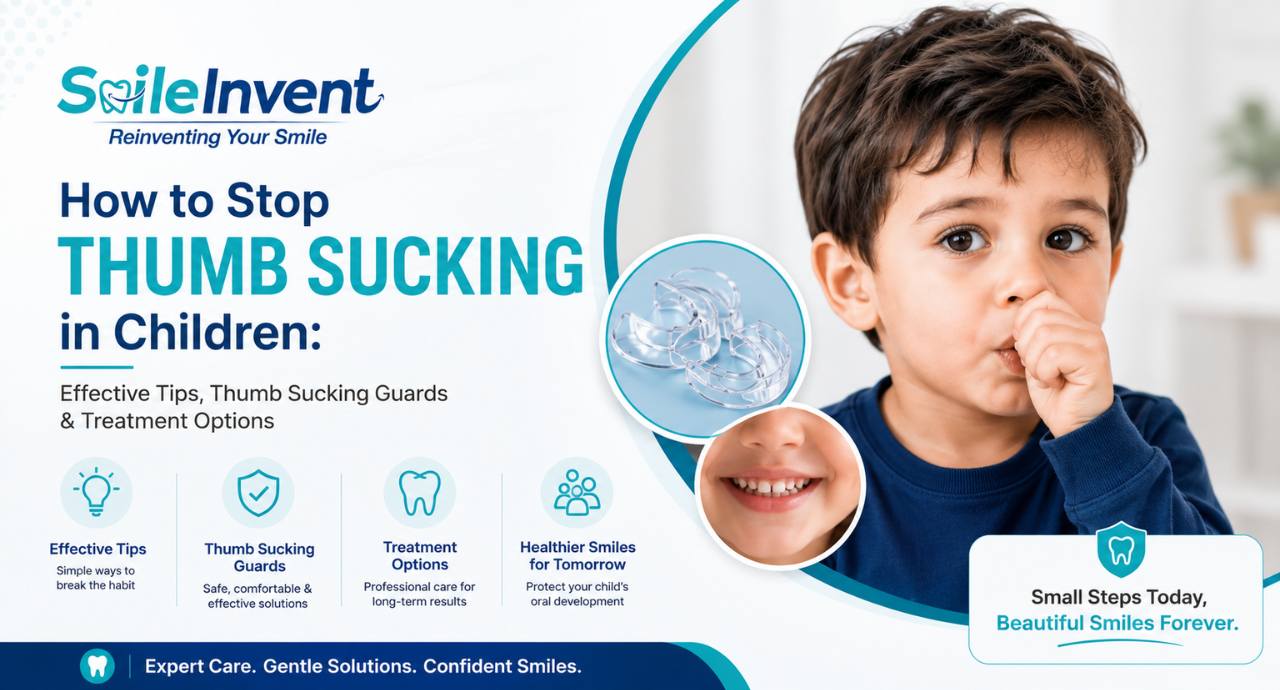
A thumb sucking guard is a device designed to help children break the habit of thumb sucking. It acts as a physical reminder that makes thumb sucking less comfortable and less automatic. Parents often consider a thumb sucking guard when gentle reminders, reward systems, and other home strategies have not been successful.
Thumb sucking guards come in different forms. Some are worn over the thumb like a protective cover, while others are habit-breaking appliances recommended by a pediatric dentist. The type of guard used depends on the child's age, the severity of the habit, and whether there are already signs of dental changes.
A thumb sucking guard is not a magic solution. It works best when combined with encouragement, patience, and positive reinforcement. Children are more likely to succeed when they understand why they are using the guard and feel supported throughout the process.
If your child continues thumb sucking despite using a guard or if you notice changes in their teeth, it may be time to consult a pediatric dentist. Professional guidance can help determine whether additional treatment is needed.
Thumb sucking is a normal part of childhood, but taking a few simple steps early on can help prevent it from becoming a long-term habit. The earlier parents recognize the pattern, the easier it is to guide children toward healthier ways of finding comfort and security.
Children often suck their thumbs when they are tired, anxious, bored, or adjusting to a new situation. Instead of focusing only on stopping the habit, try to understand what is causing it. If your child uses thumb sucking to feel calm, offering alternative comfort methods can make a big difference.
Many children stop thumb sucking naturally as they grow older. The goal is not to rush the process but to gently reduce the habit before it starts affecting the teeth and jaw. A supportive environment often works far better than pressure or strict rules.
If the habit continues beyond the preschool years or you notice changes in your child's teeth, seeking professional advice early can help prevent future dental complications.
Yes, a pediatric dentist can help when thumb sucking becomes difficult to manage at home or starts affecting your child's teeth. Many parents try reminders, reward charts, and thumb sucking guards, but some children need additional support to break the habit successfully.
During a dental visit, the dentist will examine your child's teeth, bite, and jaw development to check whether thumb sucking is causing any changes. Early evaluation is helpful because small dental issues are often easier to manage before they become more serious.
A pediatric dentist may recommend:
Many children respond well when a dentist explains the effects of thumb sucking in a friendly and age-appropriate way. Sometimes hearing the advice from a dental professional can motivate a child more than repeated reminders from family members.
Parents should consider scheduling a dental consultation if thumb sucking continues after the age of 5, occurs frequently throughout the day, or if they notice changes in tooth position, bite alignment, or speech. Professional guidance can help protect your child's smile and reduce the risk of future orthodontic problems.
At Smile Invent Dental Clinic, we understand that every child is different. Some children stop thumb sucking on their own, while others need a little extra guidance and support. Our team focuses on creating a comfortable and friendly environment where children feel relaxed during their dental visits. This helps us build trust and makes dental care a positive experience from an early age.
If thumb sucking is affecting your child's teeth or oral development, our experienced dental team can assess the situation and recommend the most suitable solution. From preventive dental care and regular check-ups to habit-breaking guidance and orthodontic evaluations, we provide personalized care based on your child's needs. We also work closely with parents, helping them understand the best ways to encourage healthy oral habits at home.
If you are looking for a trusted dentist in Mumbai for your child's dental care, Smile Invent Dental Clinic offers comprehensive pediatric dental services with a focus on prevention, early intervention, and long-term oral health. Our goal is to help every child achieve a healthy, confident smile that lasts a lifetime.
Thumb sucking is a natural reflex that often begins during infancy. Babies suck their thumbs, fingers, or pacifiers because it helps them feel calm, comfortable, and secure.
Children may continue sucking their thumbs when they feel tired, anxious, bored, or sleepy. For some, it becomes a habit that provides comfort during stressful or relaxing moments.
Thumb sucking is usually normal in young children. It may become a concern if the habit continues after age 4 or 5, as it can affect the development of teeth and jaws.
Yes. If thumb sucking continues after permanent teeth begin to erupt, it can affect tooth alignment and bite development. Early intervention can help reduce the risk of long-term dental problems.
In some cases, prolonged thumb sucking may contribute to speech difficulties. Changes in tooth position or bite alignment can make certain sounds, such as "s," "z," and "th," more difficult to pronounce clearly.
Thumb sucking is a normal part of childhood, and many children outgrow the habit on their own. While it often provides comfort and security, prolonged thumb sucking can affect the development of teeth and jaws if it continues for too long. That's why early guidance and positive encouragement can make a big difference.
If you're wondering how to stop thumb sucking in children, the key is to be patient and supportive. Simple strategies such as identifying triggers, using reward systems, establishing healthy routines, and considering thumb sucking guards can help children gradually break the habit. When needed, a pediatric dentist can provide professional advice and treatment options to prevent long-term oral health issues.
With the right approach and timely intervention, most children can successfully overcome thumb sucking and maintain a healthy, confident smile as they grow.

Walk into any supermarket or pharmacy and you will find toothpast...
Read More
Wearing braces can make your daily brushing routine a little more...
Read More
Have you ever noticed a small white mark on your tooth while look...
Read More