
Table of Contents
Teeth can naturally look a little see-through, especially around the edges of the front teeth. But if your teeth have started looking more clear, thin, grey, or glass-like, it may be a sign that the enamel has become thin or worn.
Enamel is the hard outer layer that protects your teeth. Acidic foods and drinks, teeth grinding, brushing too hard, acid reflux, and some other conditions can affect the enamel and make teeth look more translucent.
In this guide, we’ll explain what translucent teeth are, what causes them, the signs to look for, treatment options, and how you can protect your teeth.
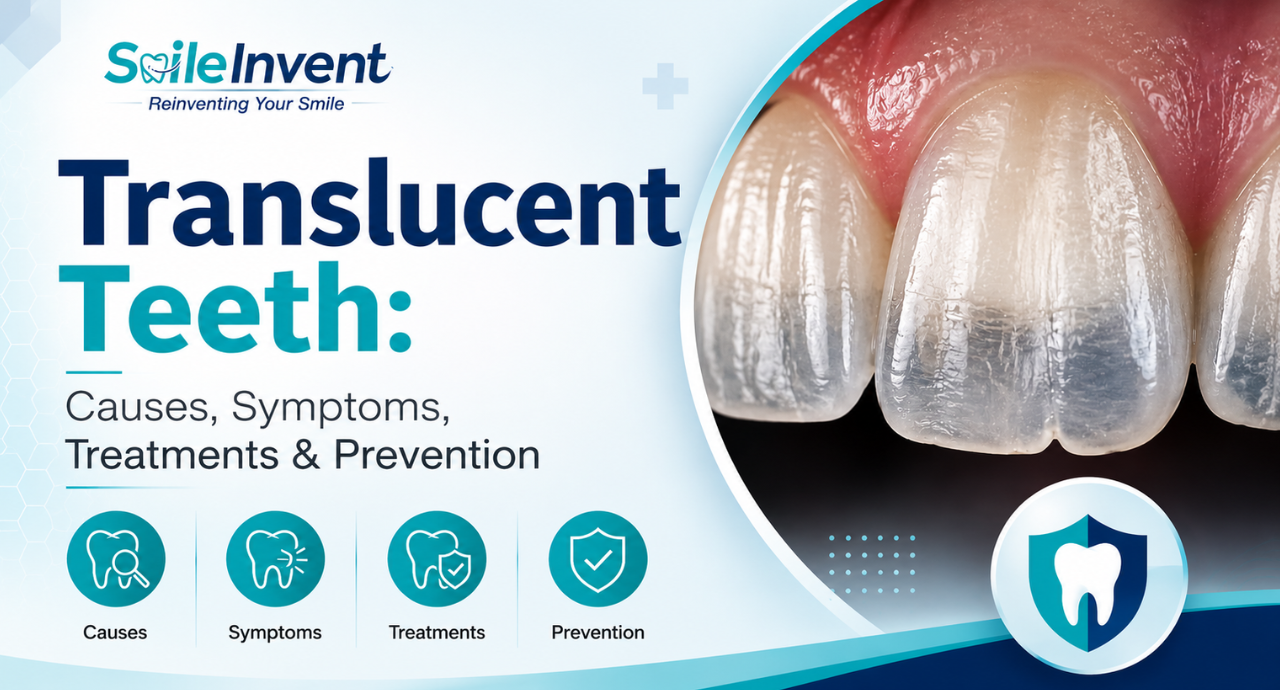
Translucent teeth are teeth that look clear, thin, or slightly see-through. You may notice this more around the edges of your front teeth. A small amount of translucency can be normal. Tooth enamel naturally lets some light pass through, and the edges of front teeth can look more transparent because the enamel is thinner there.
But if your teeth are becoming more see-through over time, or you also have sensitivity, rough edges, chipping, or changes in color, it may be linked to enamel wear.
In cases of severe enamel loss or multiple dental issues, full mouth rehabilitation can help restore teeth and improve both function and appearance. Translucent teeth can affect people of any age and may develop due to dental habits, medical conditions, or natural wear over time.
Translucent teeth usually happen when the enamel becomes thin or worn out. This makes the edges of the teeth look see-through. Common reasons include enamel erosion, acidic foods, over-brushing, genetics, and teeth grinding.
Teeth can look more translucent when the enamel becomes thin or worn. In some cases, slight translucency is natural, especially around the edges of the front teeth.
If you are also noticing dark spots or color changes in your mouth, you can read our guide on hyperpigmentation on tongue.
The way translucent teeth look can be different for each person. You may notice one or more of these signs:
The treatment for translucent teeth depends on how severe the enamel loss is and the underlying cause. Early care can prevent further damage, reduce sensitivity, and improve the appearance of teeth.
Fluoride helps strengthen weakened enamel and can reduce tooth sensitivity. Your dentist may apply fluoride varnish or prescribe special fluoride gels or toothpaste for home use.
In dental bonding, a tooth-colored resin is applied to the affected areas. This restores the thickness of the enamel, protects the tooth from further damage, and improves its appearance. Bonding is usually suitable for mild to moderate translucency.
Veneers are thin shells made of porcelain or composite resin that cover the front surface of the teeth. They hide translucency, restore tooth strength, and give a natural, uniform look. Veneers are recommended for moderate to severe enamel thinning.
For severe cases where most of the enamel is lost, dental crowns can cover the entire tooth. Crowns protect the tooth from further wear, restore its shape, and improve chewing ability.
Special toothpaste for sensitive teeth can help reduce discomfort caused by exposed dentin. Regular use can make eating or drinking hot, cold, or sweet foods more comfortable.
To prevent future enamel loss, it is important to address the causes. This may include:
Yes, the appearance of translucent teeth can often be improved. But the right treatment depends on why your teeth look translucent and how much the teeth have been affected.
If the translucency is a natural part of your teeth, you may not need treatment. But if enamel has become thin or worn, your dentist can help protect the remaining enamel and improve the appearance of your teeth. Depending on the condition, treatment may include fluoride care, treatment for sensitivity, dental bonding, veneers, or crowns.
The first step is to find out why your teeth have become translucent. Your dentist can examine your teeth and recommend the right treatment for you.
Preventing translucent teeth mainly involves protecting the enamel and avoiding habits that cause enamel erosion. Simple daily care and lifestyle changes can make a big difference.
Brush your teeth twice a day using a soft-bristled toothbrush and fluoride toothpaste. Floss daily to remove plaque and food particles that can weaken enamel.
Acidic foods and beverages such as citrus fruits, soft drinks, and packaged juices can wear down enamel over time. Reduce intake or rinse your mouth with water after consuming them.
Brushing too hard or using a hard-bristled toothbrush can damage enamel. Use gentle circular motions to clean teeth without applying excessive pressure.
If you grind or clench your teeth, especially at night, consider wearing a custom night guard. This protects enamel from excessive wear.
Fluoride helps strengthen enamel. Use fluoride toothpaste and mouth rinses regularly. Your dentist may also recommend fluoride treatments for extra protection.
Conditions like acid reflux or eating disorders can expose teeth to stomach acids. Proper management of these conditions can prevent enamel erosion.
Visit your dentist every 6 months. Early detection of enamel thinning allows for timely preventive care or treatment.
You should visit a dentist as soon as you notice any signs of translucent teeth. Getting help early can slow down enamel loss and prevent bigger dental problems later.
Contact your dentist if you notice:
Even if these symptoms feel minor, a dental check-up is important. A dentist can find the cause early and suggest the right treatment, preventive care, or simple lifestyle changes to help protect your teeth and keep them healthy.
Smile Invent Dental Clinic helps prevent translucent teeth by offering a mix of professional care, preventive treatments, and personalized guidance. Regular dental check-ups help detect early signs of enamel thinning, so treatment can begin before the condition gets worse.
The clinic provides professional fluoride treatments to strengthen enamel and reduce tooth sensitivity. Custom solutions, such as night guards, are also recommended for patients who grind their teeth, helping protect enamel from further damage.
For patients with moderate to severe enamel loss, restorative treatments like dental bonding, veneers, or crowns are used to restore strength, protect the teeth, and improve their appearance. In addition, the dentists at Smile Invent guide patients on proper oral hygiene, gentle brushing methods, and diet choices that help prevent enamel erosion. By focusing on early detection and prevention, Smile Invent Dental Clinic helps patients maintain healthy, strong, and natural-looking teeth.
Teeth that appear clear or glass-like at the edges due to enamel thinning, making them more sensitive.
Mild cases can be treated with fluoride or desensitizing toothpaste, while moderate to severe cases may need bonding, veneers, or crowns.
Slight translucency at the edges of front teeth can be normal, but multiple affected teeth should be checked by a dentist.
Acidic foods and drinks can erode enamel, increasing translucency, so limiting acidic intake helps protect teeth.
They are also called enamel erosion or enamel thinning, describing teeth that appear clear or glass-like.
Translucent teeth happen when the enamel, which is the outer protective layer of the teeth, becomes thin or weak. This can make the teeth look clear or glass-like. A little translucency can be normal as we grow older, but too much enamel loss can cause tooth sensitivity, chipping, and other dental problems.
Understanding the causes and signs of translucent teeth helps you take action early. Treatments like fluoride application, dental bonding, veneers, or crowns can help make the teeth strong again and improve their appearance. Daily care such as gentle brushing, eating healthy foods, and regular dental visits helps protect the enamel.
Smile Invent Dental Clinic offers proper dental care, early checks, and personalized treatment to keep your teeth healthy and strong. Taking care of your teeth now can help you avoid problems in the future and keep your smile healthy for a long time.
Walk into any supermarket or pharmacy and you will find toothpast...
Read More
Wearing braces can make your daily brushing routine a little more...
Read More
Have you ever noticed a small white mark on your tooth while look...
Read More