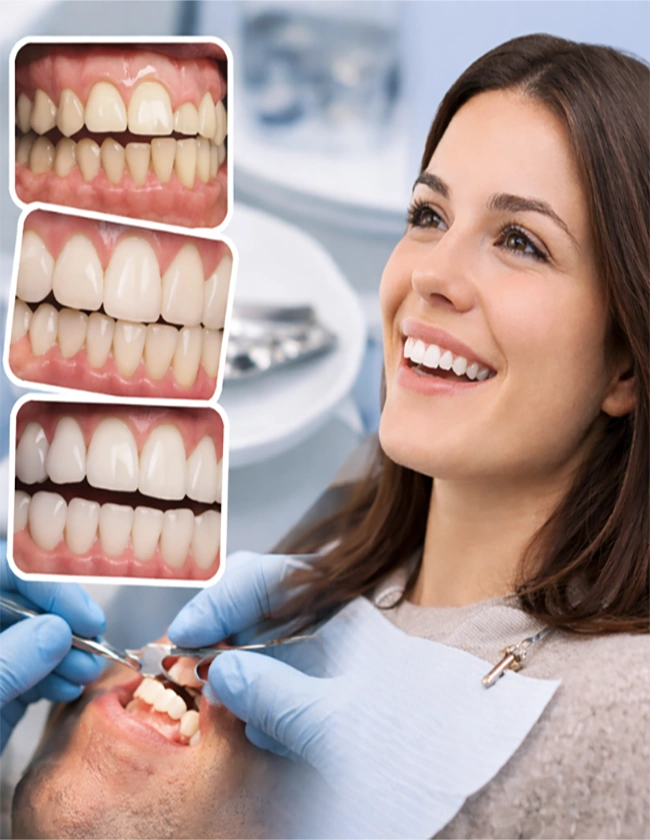
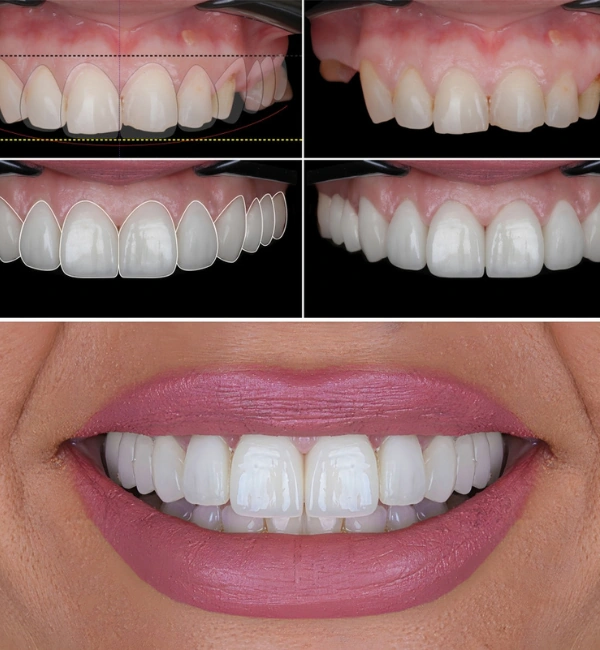




A small chip in your front tooth, a tiny gap that shows when you smile Or a tooth that looks slightly uneven.
These small problems may not cause pain, but they can make you feel conscious while smiling or talking. Many people avoid wide smiles just because of minor dental flaws. The good part is, you don’t always need a big or expensive treatment to fix them. Dental Bonding is a simple and affordable cosmetic procedure that can improve your smile in just one visit.
It is quick, painless, and gives natural-looking results. If you want an easy way to fix small imperfections in your teeth, dental bonding can be a great option.
Let’s understand it step by step in simple words.
What is Dental Bonding?
Dental Bonding is a cosmetic dental treatment where a tooth-colored material is applied to your tooth to improve its shape, size, or overall appearance.
The material used is called composite resin, and it closely matches the color of your natural teeth. The dentist places this material on the tooth, shapes it properly, and then uses a special light to harden it. Once hardened, it bonds firmly to the tooth surface.
This treatment is commonly used to repair chipped teeth, close small gaps, fix minor cracks, improve uneven edges, and cover stains or discoloration. If your main concern is yellow or stained teeth, you can also read our complete guide to Teeth Whitening to understand the available options. For small cavities, Dental Bonding can restore the tooth in a natural-looking way without affecting its overall structure.
The procedure usually takes just one visit. In most cases, anesthesia is not needed unless bonding is being done to fill a cavity.
Dental Bonding is quick, comfortable, and does not require removing much of your natural tooth structure. That’s why many people prefer it for small smile corrections.
Types of Dental Bonding
Dental Bonding is not the same in every case. The type of bonding used depends on your dental problem and the kind of treatment required. Dentists choose the method based on whether the goal is to improve appearance or to attach a dental restoration.
Direct Composite Bonding
In this type, a tooth-colored composite resin is applied directly to the tooth surface. It is shaped properly and hardened using a special light. This method is commonly used to fix chipped teeth, small gaps, cracks, and uneven edges. It is usually completed in a single visit.
Adhesive Bonding
This type is used to attach dental restorations like crowns, veneers, bridges, or inlays to the tooth. A strong bonding material helps these restorations stick firmly to the natural tooth structure and provides support.
Pros and Cons of Dental Bonding
Like any dental treatment, Dental Bonding has its advantages and a few limitations. It works very well for minor cosmetic corrections, but it may not be suitable for every situation.
Pros
- Quick procedure, usually completed in one visit
- More affordable than veneers or crowns
- Painless in most cases
- Requires very little removal of natural tooth structure
- Natural-looking results with shade-matched resin
- Immediate improvement in smile appearance
Cons
- Not as strong as crowns or veneers
- Can chip if you bite very hard objects
- May stain over time, especially with tea, coffee, or smoking
- Not suitable for large damage or major alignment issues
- May need repair or replacement after a few years
Benefits of Dental Bonding
Dental Bonding is a popular choice because it gives quick results without complicated treatment. It improves the appearance of your teeth in a simple and comfortable way.
One big benefit is that it is a minimally invasive procedure. Very little of the natural tooth is removed, so your original tooth structure stays mostly intact. The treatment is also affordable compared to other cosmetic options like veneers.
Another advantage is the natural look. The composite resin is matched to your tooth color, so it blends smoothly with your smile. The procedure is fast, usually done in one visit, and you can see immediate improvement.
For people who want small corrections without going through major dental work, dental bonding treatment is a practical and convenient option.
Dental Bonding Procedure (Step-by-Step)
The Dental Bonding procedure is simple and usually done in a single visit. It is comfortable and does not require anesthesia in most cases unless the bonding is used to treat a cavity. The entire process usually takes around 30 to 60 minutes per tooth, depending on the case.
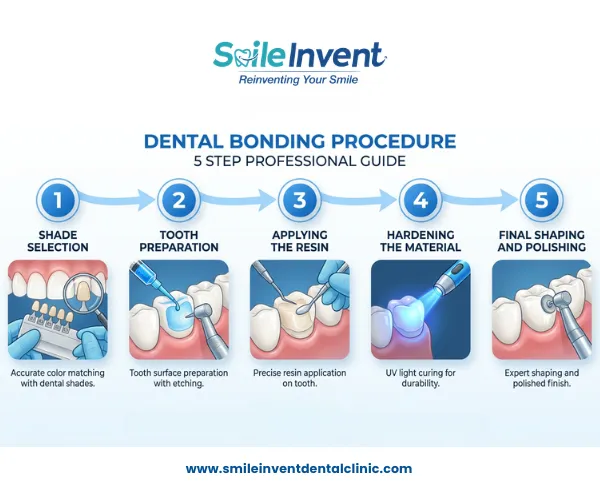
Step 1: Shade Selection
The dentist first chooses a composite resin shade that matches your natural tooth color. This step is important because the bonded area should blend perfectly with your surrounding teeth. The goal is to make it look like nothing was treated.
Step 2: Tooth Preparation
The surface of the tooth is gently roughened using a special tool. This is not painful. After that, a conditioning liquid is applied. This helps the bonding material attach properly to the tooth surface and stay in place for a long time.
Step 3: Applying the Resin
The dentist applies the soft, tooth-colored composite resin to the tooth. Since the material is moldable at this stage, it can be shaped easily. The dentist carefully builds and sculpts it to fix the chip, close the gap, or improve the shape of the tooth.
Step 4: Hardening the Material
Once the desired shape is achieved, a special curing light is used to harden the resin. The light activates the material and makes it strong within a few seconds. This step ensures the bonding firmly attaches to the tooth.
Step 5: Final Shaping and Polishing
After the resin hardens, the dentist trims and smooths the bonded area. It is then polished so it matches the shine of your natural teeth. The final result looks smooth and natural.
Limitations of Tooth BondingDental Bonding works very well for small cosmetic corrections, but it is not the right solution for every dental problem.
The bonding material is strong, but it is not as durable as crowns or veneers. If the tooth has major damage or a large portion is broken, bonding may not give long-term support. In such cases, a crown may be a better option.
Bonding is also not ideal for people who grind their teeth heavily or have a strong bite pressure, because the material can chip over time. For very large gaps or severe alignment issues, orthodontic treatment may be more suitable.
It is best for minor chips, small gaps, and slight shape corrections. Your dentist will check your teeth and suggest whether bonding is the right choice for you.
Are There Any Risks Involved in Dental Bonding?
Dental Bonding is considered a safe and simple procedure. It does not involve surgery, and very little natural tooth structure is removed. That’s why the risk level is low.
Still, there are a few things you should know.
The bonding material is not as strong as natural teeth. It can chip or break if you bite very hard foods, open packets with your teeth, or grind your teeth regularly. In such cases, it may need repair.
The resin can also stain over time, especially if you drink a lot of tea, coffee, or smoke. Unlike natural teeth, bonding does not respond to teeth whitening treatments once it is placed.
Some people may feel slight sensitivity after the procedure, but this usually settles on its own within a short time.
There are no major health risks involved, and complications are rare when the procedure is done properly.
How to Take Care of Your Bonded Tooth
Taking care of a bonded tooth is simple. Follow these easy tips to make it last longer:
- Brush your teeth twice daily with a soft toothbrush and fluoride toothpaste.
- Floss every day to keep the area around the bonded tooth clean.
- Avoid biting hard objects like ice, pens, or hard candies.
- Reduce tea, coffee, and tobacco to prevent staining.
- Do not use your teeth to open packets or bottles.
- Visit your dentist regularly for checkups and polishing.
- If you grind your teeth at night, use a night guard if recommended.
How to Decide if You Are Right for Dental Bonding?
Dental Bonding may be the right option for you if:
- You have minor chips or small cracks in your teeth.
- There are small gaps between your teeth.
- Your teeth have slight uneven edges.
- You have mild discoloration that affects your smile.
- Your teeth and gums are healthy without severe decay or gum disease.
- You want a quick cosmetic improvement without major dental work.
Dental Bonding may not be suitable if:
- A large portion of your tooth is broken.
- You have severe alignment problems.
- There is heavy bite pressure or teeth grinding.
A proper dental checkup is the best way to decide. Your dentist will examine your teeth and suggest whether Dental Bonding is the right treatment for your case.
How Long Does Dental Bonding Last?
Dental Bonding is not permanent, but it can last for several years with proper care. On average, bonding lasts between 3 to 10 years. The exact time depends on your oral hygiene, eating habits, and the location of the bonded tooth.
If the bonding is done on a front tooth that does not handle heavy biting pressure, it may last longer. But if it is on a tooth used for chewing, it may wear down faster.
Habits like nail biting, chewing ice, grinding teeth, or opening packets with your teeth can reduce its lifespan. Drinking a lot of tea or coffee can also cause staining over time.
The good thing is that if bonding chips or wears out, it can be repaired or replaced easily during a dental visit.
Alternatives to Dental Bonding
Dental Bonding is a good solution for small cosmetic corrections. But if the damage is bigger or you want a long-term change, other treatments may be more suitable.
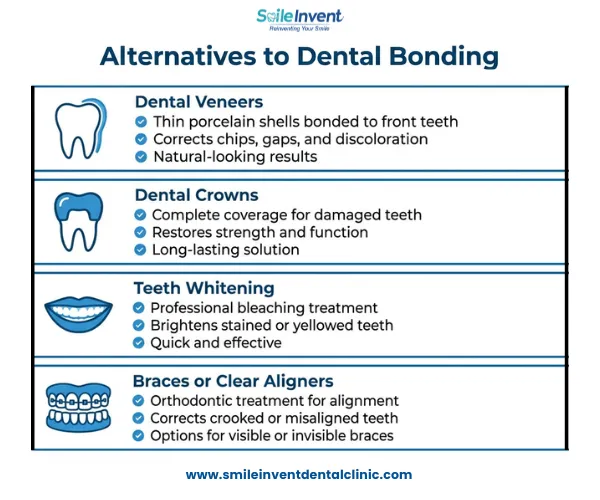
Dental Veneers
Thin, custom-made shells placed on the front surface of teeth. They are stronger and more stain-resistant than bonding. Veneers are ideal for correcting multiple issues like discoloration, uneven shape, or small gaps. They also last longer than bonding.
Dental Crowns
Used when a large portion of the tooth is damaged or weak. A crown covers the entire tooth and restores both strength and appearance. It provides better protection for heavily cracked or decayed teeth.
Teeth Whitening
Suitable when the main concern is yellow or stained teeth. This treatment improves the natural color of your teeth without adding any material. It works best when teeth are healthy but discolored.
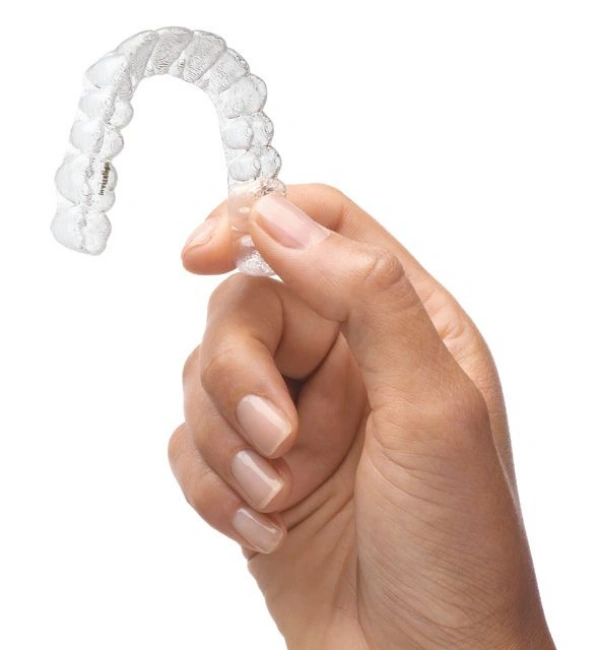
Braces or Clear Aligners
Recommended for major alignment issues, crowded teeth, or large gaps. While bonding can fix small gaps, orthodontic treatment gives a more permanent and structured alignment correction.
Why Choose Smile Invent Dental Care for Dental Bonding?
Choosing the right dental clinic makes a big difference in the final result. Dental Bonding may look simple, but proper technique and shade matching are very important for a natural finish.
At our dental clinic, the focus is on giving results that look natural and feel comfortable. The composite resin is carefully matched to your tooth color so that the bonded area blends perfectly with your smile.
The procedure is done with precision and attention to detail. Each tooth is shaped properly to maintain balance, symmetry, and a smooth finish. The goal is not just to fix a chip or gap, but to improve your overall smile.
Patients also receive clear guidance about aftercare so the bonding lasts longer. From consultation to final polishing, the treatment is planned according to your specific concern.
If you are looking for safe, affordable, and natural-looking Dental Bonding treatment, Smile Invent Dental Care offers a practical solution with personalized care.
FAQ’s
1. How long does dental bonding last?
Dental Bonding usually lasts between 3 to 10 years. It depends on how well you take care of your teeth and where the bonding is placed. If you avoid biting hard objects and maintain good oral hygiene, it can last longer. If it chips or wears down, it can be repaired easily.
2. Is Dental Bonding Safe for Teeth?
Yes, Dental Bonding is a safe procedure. Very little of the natural tooth structure is removed. It is a non-surgical and minimally invasive treatment. When done properly, it does not harm your teeth.
3. Does Dental Bonding Hurt?
No, the procedure is usually painless. In most cases, anesthesia is not needed. You may feel slight sensitivity after the treatment, but it usually goes away within a short time.
4. Are Teeth Permanently Bonded?
Dental Bonding is not permanent, but it is long-lasting. The material stays attached to your tooth, but it may need replacement after several years due to wear or staining.
5. Which is better, veneers or bonding?
It depends on your dental condition and goals. Bonding is more affordable and good for small corrections. Veneers are stronger, more stain-resistant, and last longer. Your dentist can suggest the best option after examining your teeth.
6. Do Teeth Require Special Maintenance After Tooth Bonding?
No special maintenance is required. Just follow normal oral hygiene like brushing twice daily and flossing. Avoid biting hard objects and limit staining foods and drinks. Regular dental checkups will help maintain the bonding for years.
Conclusion
So, what is Dental Bonding? It is a simple and effective cosmetic treatment where a tooth-colored material is applied to improve the shape, size, or appearance of your teeth. It is mainly used to fix small chips, close minor gaps, cover stains, and improve uneven edges.
Dental Bonding is quick, painless, and usually completed in a single visit. It does not require major drilling, and the results look natural when done properly. While it may not be suitable for large damage or severe alignment issues, it works very well for minor smile corrections.
If you are looking for an affordable and practical way to improve your smile without complicated procedures, Dental Bonding can be a good option. A proper dental checkup will help you decide if this treatment is right for you.
This article is general information, not a diagnosis. For advice about your own teeth, book a consultation.